JellyFil Official Website › Blog › Who Should Not Reach For This
Who Should Not Reach For This Gummy: The Caffeine And Ashwagandha Questions
Most of the nine plants on this bottle's panel rest on traditional use, animal work or a handful of small trials, and the honest answer to "is this safe for me" is usually "probably, but nobody has specifically checked." Two ingredients on this panel are different. Caffeine has a stated amount and a well-studied cardiovascular profile. Ashwagandha has trial data showing it measurably moves thyroid hormone levels. Both are reasons for a narrow group of people to ask a clinician first, not reasons for most people to worry, and this article tries to keep that distinction exact.
Two different questions, one gummy
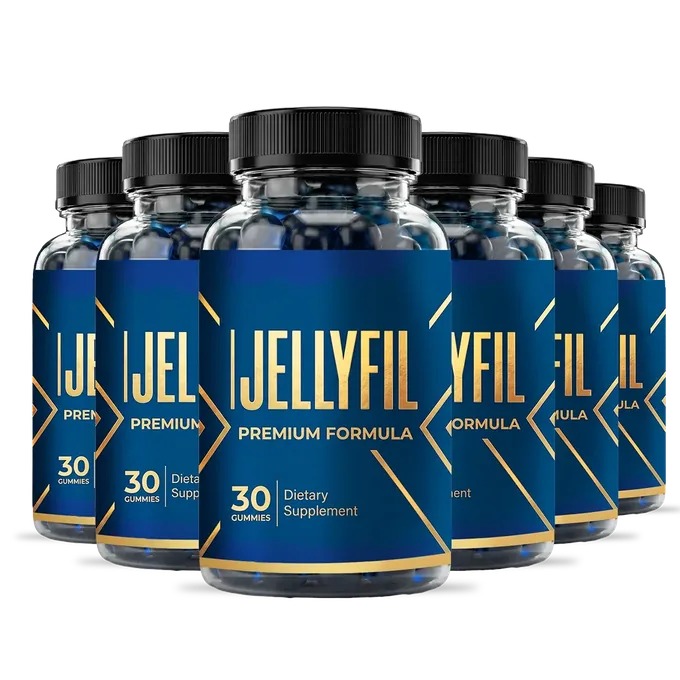
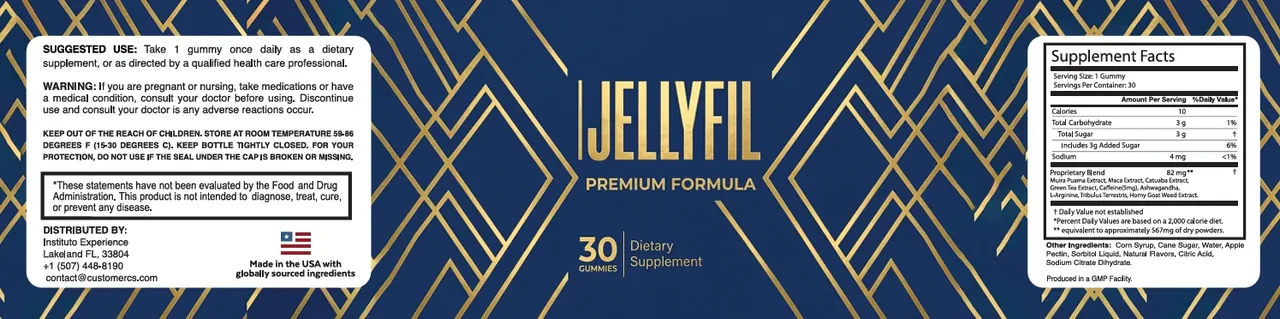
The JellyFil Supplement Facts panel states 5 mg of caffeine per gummy, printed with its own figure rather than folded silently into the 82 mg proprietary blend. Ashwagandha (Withania somnifera) sits inside that blend, sixth by weight, with no milligram figure of its own. Those are two different labelling situations and two different questions, and this article keeps them separate rather than lumping every plant on the panel into one generic caution.
Neither question is about whether JellyFil is dangerous for a typical healthy adult at the labelled dose of one gummy a day. It almost certainly is not. Both questions are about smaller groups of people for whom a stimulant or a hormone-active herb is worth a two-minute conversation before the first gummy rather than after.
The caffeine line, and the one it does not cover
Five milligrams of caffeine is a small amount. A cup of brewed coffee typically carries somewhere between 80 and 100 mg, so one gummy's declared caffeine is a fraction of that. On its own, the stated 5 mg line is not the reason for caution here.
The reason is what sits next to it on the same panel: Green Tea Extract (Camellia sinensis), printed fourth in the blend, with no milligram figure and no separate caffeine figure of its own. Green tea naturally contains caffeine as part of its chemistry, and unless an extract is specifically decaffeinated, some caffeine typically travels with it. The panel does not say whether this extract is decaffeinated, does not give its weight inside the 82 mg total, and does not fold any of its caffeine content into the 5 mg line. The honest reading is that 5 mg is the stated caffeine figure, not necessarily the only source of caffeine on this label.
Settled: the gummy carries at least 5 mg of caffeine, declared with its own number. Left open: whether the green tea extract adds any further caffeine, and if so, how much. That second gap is small in absolute terms — nobody is describing this as a high-caffeine product — but small is not the same as zero, and stacking one undisclosed source next to a declared one is worth naming plainly rather than rounding away.
What the caffeine and blood pressure trials found
Caffeine's cardiovascular profile is one of the better-studied questions in nutrition science, and two different bodies of evidence point in slightly different directions depending on the timeframe.
A 2011 systematic review and meta-analysis focused specifically on hypertensive individuals. Pooling five controlled trials, the researchers found that a single dose of 200 to 300 mg of caffeine — roughly the amount in two to three cups of coffee — produced a mean acute rise of 8.1 mmHg in systolic blood pressure and 5.7 mmHg in diastolic blood pressure, starting within the first hour and lasting three hours or more. The same review found something reassuring at longer timeframes: two-week trials of habitual coffee drinking showed no sustained rise in blood pressure compared with a caffeine-free diet, and seven cohort studies found no link between habitual coffee consumption and cardiovascular disease risk in people who already had high blood pressure.
A separate, broader 2017 review of caffeine and cardiovascular health reached a similar overall picture from a wider evidence base: cardiovascular effects at caffeine intakes up to 600 mg a day are generally mild, transient and reversible, and typical moderate intake is not linked to a higher risk of cardiovascular disease, arrhythmia, heart failure or sustained blood pressure change in regular consumers.
| What was measured | Result |
|---|---|
| Single dose, 200–300 mg caffeine, hypertensive adults | Systolic BP up 8.1 mmHg, diastolic up 5.7 mmHg, for 3+ hours |
| Habitual coffee drinking, 2 weeks, vs caffeine-free diet | No sustained rise in blood pressure |
| Habitual coffee consumption, cohort data | No link to higher cardiovascular disease risk in hypertensive adults |
| General caffeine intake up to 600 mg/day | Effects described as mild, transient and reversible |
The 200–300 mg doses tested in these trials are forty to sixty times this gummy's declared 5 mg caffeine line. They describe how caffeine behaves in the body, not a finding about this product.
So the acute-rise finding is real, and it is specifically about hypertensive people at doses this gummy does not come close to on its labelled caffeine line alone. It is the reason a person managing blood pressure with medication is better off asking a clinician about any caffeine-containing product, including this one, rather than assuming 5 mg is too small to matter without checking.
The ashwagandha trial that moved thyroid hormones
Ashwagandha's reputation in the supplement aisle is mostly about stress and vitality. Less widely repeated is that it has also been trialled directly in people with a diagnosed thyroid condition, and it moved the numbers that matter.
A 2018 randomised, double-blind, placebo-controlled trial enrolled fifty adults with subclinical hypothyroidism — a mild thyroid disorder with elevated TSH but no obvious symptoms — and gave half of them 600 mg of ashwagandha root extract daily for eight weeks. Serum TSH, T3 and T4 all improved significantly compared with placebo, and the treatment group's thyroid indices moved toward the normal range over the study period.
- Fifty adults with subclinical hypothyroidism, randomised to ashwagandha or placebo.
- 600 mg of ashwagandha root extract daily, for 8 weeks.
- TSH, T3 and T4 all improved significantly against placebo.
- Framed by the authors as a possible benefit for this specific patient group, not a general finding.
That result is presented by its own authors as a potential benefit for people with underactive thyroid function, not a warning. But a herb that measurably moves TSH, T3 and T4 in one direction, in a population selected for thyroid dysfunction, is not an inert bystander in anyone else's thyroid chemistry either. Anyone already on thyroid medication, or being monitored for a thyroid condition of any kind, is exactly the population this trial's own result points toward: not "avoid it," but "mention it before starting it," because a medication dose that was correctly calibrated before could need rechecking after.
A second trial, in healthy volunteers, found nothing
The picture gets more precise, not less, once a second trial is added. A 2021 safety study gave eighty healthy adults — forty men and forty women with no thyroid diagnosis — either 300 mg of ashwagandha root extract twice daily (600 mg total) or a matched placebo, for eight weeks, and tracked a full panel of safety measures including thyroid function, blood counts, liver enzymes, vital signs and reported side effects.
No statistically significant change turned up in any measured parameter, including the thyroid panel, and no adverse events were reported by any participant. The dose was the same 600 mg a day used in the thyroid-patient trial above.
In people with subclinical hypothyroidism, 600 mg of ashwagandha a day measurably shifted TSH, T3 and T4 toward normal over eight weeks. In healthy adults with no thyroid diagnosis, the identical dose changed nothing on the same panel of tests. Read together, the two trials describe an herb that appears to act on thyroid chemistry specifically when there is thyroid chemistry to correct, rather than one that pushes hormone levels around in everybody regardless of starting point. That is a reassuring pattern for most people and precisely why it is still worth naming for the smaller group already managing a thyroid condition.
Reading the two trials together
Put the two ashwagandha trials next to the caffeine review above and a consistent shape emerges: none of this evidence suggests either ingredient is unsafe at ordinary doses for most adults. All of it points to specific, identifiable groups where the general reassurance stops applying and a clinician's input starts being useful. That is a narrower and more useful finding than either "perfectly safe for everyone" or "this ingredient is risky," and it is the finding this article is actually reporting.
None of the trials above used this product. None tested ashwagandha inside a nine-plant blend alongside caffeine, green tea extract and the other six plants on this panel, and no published trial has. The blend-total labelling format this bottle uses, and what it does and does not let a reader check, is covered separately on the supplement facts page and in this website's dose arithmetic article.
Who this actually points to
Four groups, specifically, rather than a blanket warning to everyone.
- Anyone on blood pressure medication, or with diagnosed hypertension. The acute blood-pressure trials above used caffeine doses far above this gummy's declared 5 mg line, but the undisclosed caffeine content of the green tea extract is exactly the kind of unknown worth flagging before adding any new caffeine-containing product.
- Anyone with a diagnosed thyroid condition, or taking thyroid medication. The subclinical hypothyroidism trial found a measurable shift in TSH, T3 and T4 at 600 mg of ashwagandha a day. This blend states no milligram figure for its own ashwagandha content, so the amount here is unknown, but the mechanism is not hypothetical.
- Anyone who is pregnant or breastfeeding. None of the trials cited on this page enrolled pregnant or breastfeeding women, and this bottle's own label is written for healthy adults rather than this population specifically.
- Anyone unusually sensitive to caffeine. A small stated amount plus an unstated one from green tea extract is still a real, if modest, stimulant load for someone who reacts strongly to caffeine at any dose.
Outside those four groups, nothing in the evidence above describes a safety problem at the labelled dose of one gummy a day. The point of this article is precision, not alarm: most readers are not in any of the four groups above, and the minority who are have a specific, answerable question to bring to a clinician rather than a vague one.
Every plant on the JellyFil panel is covered on this website
Including the caffeine line, the thyroid-relevant trial on ashwagandha, and what each one does and does not establish.
From $158 for two bottles to $294 for six, with 60 days on all three
Order JellyFilChewed, one a day, 30 to a bottle.
What to say in that conversation
It is short, and naming the two specific ingredients makes it shorter still.
- Say what it is. A chewable supplement with a proprietary blend of 82 mg across nine plants, plus 5 mg of stated caffeine, with green tea extract also inside the blend.
- Say what you take, or what is being managed. Blood pressure medication, a thyroid diagnosis or thyroid medication, or a pregnancy, are the three situations this article is built around.
- Ask the narrow question. Not "is this safe," but whether this specific combination — a small stated caffeine dose, an unstated amount of green tea extract, and an unstated amount of ashwagandha — is a reasonable addition given what is already being managed.
JellyFil is a dietary supplement, not a treatment for anything, and none of the trials cited on this page were conducted using this product. MedlinePlus keeps a plain-English overview of caffeine and who should limit it, and the same site's thyroid disease pages are a reasonable starting point for anyone managing a thyroid condition before adding a new supplement.
Further reading on this website: the side effects page, which works through all nine plants; the plant the advert leaves out, on the one ingredient here with a mechanism that overlaps a prescription medicine; and who it's for, which starts with this same question from the label's own side.
References
- Mesas AE, Leon-Munoz LM, Rodriguez-Artalejo F, Lopez-Garcia E. The effect of coffee on blood pressure and cardiovascular disease in hypertensive individuals: a systematic review and meta-analysis. Am J Clin Nutr. 2011;94(4):1113-26. Single doses of 200-300 mg caffeine raised systolic BP by 8.1 mmHg and diastolic by 5.7 mmHg for 3+ hours in hypertensive adults; no sustained rise from habitual coffee drinking over 2 weeks. PMID 21880846. https://pubmed.ncbi.nlm.nih.gov/21880846/
- Turnbull D, Rodricks JV, Mariano GF, Chowdhury F. Caffeine and cardiovascular health. Regul Toxicol Pharmacol. 2017;89:165-185. Review concluding that cardiovascular effects at caffeine intakes up to 600 mg/day are generally mild, transient and reversible. PMID 28756014. https://pubmed.ncbi.nlm.nih.gov/28756014/
- Sharma AK, Basu I, Singh S. Efficacy and Safety of Ashwagandha Root Extract in Subclinical Hypothyroid Patients: A Double-Blind, Randomized Placebo-Controlled Trial. J Altern Complement Med. 2018;24(3):243-248. 600 mg daily for 8 weeks significantly improved TSH, T3 and T4 versus placebo in adults with subclinical hypothyroidism. PMID 28829155. https://pubmed.ncbi.nlm.nih.gov/28829155/
- Verma N, Gupta SK, Tiwari S, Mishra AK. Safety of Ashwagandha Root Extract: A Randomized, Placebo-Controlled Study in Healthy Volunteers. Complement Ther Med. 2021;57:102642. Same 600 mg daily dose, 8 weeks, in 80 healthy adults with no thyroid diagnosis; no significant change in thyroid panel or other safety measures. PMID 33338583. https://pubmed.ncbi.nlm.nih.gov/33338583/
- Lopresti AL, Drummond PD, Smith SJ. A Randomized, Double-Blind, Placebo-Controlled, Crossover Study Examining the Hormonal and Vitality Effects of Ashwagandha (Withania somnifera) in Aging, Overweight Males. Am J Mens Health. 2019;13(2):1557988319835985. 21 mg of withanolide glycosides daily for 8 weeks raised DHEA-S and testosterone versus placebo, with no significant between-group difference in vigour or sexual well-being. PMID 30854916. https://pubmed.ncbi.nlm.nih.gov/30854916/