JellyFil Official Website › How It Works
How It WorksHow Does JellyFil Work? The Three Routes on the Label
JellyFil is sold on three routes. L-arginine is the raw material the body turns into nitric oxide, which relaxes vessel walls. Maca and ashwagandha act on drive and on how a body handles load. Epimedium, printed last in the blend, contains a compound that inhibits the same enzyme prescription treatments block. None of the three has been measured in this gummy.
What each route is, what the published work actually shows, and where the gap between a pathway and a product sits.
The route JellyFil is sold on
The seller's version is short: plants that support blood flow and plants that support drive, taken daily, so the effect is a background one rather than an event.
That is a reasonable description of what the ingredient list is reaching for. It is also, as written, a mechanism story rather than a result, and this page separates the two deliberately: what the pathway is, then what has been shown, then what is missing.
Route one: nitric oxide, and what JellyFil contributes to it
Arginine is the substrate the body uses to make nitric oxide. Nitric oxide relaxes the smooth muscle in a vessel wall, the vessel widens, and more blood moves through it. This is real physiology, it is well described, and it is the upstream end of the same system that prescription treatments act on further down.
What the trial record shows is narrower than the pathway. Five grams a day for six weeks produced subjective improvement in nine of twenty-nine men, all of whom had started with low nitric oxide output, and produced no change in the measured haemodynamics at all. The pooled analysis spans 1.5 g to 5 g a day.
Oral arginine is also the wasteful way in: a large share of an oral dose never reaches the circulation. That is a fact about the amino acid, not about this bottle, and it applies to every product that carries it.
Route two: drive and load, and what JellyFil carries for it
Maca and ashwagandha are both adaptogens in the loose sense: they are sold as acting on how a body copes rather than on a specific organ.
Maca's twelve-week trial is the useful one. Self-rated desire rose from week eight on 1,500 to 3,000 mg a day, and the authors showed the effect was independent of mood scores and of serum testosterone. That is the cleanest positive result attached to any plant in this blend, and it is a questionnaire result at a gram dose.
Ashwagandha's crossover trial moved testosterone 14.7% more than placebo on a standardised extract delivering 21 mg of withanolide glycosides a day. In the same trial, fatigue, vigour and sexual well-being showed no significant difference between groups. Both halves of that sentence are the finding.
Route three: the enzyme, which the JellyFil advertising never mentions
Epimedium is printed last in the blend and is missing from the sales page entirely, which is the wrong way round.
When four plants traditionally used for impotence were screened against human PDE5A1, Epimedium was the only extract with activity and its icariin the only active principle. PDE5 is the enzyme prescription treatments block. Modified icariin derivatives in the same paper approached sildenafil's potency in the assay.
Follow-up work took icariin into cells and into rats and a structure-activity study localised the effect to particular isolated flavonoids.
What none of that establishes is an effect from an extract inside a gummy at a share of 82 mg. What it does establish is that the interaction question is not hypothetical, which is why it is on the side effects page in plain language.
The most pharmacologically interesting plant on this label is the one the sales page leaves out.The JellyFil editorial desk
Where the JellyFil mechanism story stops
Three plausible routes, none of them measured in this product. That sentence is the honest summary and it is worth being precise about why.
Every trial cited above studied a plant, at a stated dose, on its own. This bottle holds nine plants in a blend whose total is 82 mg, so no single plant's amount can be reconciled with any single trial. The category audit found no finished men's formula with a trial of its own, and the network meta-analysis reaches the same conclusion from the evidence side.
What a buyer is choosing between, then, is a mechanism story and a routine with a refund window. The second of those can be checked, which is why this website spends more words on the window than on the mechanism.
What happens in the first month on JellyFil
| Window | What the record supports |
|---|---|
| Days 1 to 7 | What most people notice first is that they remembered to take it. The only input with its own number is caffeine at 5 mg, which is about a twentieth of a small cup of coffee, so anyone expecting a lift at this stage is expecting it from something that is not there in that quantity. |
| Days 8 to 21 | The twelve-week maca trial reported its first change in self-rated desire at week eight, on 1,500 to 3,000 mg a day. This bottle carries 82 mg of blend across nine plants, so week two is early by the standards of the research even before the arithmetic. Buyers here describe three to four weeks as the typical wait. |
| Days 22 to 30 | Thirty days of use is what the seller asks for before a claim, and it is also the point the four-star reviewers on this desk describe as fair. One bottle is exactly thirty gummies, so a single bottle takes you to this line and no further. |
| Days 31 to 60 | The 60 days run from the date of purchase, not from delivery, so the useful question at day forty is whether the answer is yes rather than whether to keep waiting. A three-bottle pack covers ninety days, which outlasts the window by a month. |
| Beyond day 60 | Nothing in the published record on these plants suggests an effect that only appears after two months. If it has done nothing by then, another bottle is unlikely to change that, and the refund route has already closed. |
The right-hand column is what buyers here describe set beside what the published trials measured and when. Neither column is a promise.
The published work under each JellyFil route
- Chen J, Wollman Y, Chernichovsky T, et al. Effect of oral administration of high-dose nitric oxide donor L-arginine in men with organic erectile dysfunction: results of a double-blind, randomized, placebo-controlled study. BJU Int. 1999;83(3):269-73. Fifty men, 5 g a day for six weeks; nine of twenty-nine reported subjective improvement, all of them men who started with low nitric oxide excretion, and the measured haemodynamics did not change. PMID 10233492. https://pubmed.ncbi.nlm.nih.gov/10233492/
- Rhim HC, Kim MS, Park YJ, et al. The Potential Role of Arginine Supplements on Erectile Dysfunction: A Systemic Review and Meta-Analysis. J Sex Med. 2019;16(2):223-234. The paper carries a published erratum, which is noted here rather than hidden. Doses in the pooled trials run from 1.5 g to 5 g a day. PMID 30770070. https://pubmed.ncbi.nlm.nih.gov/30770070/
- Schwedhelm E, Maas R, Freese R, et al. Pharmacokinetic and pharmacodynamic properties of oral L-citrulline and L-arginine: impact on nitric oxide metabolism. Br J Clin Pharmacol. 2008;65(1):51-9. Oral arginine is the inefficient route: much of a dose is lost before it reaches the circulation. PMID 17662090. https://pubmed.ncbi.nlm.nih.gov/17662090/
- Gonzales GF, Cordova A, Vega K, et al. Effect of Lepidium meyenii (MACA) on sexual desire and its absent relationship with serum testosterone levels in adult healthy men. Andrologia. 2002;34(6):367-72. Men aged 21-56 took 1,500 mg or 3,000 mg a day for twelve weeks; self-reported desire improved from week eight and testosterone did not move. PMID 12472620. https://pubmed.ncbi.nlm.nih.gov/12472620/
- Lopresti AL, Drummond PD, Smith SJ. A Randomized, Double-Blind, Placebo-Controlled, Crossover Study Examining the Hormonal and Vitality Effects of Ashwagandha (Withania somnifera) in Aging, Overweight Males. Am J Mens Health. 2019;13(2):1557988319835985. A standardised extract delivering 21 mg of withanolide glycosides a day for eight weeks; testosterone rose 14.7% more than placebo, while fatigue, vigour and sexual well-being showed no between-group difference. PMID 30854916. https://pubmed.ncbi.nlm.nih.gov/30854916/
- Dell'Agli M, Galli GV, Dal Cero E, et al. Potent inhibition of human phosphodiesterase-5 by icariin derivatives. J Nat Prod. 2008;71(9):1513-7. Four plants traditionally used for impotence were screened against human PDE5A1. Only Epimedium and its icariin were active; Tribulus terrestris showed nothing. PMID 18778098. https://pubmed.ncbi.nlm.nih.gov/18778098/
- Shindel AW, Xin ZC, Lin G, et al. Erectogenic and neurotrophic effects of icariin, a purified extract of horny goat weed (Epimedium spp.) in vitro and in vivo. J Sex Med. 2010;7(4 Pt 1):1518-28. Purified icariin, in cells and in animals, not the whole herb in a person. PMID 20141584. https://pubmed.ncbi.nlm.nih.gov/20141584/
- Li J, Wu Y, Yu X, et al. Isolation, bioassay and 3D-QSAR analysis of 8-isopentenyl flavonoids from Epimedium sagittatum maxim. as PDE5A inhibitors. Chin Med. 2022;17(1):147. The activity sits in specific isolated flavonoids, which is not the same claim as an extract in a gummy. PMID 36587222. https://pubmed.ncbi.nlm.nih.gov/36587222/
- Kuchakulla M, Narasimman M, Soni Y, et al. A systematic review and evidence-based analysis of ingredients in popular male testosterone and erectile dysfunction supplements. Int J Impot Res. 2021;33(3):311-317. Thirty-seven ingredients across the thirty-two best-selling products; no finished product had a published trial of its own, and 68% of ingredients scored C or D for contradictory, negative or absent evidence. PMID 32358510. https://pubmed.ncbi.nlm.nih.gov/32358510/
- Barbonetti A, Tienforti D, Antolini F, et al. Nutraceutical interventions for erectile dysfunction: a systematic review and network meta-analysis. J Sex Med. 2024;21(11):1054-1063. PMID 39279185. https://pubmed.ncbi.nlm.nih.gov/39279185/
- 21 CFR 101.36, Nutrition labeling of dietary supplements. US Government Publishing Office. The rule that lets a label state one total for a proprietary blend and list its contents in descending order of weight without an amount for each. https://www.govinfo.gov/content/pkg/CFR-2023-title21-vol2/xml/CFR-2023-title21-vol2-sec101-36.xml
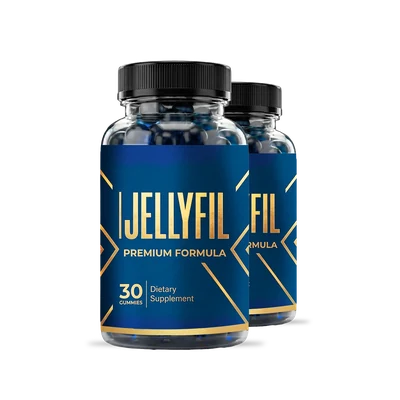
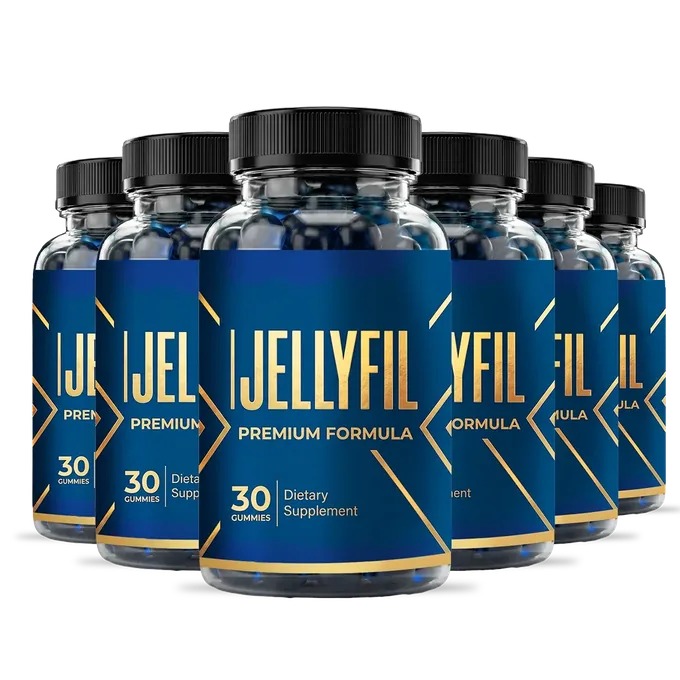
Three routes, one JellyFil routine, sixty days to judge it
The mechanism is the seller's argument. The window is the part you can hold them to, and it runs sixty days from the date you pay.
From $158 for two bottles to $294 for six, with 60 days on all three
Choose A JellyFil PackChewed, one a day, 30 to a bottle. Batch JEL-26/JE-5655, shipped from the United States.