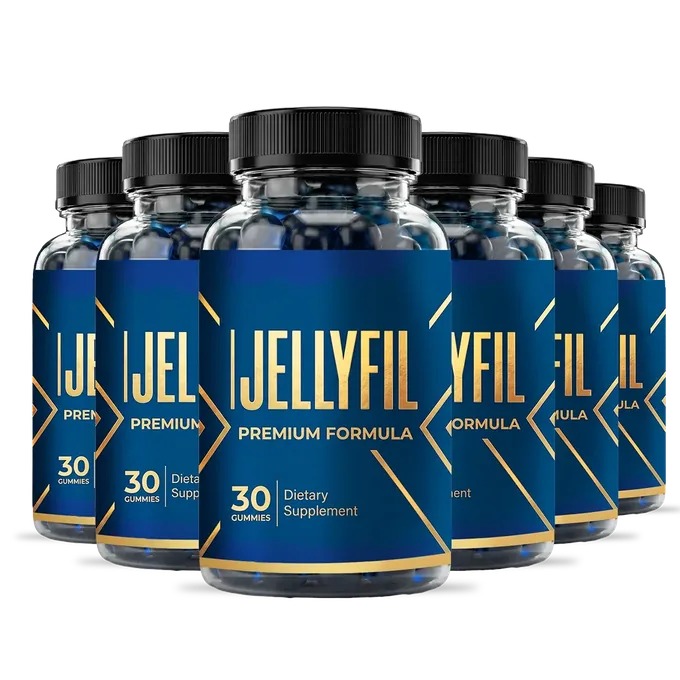
JellyFil Official Website › Ingredients
IngredientsJellyFil Ingredients: the Nine Plants on the Printed Panel
The JellyFil panel prints one proprietary blend at 82 mg carrying nine plants in descending order of weight: muira puama, maca, catuaba, green tea, caffeine at 5 mg, ashwagandha, l-arginine, tribulus and horny goat weed. The advertising names six of them. Only caffeine has a figure of its own beside it.
Each plant below gets a card: what it is, what the published trials gave people, and what that does and does not imply for a gummy carrying a share of 82 mg.
How to read the JellyFil ingredient list
Two things decide how much this list is worth, and both are visible on the bottle.
The first is the order. A proprietary blend must list its contents in descending order of weight, so the ranking above is real information even though the individual amounts are absent. Muira puama outweighs maca, which outweighs catuaba, and horny goat weed is the smallest of the nine.
The second is the total. 82 mg is the whole blend, with a footnote putting it at roughly 567 mg of dry-powder equivalent. Every trial dose quoted below is the dose that trial actually used, and none of them is an amount in this gummy.
The sales page names six plants. The panel names nine. Green tea extract, caffeine and horny goat weed extract appear only on the bottle. The panel is the regulated statement on the container you receive, so nine is the number this website uses throughout.
The nine plants inside the JellyFil blend
Muira Puama Extract
Ptychopetalum olacoidesFirst by weightThe first name printed inside the blend, which under the labelling rule means it is the heaviest of the nine. An Amazonian bark with centuries of traditional use behind it and a short modern record in front of it.
The published work is an analysis of what is in the bark, cell work in rat penile tissue testing a four-plant combination, and one three-month pilot in men, single-arm, with no placebo group and three other ingredients alongside it. None of that is a dose-controlled trial of muira puama in a person.
It is named in this website's own headline because it sits first on the label. That is a statement about the bottle, not about the evidence.
Maca Extract
Lepidium meyeniiSecond by weightThe plant in this bottle with the largest human record, and the one whose trials are easiest to set against a gummy.
A twelve-week randomised trial gave men aged 21 to 56 either 1,500 mg or 3,000 mg a day. Self-rated sexual desire rose from week eight, and serum testosterone and oestradiol did not move at either dose. The authors were explicit that the effect was independent of mood and of hormones, which makes it a desire finding rather than a hormonal one.
A dose-finding study in people whose sexual difficulty came from an antidepressant found 3.0 g a day moved the questionnaires while 1.5 g a day did not, which is the clearest dose-response signal in this reference list. A 175-person safety trial used 3 g a day for twelve weeks and reported improvements in mood, energy and health status. The systematic review calls the overall evidence limited, and it is right to.
Three grams. This bottle's entire blend is 82 mg.
Catuaba Extract
Trichilia catiguaThird by weightA Brazilian bark, and the plant here with the least to show in people.
The work that exists is antioxidant, anticholinesterase and antifatigue testing in animals. The review of native Brazilian plants used for male sexual difficulty places catuaba and muira puama in the same position: traditional use, animal models, and a proposed mechanism nobody has confirmed in a human trial.
There is a second complication worth knowing. Catuaba is a common name rather than a species, and material sold under it can be Trichilia catigua or Erythroxylum vaccinifolium depending on the supplier. The panel does not say which, and no page here pretends to know.
Green Tea Extract
Camellia sinensisFourth, and absent from the sales pageThe first of the three plants the advertising leaves out, and the one that most deserved a mention.
The US Pharmacopeia review of green tea extract and the liver is the reason USP now recommends a cautionary labelling statement on products that carry it. A national survey published in 2024 put green tea among six botanicals that an estimated 15.6 million US adults had taken in the previous thirty days. The LiverTox monograph keeps the running case record and is free to read.
Trials of the active catechin run at around 800 mg of EGCG a day, which is an order of magnitude beyond anything a 82 mg nine-plant blend can hold. So the reason to know this is in the bottle is not the dose. It is that a reader with liver trouble, or taking something already hard on the liver, should be able to see it on the label before buying. The NCCIH page is a good plain-language starting point.
Caffeine
5 mg, the only stated figureThe second omission from the advertising, and the only input anywhere in this blend with its own number beside it.
Five milligrams is roughly a twentieth of a small cup of coffee. The sports-nutrition position stand puts the range that produces a measurable effect at 3 to 6 mg per kilogram of bodyweight, which for a 180-pound man is 245 to 490 mg. The dose-response meta-analysis on blood pressure finds the diastolic effect appearing above about 400 mg a day.
Both directions matter here. It will not keep you awake, and it is not lifting anything either. What it does is make the label honest, and a stimulant with a stated amount belongs on the front of a product page rather than nowhere. MedlinePlus has the consumer summary if you are already counting.
Ashwagandha
Withania somniferaSixth by weightAn adaptogen carrying both a hormone signal and a liver signal, which is an unusual pairing and is best stated in one breath rather than in two sections.
The crossover trial in overweight men aged 40 to 70 used a standardised extract delivering 21 mg of withanolide glycosides a day for eight weeks. Testosterone rose 14.7% more than placebo and DHEA-S rose 18% more. Fatigue, vigour, sexual well-being, cortisol and oestradiol showed no significant difference between the groups, which is the part usually left out when that trial is quoted. The male-fertility meta-analysis and the 2026 hormonal meta-analysis cover the wider picture.
The liver signal is documented in case series from Iceland and the US Drug-Induced Liver Injury Network and from India, with the LiverTox monograph maintaining the record. It is uncommon and it is real, and nobody has measured what a fraction of an 82 mg blend contributes to it.
L-Arginine
Seventh by weightThe amino acid the seller's copy leans on hardest, because the body converts it into nitric oxide and nitric oxide is what relaxes a vessel wall.
The trial usually meant is five grams a day for six weeks in fifty men with confirmed organic erectile difficulty. Nine of twenty-nine on arginine reported subjective improvement against two of seventeen on placebo. Every one of those nine had started with low nitric oxide excretion, and the objectively measured blood flow did not change in either group. That is a narrow, honest result and it is worth more than the sentence usually built on it.
Oral arginine is also the inefficient route into the circulation. The meta-analysis of the trials, as corrected pools doses from 1.5 g to 5 g a day, and the review of arginine alongside prescription treatment covers what happens when it is added to a drug that works.
A share of an 82 mg blend is three orders of magnitude away from the trial doses. That is the honest arithmetic and this desk would rather print it than a mechanism story.
Tribulus Terrestris
Eighth by weightNamed in the advertising, and the plant the published record treats most sceptically of the nine.
The meta-analysis of eight randomised trials found questionnaire scores beat placebo on both the short and the full index, while total testosterone showed no difference between groups at all. The six-week trial in trained men used 770 mg a day and found the same pattern on the hormone side.
It is also the plant the PDE5 bench assay screened alongside three others and found completely inactive, while the plant printed directly after it on this panel was the one that worked. The seller's line about tribulus stimulating luteinising hormone and therefore testosterone is not what the trials found, and this website does not repeat it.
Horny Goat Weed Extract
EpimediumLast by weight, and absent from the sales pageThe third omission, and by some distance the most interesting name on this bottle.
When four plants traditionally used for impotence were screened against human PDE5A1, only Epimedium brevicornum and its active principle icariin were active. PDE5 is the enzyme prescription treatments block. Later work took icariin into cells and into rats, and a structure-activity study traced the activity to specific isolated flavonoids rather than to the raw extract.
Three caveats, all of them load-bearing. A test tube is not a man. An isolated compound is not an extract in a gummy. And nobody has related any of those concentrations to a share of 82 mg.
What survives all three is the practical point: this is the reason anyone taking a nitrate, a blood-pressure medicine or an erectile-dysfunction prescription should raise this bottle with a clinician before starting it rather than after.
What is in a JellyFil gummy besides the blend
A gummy has to be set with something, and the other-ingredients line says what. In full: Corn Syrup, Cane Sugar, Water, Apple Pectin, Sorbitol Liquid, Natural Flavors, Citric Acid, Sodium Citrate Dihydrate.
Apple pectin rather than gelatin is what allows the vegetarian mark on the bottle. Corn syrup and cane sugar are what put three grams of added sugar and ten calories in each gummy, which is 6% of the Daily Value for added sugar and worth knowing rather than worth worrying about unless a clinician has told you to count it.
Sorbitol is worth one sentence of its own: in the quantities a single gummy carries it is unremarkable, and in much larger quantities it is the ingredient that makes sugar-free sweets a digestive event. One a day is not that.
- 10 calories a gummy.
- 3 g of total sugar, all of it added sugar, at 6% of the Daily Value.
- 4 mg of sodium, under 1% of the Daily Value.
What the JellyFil ingredient list cannot tell you
Three limits, stated once, here, rather than repeated under every card above.
It cannot tell you how much of any single plant you are taking, because the blend carries one figure. It cannot tell you what form or standardisation each extract is, because the panel does not say, and for ashwagandha in particular the trial result depends on the standardisation. And it cannot tell you what this combination does, because the combination has not been trialled.
That last one is not unique to this bottle. The audit of the thirty-two best-selling men's formulas found no finished product in the category with a published trial of its own, and 68% of the ingredients across them scored C or D for contradictory, negative or absent evidence.
Every trial quoted on this JellyFil page, in full
- Tian X, Guo S, He K, et al. Qualitative and quantitative analysis of chemical constituents of Ptychopetalum olacoides Benth. Nat Prod Res. 2018;32(3):354-357. A chemistry paper: it establishes what is in the bark, not what the bark does in a person. PMID 28750557. https://pubmed.ncbi.nlm.nih.gov/28750557/
- Ferrini MG, Garcia E, Abraham A, et al. Effect of ginger, Paullinia cupana, muira puama and l-citrulline, singly or in combination, on modulation of the inducible nitric oxide-NO-cGMP pathway in rat penile smooth muscle cells. Nitric Oxide. 2018;76:81-86. Cell work in rats, not a human trial. PMID 29551532. https://pubmed.ncbi.nlm.nih.gov/29551532/
- Nguyen S, Rajfer J, Shaheen M. Safety and efficacy of daily Revactin in men with erectile dysfunction: a 3-month pilot study. Transl Androl Urol. 2018;7(2):266-273. A single-arm pilot of a four-ingredient combination containing muira puama, with no placebo group. PMID 29732286. https://pubmed.ncbi.nlm.nih.gov/29732286/
- Gonzales GF, Cordova A, Vega K, et al. Effect of Lepidium meyenii (MACA) on sexual desire and its absent relationship with serum testosterone levels in adult healthy men. Andrologia. 2002;34(6):367-72. Men aged 21-56 took 1,500 mg or 3,000 mg a day for twelve weeks; self-reported desire improved from week eight and testosterone did not move. PMID 12472620. https://pubmed.ncbi.nlm.nih.gov/12472620/
- Shin BC, Lee MS, Yang EJ, et al. Maca (L. meyenii) for improving sexual function: a systematic review. BMC Complement Altern Med. 2010;10:44. Four randomised trials, small, and the authors call the evidence limited. PMID 20691074. https://pubmed.ncbi.nlm.nih.gov/20691074/
- Dording CM, Fisher L, Papakostas G, et al. A double-blind, randomized, pilot dose-finding study of maca root (L. meyenii) for the management of SSRI-induced sexual dysfunction. CNS Neurosci Ther. 2008;14(3):182-91. 3.0 g a day moved the questionnaire scores; 1.5 g a day did not. PMID 18801111. https://pubmed.ncbi.nlm.nih.gov/18801111/
- Gonzales-Arimborgo C, Yupanqui I, Montero E, et al. Acceptability, Safety, and Efficacy of Oral Administration of Extracts of Black or Red Maca (Lepidium meyenii) in Adult Human Subjects: A Randomized, Double-Blind, Placebo-Controlled Study. Pharmaceuticals (Basel). 2016;9(3):49. 3 g a day for twelve weeks, with mood and energy as the outcomes that moved. PMID 27548190. https://pubmed.ncbi.nlm.nih.gov/27548190/
- Martins NO, de Brito IM, Araujo SSO, et al. Antioxidant, anticholinesterase and antifatigue effects of Trichilia catigua (catuaba). BMC Complement Altern Med. 2018;18(1):172. Animal work. PMID 29866157. https://pubmed.ncbi.nlm.nih.gov/29866157/
- Teixeira TM, Boeff DD, de Oliveira Carvalho L, et al. The traditional use of native Brazilian plants for male sexual dysfunction: Evidence from ethnomedicinal applications, animal models, and possible mechanisms of action. J Ethnopharmacol. 2024;318(Pt A):116876. Catuaba and muira puama are both covered, and both rest mainly on animal models. PMID 37437795. https://pubmed.ncbi.nlm.nih.gov/37437795/
- Oketch-Rabah HA, Roe AL, Rider CV, et al. United States Pharmacopeia (USP) comprehensive review of the hepatotoxicity of green tea extracts. Toxicol Rep. 2020;7:386-402. The review behind the cautionary labelling statement USP now recommends for green tea extract products. PMID 32140423. https://pubmed.ncbi.nlm.nih.gov/32140423/
- Likhitsup A, Chen VL, Fontana RJ. Estimated Exposure to 6 Potentially Hepatotoxic Botanicals in US Adults. JAMA Netw Open. 2024;7(8):e2425822. An estimated 15.6 million US adults had taken at least one in the past 30 days; green tea and ashwagandha are both on the list, and both are in this bottle. PMID 39102266. https://pubmed.ncbi.nlm.nih.gov/39102266/
- Siblini H, Al-Hendy A, Segars J, et al. Assessing the Hepatic Safety of Epigallocatechin Gallate (EGCG) in Reproductive-Aged Women. Nutrients. 2023;15(2):320. 800 mg of EGCG a day, which is the order of magnitude the green tea trials use. PMID 36678191. https://pubmed.ncbi.nlm.nih.gov/36678191/
- LiverTox: Clinical and Research Information on Drug-Induced Liver Injury. Green Tea. National Institute of Diabetes and Digestive and Kidney Diseases, Bethesda MD. The case record for green tea extract and liver injury, kept by NIDDK and free to read. https://www.ncbi.nlm.nih.gov/books/NBK547925/
- National Center for Complementary and Integrative Health. Green Tea: What You Need To Know. National Institutes of Health. https://www.nccih.nih.gov/health/green-tea
- Lowery LM, Anderson DE, Scanlon KF, et al. International society of sports nutrition position stand: coffee and sports performance. J Int Soc Sports Nutr. 2023;20(1):2237952. The performance range in the literature is 3-6 mg of caffeine per kilogram of bodyweight, taken about an hour beforehand. PMID 37498180. https://pubmed.ncbi.nlm.nih.gov/37498180/
- Abbas-Hashemi SA, Hosseininasab D, Rastgoo S, et al. The effects of caffeine supplementation on blood pressure in adults: A systematic review and dose-response meta-analysis. Clin Nutr ESPEN. 2023;58:165-177. The diastolic effect appears above about 400 mg a day. PMID 38057002. https://pubmed.ncbi.nlm.nih.gov/38057002/
- MedlinePlus. Caffeine. US National Library of Medicine, National Institutes of Health. The consumer page, including what counts as a high daily intake and who should keep it low. https://medlineplus.gov/caffeine.html
- Lopresti AL, Drummond PD, Smith SJ. A Randomized, Double-Blind, Placebo-Controlled, Crossover Study Examining the Hormonal and Vitality Effects of Ashwagandha (Withania somnifera) in Aging, Overweight Males. Am J Mens Health. 2019;13(2):1557988319835985. A standardised extract delivering 21 mg of withanolide glycosides a day for eight weeks; testosterone rose 14.7% more than placebo, while fatigue, vigour and sexual well-being showed no between-group difference. PMID 30854916. https://pubmed.ncbi.nlm.nih.gov/30854916/
- Durg S, Shivaram SB, Bavage S. Withania somnifera (Indian ginseng) in male infertility: An evidence-based systematic review and meta-analysis. Phytomedicine. 2018;50:247-256. PMID 30466985. https://pubmed.ncbi.nlm.nih.gov/30466985/
- Fornalik M, Malkiewicz A, Adamczak D, et al. Hormonal Modulation with Withania somnifera: Systematic Review and Meta-Analysis of Randomized-controlled Trials. Planta Med. 2026;92(8):790-805. PMID 41740946. https://pubmed.ncbi.nlm.nih.gov/41740946/
- Bjornsson HK, Bjornsson ES, Avula B, et al. Ashwagandha-induced liver injury: A case series from Iceland and the US Drug-Induced Liver Injury Network. Liver Int. 2020;40(4):825-829. PMID 31991029. https://pubmed.ncbi.nlm.nih.gov/31991029/
- Philips CA, Valsan A, Theruvath AH, et al. Ashwagandha-induced liver injury-A case series from India and literature review. Hepatol Commun. 2023;7(10):e0270. PMID 37756041. https://pubmed.ncbi.nlm.nih.gov/37756041/
- LiverTox: Clinical and Research Information on Drug-Induced Liver Injury. Ashwagandha. National Institute of Diabetes and Digestive and Kidney Diseases, Bethesda MD. https://www.ncbi.nlm.nih.gov/books/NBK548536/
- Chen J, Wollman Y, Chernichovsky T, et al. Effect of oral administration of high-dose nitric oxide donor L-arginine in men with organic erectile dysfunction: results of a double-blind, randomized, placebo-controlled study. BJU Int. 1999;83(3):269-73. Fifty men, 5 g a day for six weeks; nine of twenty-nine reported subjective improvement, all of them men who started with low nitric oxide excretion, and the measured haemodynamics did not change. PMID 10233492. https://pubmed.ncbi.nlm.nih.gov/10233492/
- Rhim HC, Kim MS, Park YJ, et al. The Potential Role of Arginine Supplements on Erectile Dysfunction: A Systemic Review and Meta-Analysis. J Sex Med. 2019;16(2):223-234. The paper carries a published erratum, which is noted here rather than hidden. Doses in the pooled trials run from 1.5 g to 5 g a day. PMID 30770070. https://pubmed.ncbi.nlm.nih.gov/30770070/
- Schwedhelm E, Maas R, Freese R, et al. Pharmacokinetic and pharmacodynamic properties of oral L-citrulline and L-arginine: impact on nitric oxide metabolism. Br J Clin Pharmacol. 2008;65(1):51-9. Oral arginine is the inefficient route: much of a dose is lost before it reaches the circulation. PMID 17662090. https://pubmed.ncbi.nlm.nih.gov/17662090/
- Xu Z, Liu C, Liu S, et al. Comparison of efficacy and safety of daily oral L-arginine and PDE5Is alone or combination in treating erectile dysfunction: A systematic review and meta-analysis of randomised controlled trials. Andrologia. 2021;53(4):e14007. PMID 33587304. https://pubmed.ncbi.nlm.nih.gov/33587304/
- Suharyani S, Amanda B, Angellee J, et al. Tribulus terrestris for management of patients with erectile dysfunction: a systematic review and meta-analysis of randomized trials. Int J Impot Res. 2026;38(1):11-18. Eight trials: questionnaire scores beat placebo, and total testosterone did not differ between the groups. PMID 40360723. https://pubmed.ncbi.nlm.nih.gov/40360723/
- Fernandez-Lazaro D, Mielgo-Ayuso J, Del Valle Soto M, et al. The Effects of 6 Weeks of Tribulus terrestris L. Supplementation on Body Composition, Hormonal Response, Perceived Exertion, and CrossFit Performance: A Randomized, Single-Blind, Placebo-Controlled Study. Nutrients. 2021;13(11):3969. Thirty trained men, 770 mg a day for six weeks. PMID 34836225. https://pubmed.ncbi.nlm.nih.gov/34836225/
- Dell'Agli M, Galli GV, Dal Cero E, et al. Potent inhibition of human phosphodiesterase-5 by icariin derivatives. J Nat Prod. 2008;71(9):1513-7. Four plants traditionally used for impotence were screened against human PDE5A1. Only Epimedium and its icariin were active; Tribulus terrestris showed nothing. PMID 18778098. https://pubmed.ncbi.nlm.nih.gov/18778098/
- Shindel AW, Xin ZC, Lin G, et al. Erectogenic and neurotrophic effects of icariin, a purified extract of horny goat weed (Epimedium spp.) in vitro and in vivo. J Sex Med. 2010;7(4 Pt 1):1518-28. Purified icariin, in cells and in animals, not the whole herb in a person. PMID 20141584. https://pubmed.ncbi.nlm.nih.gov/20141584/
- Li J, Wu Y, Yu X, et al. Isolation, bioassay and 3D-QSAR analysis of 8-isopentenyl flavonoids from Epimedium sagittatum maxim. as PDE5A inhibitors. Chin Med. 2022;17(1):147. The activity sits in specific isolated flavonoids, which is not the same claim as an extract in a gummy. PMID 36587222. https://pubmed.ncbi.nlm.nih.gov/36587222/
- 21 CFR 101.36, Nutrition labeling of dietary supplements. US Government Publishing Office. The rule that lets a label state one total for a proprietary blend and list its contents in descending order of weight without an amount for each. https://www.govinfo.gov/content/pkg/CFR-2023-title21-vol2/xml/CFR-2023-title21-vol2-sec101-36.xml
- Kuchakulla M, Narasimman M, Soni Y, et al. A systematic review and evidence-based analysis of ingredients in popular male testosterone and erectile dysfunction supplements. Int J Impot Res. 2021;33(3):311-317. Thirty-seven ingredients across the thirty-two best-selling products; no finished product had a published trial of its own, and 68% of ingredients scored C or D for contradictory, negative or absent evidence. PMID 32358510. https://pubmed.ncbi.nlm.nih.gov/32358510/
- MedlinePlus Medical Encyclopedia. Sweeteners - sugars. US National Library of Medicine, National Institutes of Health. Background for the 3 g of added sugar this gummy carries. https://medlineplus.gov/ency/article/002444.htm
Where to read further about JellyFil
Read the JellyFil panel, then decide
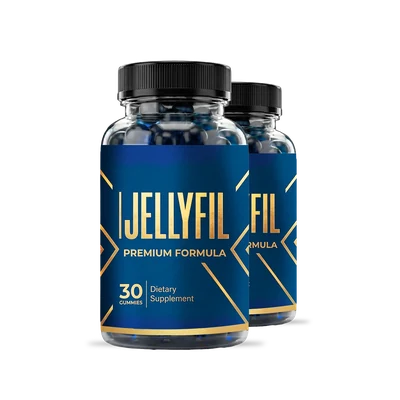
Nine plants, one blend figure, and sixty days from the date of purchase to make up your mind. The three-bottle pack is the first rung with free shipping and it covers ninety days.
From $158 for two bottles to $294 for six, with 60 days on all three
Choose A JellyFil PackChewed, one a day, 30 to a bottle. Batch JEL-26/JE-5655, shipped from the United States.