JellyFil Official Website › Blog › The Plant The Advert Leaves Out
Horny Goat Weed in JellyFil: The Plant the Ad Skips
Yes, JellyFil contains horny goat weed. It is printed last in the nine-plant blend on the bottle and does not appear on the sales page at all. Research on its enzyme activity is the reason a short chat with a clinician makes sense before the first gummy, especially for anyone who already takes a regular medicine.
What PDE5 is, in one paragraph
Phosphodiesterase type 5 is an enzyme that breaks down a signalling molecule called cyclic GMP. Cyclic GMP is what keeps the smooth muscle in a blood vessel relaxed, so when the enzyme clears it, the vessel narrows again.
A PDE5 inhibitor blocks that clearance. The signal persists, the vessel stays relaxed, and blood flow through it rises. That is the whole mechanism behind the best-known erectile-dysfunction prescriptions, and it is also why those prescriptions interact dangerously with nitrates: nitrates raise the same signal from the other end, and the two together can drop blood pressure further than either would alone.
So PDE5 is not an obscure piece of biochemistry. It is the exact point where a supplement ingredient and a prescription can meet.
The bench test that put four plants side by side
In 2008 a group screened four plant extracts traditionally used for male impotence against human recombinant PDE5A1, alongside three isolated compounds. The four were tribulus terrestris, Ferula hermonis, Epimedium brevicornum and cinnamon.
The result was clean. Only the Epimedium extract was active, at eighty per cent inhibition, and only its active principle icariin was active among the isolated compounds. Tribulus terrestris, which appears on far more labels than Epimedium does, showed nothing.
The same paper then modified icariin chemically and produced a derivative whose potency in the enzyme assay was close to sildenafil's, with better selectivity against related enzymes. That is a medicinal-chemistry result rather than a supplement one, and it is the reason the plant keeps being studied.
| Screened against human PDE5 | Result in that assay |
|---|---|
| Epimedium brevicornum extract | Active, 80% inhibition at 50 micrograms per mL |
| Icariin, the isolated compound | Active |
| Tribulus terrestris extract | Not active |
| Ferula hermonis extract | Not active |
| Cinnamomum cassia extract | Not active |
| A modified icariin derivative | Potency close to sildenafil in the assay |
An enzyme assay is a test tube. It establishes that a compound can inhibit an enzyme, and nothing at all about what a plant extract does inside a person at a share of an 82 mg blend.
What followed that result
Two lines of work, and both stayed short of a human trial of the herb.
The first took icariin into cells and into animals, looking at erectile and nerve-related effects. The second was a structure-activity study that isolated eight related flavonoids from Epimedium and mapped which structural features produced the inhibition.
The direction of travel in both is towards isolated compounds at controlled concentrations, which is what you would expect: that is how a promising bench result gets turned into something usable. It is also the opposite direction from a plant extract sharing eighty-two milligrams with eight other plants.
What none of it establishes
Three gaps, and all three matter.
- A test tube is not a man. An enzyme assay uses purified enzyme at controlled concentrations. It says nothing about absorption, metabolism or what reaches the tissue.
- An isolated compound is not an extract. Icariin is one molecule from a plant that contains many, and the concentration in any given extract is not stated on this panel.
- A study concentration is not a dose. Nobody has related the concentrations used in those experiments to a share of an 82 mg nine-plant blend, and this desk will not estimate one.
Set against that, the clinical record for the plants this advertising does name is not stronger. The tribulus meta-analysis pooled eight randomised trials and found questionnaire scores beat placebo while total testosterone showed no difference between groups — the opposite of the mechanism the sales page describes for it.
The advertising keeps a plant whose named mechanism the trials did not confirm, and drops the one plant with a confirmed bench mechanism. That is almost certainly an accident of which names sound better. It is still the clearest reason to read the panel rather than the copy.
What the other eight plants have on the same question
It is fair to ask whether Epimedium is unusual here or whether every plant on this bottle has some mechanism story attached. The answer is that they have stories, and only one of them runs through this particular enzyme.
- L-arginine works upstream, as the raw material the body turns into nitric oxide. Same pathway, opposite end, and the trials that moved anything used five grams a day.
- Maca has the best human data of the nine and it is not a vascular result at all: self-rated desire rose while testosterone did not move.
- Ashwagandha moved hormones in its crossover trial and did not move self-rated vigour or sexual well-being in the same trial.
- Tribulus is sold on a luteinising-hormone story the trials did not confirm, and it was inactive in the enzyme assay above.
- Muira puama and catuaba rest on traditional use and animal work, with no dose-controlled human trial of either bark alone.
- Green tea extract and caffeine are not sold for this at all; they are on the panel and absent from the copy, which is the subject of a different article here.
So the shape of the panel is one plant with a bench mechanism that overlaps a drug, one with a modest human result on desire, one with a hormone result and no symptom result, and six with either a story or a safety note. That is a normal shape for this category, and it is the reason the interaction question attaches to exactly one name rather than to the bottle as a whole.
Every plant on the JellyFil panel is covered on this website
Including the three the sales page leaves out, with the published work behind each one and what it does and does not establish.
From $158 for two bottles to $294 for six, with 60 days on all three
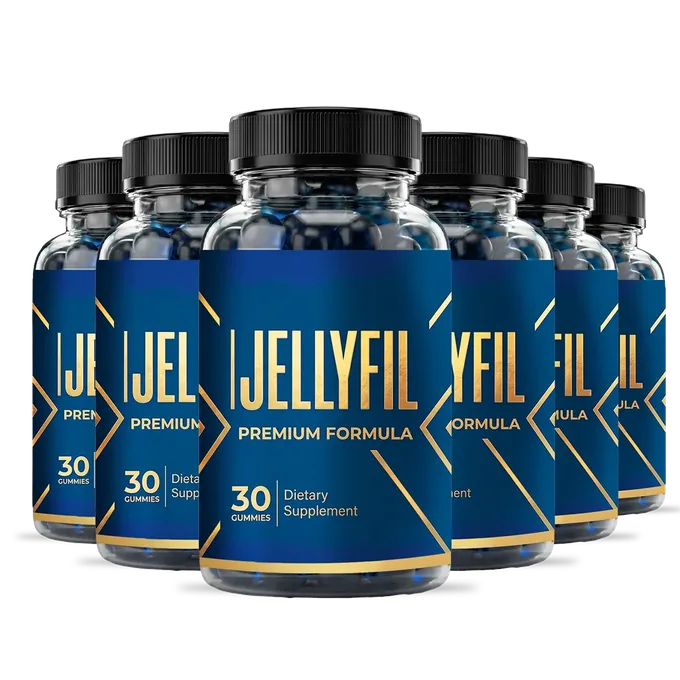
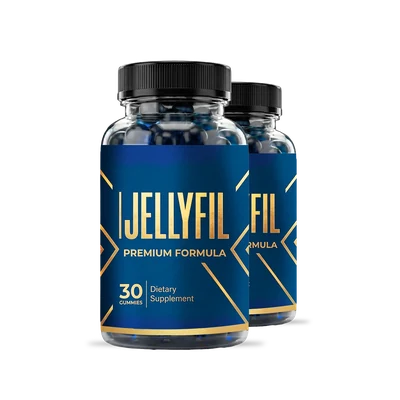
Choose A JellyFil PackChewed, one a day, 30 to a bottle. Batch JEL-26/JE-5655, shipped from the United States.
Why the omission matters anyway
Because of who reads an ingredient list and why.
A man taking a nitrate for angina has usually been told, in plain terms, not to take anything that acts on PDE5. He scans ingredient lists for exactly this. If the list he scans is the six-name version on the sales page, he will not find it, and he will buy a bottle containing a plant whose isolated compound does precisely that.
The amounts here are almost certainly too small to matter. Almost certainly is not the same as measured, and the honest position is that nobody has measured it. That is a reason to ask, not a reason to assume.
There is a second reason, and it is about the category rather than this bottle. Sexual enhancement supplements are the most adulterated corner of the supplement market: reviews of seized and sampled products keep finding undeclared prescription drugs and untested analogues inside products sold as herbal. The class involved is the same one nitrates interact with. A category with that history is a category where a complete ingredient list is worth more than a tidy one.
The conversation worth having
It is short, and naming the plant makes it shorter.
- Say the plant. Horny goat weed, or Epimedium, whichever your clinician recognises faster.
- Say what it is in. A chewable supplement with a proprietary blend of 82 mg across nine plants, with the extract amount not individually stated.
- Say what else you take. Nitrates, blood-pressure medicines and erectile-dysfunction prescriptions are the three that matter here.
- Ask the narrow question. Not is this safe, but is there any reason this specific plant should not sit alongside what I already take.
And there is one situation where the answer is to skip the supplement conversation entirely. Erectile difficulty that is new, that arrived quickly, or that is worsening month by month is treated in the Princeton IV consensus as a cardiovascular marker worth assessing. The vessels involved are small and they show a problem before larger ones do. That is a reason to be examined, and it outranks everything else on this page.
- PDE5 is the enzyme prescription treatments block, and nitrates interact with it.
- Of four plants screened, only Epimedium and its icariin inhibited it; tribulus did not.
- All of that is bench and animal work with isolated compounds.
- Epimedium is printed last in this blend and does not appear in the advertising.
- Name the plant to a clinician if you take a nitrate or an ED prescription.
JellyFil is a dietary supplement, not a treatment for anything. Erectile difficulty that arrived quickly, or that has worsened month by month, is treated in the cardiology consensus on the subject as a cardiovascular marker worth assessing rather than a standalone complaint, because the vessels involved are small and show a problem before larger ones do. MedlinePlus sets out plainly what a clinician will look at. That is an appointment, and no gummy is a substitute for it.
Further reading on this website: the side effects page, which works through all nine plants; the ingredient cards; and who should not buy this, which starts with this exact question.
References
- Dell'Agli M, Galli GV, Dal Cero E, et al. Potent inhibition of human phosphodiesterase-5 by icariin derivatives. J Nat Prod. 2008;71(9):1513-7. Four plants traditionally used for impotence were screened against human PDE5A1. Only Epimedium and its icariin were active; Tribulus terrestris showed nothing. PMID 18778098. https://pubmed.ncbi.nlm.nih.gov/18778098/
- Shindel AW, Xin ZC, Lin G, et al. Erectogenic and neurotrophic effects of icariin, a purified extract of horny goat weed (Epimedium spp.) in vitro and in vivo. J Sex Med. 2010;7(4 Pt 1):1518-28. Purified icariin, in cells and in animals, not the whole herb in a person. PMID 20141584. https://pubmed.ncbi.nlm.nih.gov/20141584/
- Li J, Wu Y, Yu X, et al. Isolation, bioassay and 3D-QSAR analysis of 8-isopentenyl flavonoids from Epimedium sagittatum maxim. as PDE5A inhibitors. Chin Med. 2022;17(1):147. The activity sits in specific isolated flavonoids, which is not the same claim as an extract in a gummy. PMID 36587222. https://pubmed.ncbi.nlm.nih.gov/36587222/
- Suharyani S, Amanda B, Angellee J, et al. Tribulus terrestris for management of patients with erectile dysfunction: a systematic review and meta-analysis of randomized trials. Int J Impot Res. 2026;38(1):11-18. Eight trials: questionnaire scores beat placebo, and total testosterone did not differ between the groups. PMID 40360723. https://pubmed.ncbi.nlm.nih.gov/40360723/
- Rosen RC, Miner M, Burnett AL, et al. Proceedings of PRINCETON IV: PDE5 inhibitors and cardiac health symposium. Sex Med Rev. 2024;12(4):681-709. The consensus that treats erectile difficulty as a cardiovascular marker worth assessing rather than a standalone complaint. PMID 38936840. https://pubmed.ncbi.nlm.nih.gov/38936840/
- Kee CL, Ge X, Gilard V, et al. A review of synthetic phosphodiesterase type 5 inhibitors (PDE-5i) found as adulterants in dietary supplements. J Pharm Biomed Anal. 2018;147:250-277. PMID 28903860. https://pubmed.ncbi.nlm.nih.gov/28903860/