JellyFil Official Website › Blog › What The Maca Trials Measured
What The Maca Trials Actually Measured, And What They Did Not
Maca is the second plant printed on this bottle's panel, and of the nine names on it, maca carries the most human trial data by a wide margin. That is a real distinction, not a marketing one. It is also a much narrower distinction than "maca works," because the trials behind it measured a specific outcome, at a specific dose, over a specific number of weeks, in a specific population, and none of that transfers cleanly to a gummy that states one figure for nine plants together.
Where maca sits on this panel
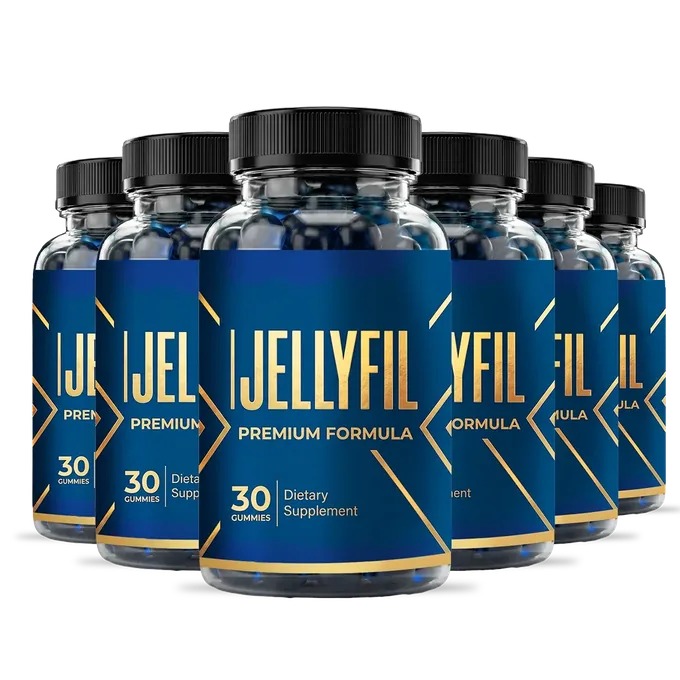
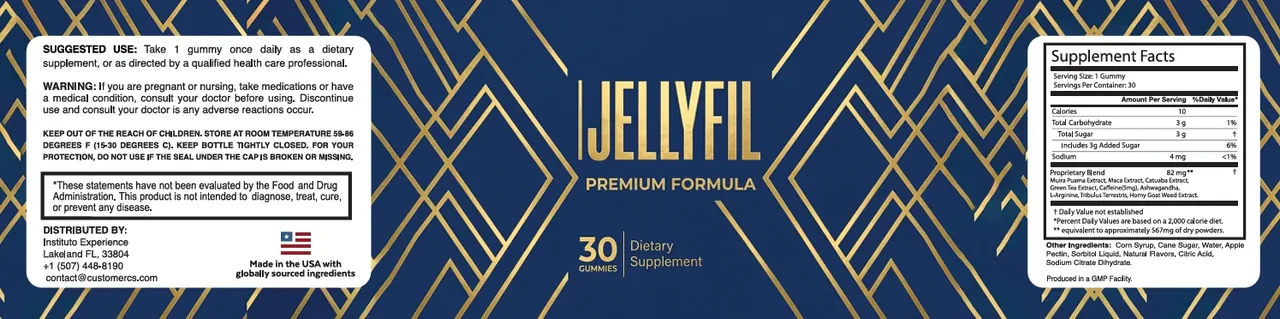
The JellyFil Supplement Facts panel lists Maca Extract (Lepidium meyenii) second among nine plants, inside an 82 mg proprietary blend that the label footnotes as roughly 567 mg of dry powders. Descending order of weight is the rule a proprietary blend has to follow, so second place means maca is the second-heaviest ingredient in the blend, behind muira puama and ahead of the other seven. It does not mean a milligram figure exists for it anywhere. The panel states one number for the whole blend and none for any single plant inside it, which is a point covered in detail on this website's article on counting an ingredient list. This article does something narrower: it goes looking for what the published maca trials actually gave people, and sets that dose next to what an 82 mg blend can plausibly contain.
The 2002 trial that established the desire claim
Most of what gets said about maca and libido traces back to one Peruvian trial published in 2002. It was a twelve-week, double-blind, placebo-controlled, randomised, parallel study, and it was designed with an unusually specific question in mind: does maca improve sexual desire, and if it does, is that improvement riding on mood or on testosterone.
The design was direct. Healthy men aged 21 to 56 were split into three groups: one took 1,500 mg of maca a day, a second took 3,000 mg a day, and a third took a placebo. Every four weeks, for twelve weeks, the men rated their own sexual desire, and were also scored on the Hamilton scales for depression and anxiety, so the researchers could check whether any change in desire was really just a change in mood.
Both maca doses, not just the higher one, were compared against placebo. This is worth pausing on because a two-dose design lets a trial show whether more of something does more, which most single-dose supplement trials cannot do.
| Detail | What the 2002 trial used |
|---|---|
| Design | 12-week, double-blind, placebo-controlled, randomised, parallel groups |
| Population | Healthy men, aged 21–56 |
| Doses tested | 1,500 mg per day and 3,000 mg per day, each against placebo |
| Primary measure | Self-rated sexual desire, at weeks 4, 8 and 12 |
| Also measured | Hamilton depression score, Hamilton anxiety score, serum testosterone, serum oestradiol |
Gonzales GF, Cordova A, Vega K, et al. Andrologia. 2002. The trial this section describes; full citation in the references below.
What eight weeks showed, and what twelve added
Nothing moved at four weeks. The self-rated improvement in sexual desire first separated from placebo at eight weeks, and it was still present at twelve. That timeline is not a throwaway detail. It is the same eight-to-twelve-week window this website's article on early expectations draws from more generally, and maca's own trial is one of the sources behind that argument: the plant with this bottle's strongest human data did not show anything in its own trial until roughly two months in, at doses measured in grams rather than in a share of 82 milligrams.
A statistical technique called logistic regression let the researchers ask a follow-up question directly: was the desire effect actually just a side door into mood, or into a hormone change. The answer, stated plainly in the paper, was no on both counts. The improvement in sexual desire held up as an independent effect once depression scores, anxiety scores, testosterone and oestradiol were all accounted for separately.
The testosterone question, asked on purpose
The word "testosterone" attaches itself to almost every plant sold in this category, and maca is no exception in the advertising built around it. The 2002 trial is unusual because it measured testosterone specifically to test that assumption, rather than to support it.
Serum testosterone and oestradiol were not different between the maca groups and placebo at any of the three time points. The paper's own title says this outright: an effect on sexual desire "and its absent relationship with serum testosterone levels." A later review of maca's pharmacology by the same Peruvian research group, working from a wider body of trial and animal data, reaches the same position: maca's measured effects on desire, mood and semen parameters showed up without moving testosterone, oestradiol, luteinising hormone, follicle-stimulating hormone or prolactin.
A hormone-free desire effect for maca lines up with what this website has already noted about ashwagandha, the sixth plant on this same panel: in its own crossover trial, ashwagandha moved hormones without moving self-rated vigour or sexual well-being. Maca does close to the opposite — desire moved and hormones did not. Two plants on the same nine-name list, pulling in different directions on the same question, is a reason to read each one's own trial rather than assume a shared mechanism.
A fourteen-day trial in a different population
A separate, much smaller study took a different route entirely: fourteen days of maca extract in trained male cyclists, in a randomised cross-over design against placebo, with a 40 km time-trial and a sexual desire inventory completed at each visit.
Two results came out of it. Cycling performance improved compared with the men's own baseline test, but not compared with the placebo trial after supplementation, which is a meaningfully weaker result than it first sounds — a true placebo-controlled effect has to beat the placebo arm, not just beat where the rider started. Self-rated sexual desire did clear that higher bar: it improved compared with baseline and compared with the placebo trial.
Eight participants is a pilot-sized study, and the paper describes itself as exactly that: a pilot. It is useful for a different reason than statistical power. It shows a sexual-desire effect appearing in fourteen days rather than eight weeks, in a young, fit, athletic population that has almost nothing in common with the general buyer of a vitality gummy. Two trials, two timelines, two populations, one plant. That spread is itself informative about how unsettled the dosing and timeline questions still are.
What a systematic review found when it added them up
In 2010, a team that included a specialist in evidence review searched seventeen databases for every randomised trial of maca against placebo for sexual function, in either healthy people or people with diagnosed sexual dysfunction. Four trials met their inclusion criteria.
Two of the four showed a positive effect on sexual dysfunction or desire, in healthy menopausal women and healthy adult men respectively. A third, in healthy cyclists, found nothing. A fourth, in men with diagnosed erectile dysfunction, found a significant effect on a standard erectile-function questionnaire. The review's own conclusion is carefully worded: limited evidence for the effectiveness of maca in improving sexual function, with the number of trials, the total sample size and the methodological quality all flagged as too small to support a firm conclusion.
- Two of four trials found a positive effect on desire or sexual dysfunction.
- One found no effect, in athletes, over fourteen days.
- One found an effect on a diagnosed-dysfunction questionnaire, a different population from a general supplement buyer.
- The reviewers call the overall evidence limited, not settled, mainly because there are so few trials to pool.
Limited evidence is not the same sentence as no evidence, and it is not the same sentence as proven. It is the sentence a careful reviewer writes when a plant has more going for it than most of its neighbours on a proprietary-blend panel, but not nearly enough trials to call the question closed.
What none of this establishes about a gummy
Three gaps sit between these trials and a chewable that states 82 mg for nine plants together.
- Dose. The 2002 trial used 1,500 mg or 3,000 mg of maca a day, on its own. That is between eighteen and thirty-six times the entire blend weight on this bottle, before the other eight plants take their share of it. No published trial has tested maca at a milligram amount anywhere near what an 82 mg, nine-plant blend could contain.
- Form. The 2002 trial used what the paper calls Maca Gelatinizada, a specific processed form of the root. This bottle's panel states "Maca Extract" and nothing about how it was processed or standardised. Different preparations of the same plant are not interchangeable by default; the site's own dose-arithmetic article covers this gap for the blend as a whole, and it applies to maca specifically here.
- Combination. Every trial above tested maca alone against a placebo. None tested it alongside eight other plants and a stimulant, which is the product actually being sold, and which no published trial has examined as a combination.
None of this means maca is inert at a smaller dose. It means nobody has published a trial that answers the question, and an amount that has never been tested is not the same claim as an amount that has been tested and shown to do nothing. The honest position sits between those two, and it is where this article leaves it.
Reading the trials against this panel
Put together, here is what a fair reading supports and what it does not.
Supported: maca has more randomised human trial data attached to it than any other plant on this bottle's panel, several of the largest published trials measured sexual desire specifically rather than a vaguer "vitality" outcome, and more than one of them found an effect that held up against a placebo arm rather than only against the participants' own starting point.
Not supported: that any of those trials tested the dose inside this gummy, that the maca in this blend matches the processed form those trials used, that the timeline in this bottle's own marketing matches the six-to-twelve-week window those trials actually ran, or that testosterone has anything to do with why some men in those trials reported feeling different.
A blend total is a real regulatory format, not a trick, and it is explained in full on the supplement facts page. What it costs a reader, every time, is the ability to hold a single ingredient's own trial dose up against what is actually in the bottle. For maca, more than for most of the other eight plants here, that trial dose is worth knowing, precisely because it is so much larger than 82 milligrams could ever divide up to be.
Every plant on the JellyFil panel is covered on this website
Including what its own published trials tested, at what dose, and what those trials did not measure.
From $158 for two bottles to $294 for six, with 60 days on all three
Order JellyFilChewed, one a day, 30 to a bottle.
JellyFil is a dietary supplement, not a treatment for anything, and none of the maca literature above was generated using this product. Anyone taking a prescription medicine, or who is pregnant or breastfeeding, should check with a clinician before adding any new supplement, maca included. MedlinePlus keeps a plain-English summary of maca's studied uses and cautions.
Further reading on this website: what eighty-two milligrams buys, which sets trial doses for several of these plants against the blend total in one place; nine on the bottle, six in the advert, on how to read the ingredient list itself; and the ingredient cards for a shorter summary of all nine plants.
References
- Gonzales GF, Cordova A, Vega K, Chung A, Villena A, Gonez C, Castillo S. Effect of Lepidium meyenii (MACA) on sexual desire and its absent relationship with serum testosterone levels in adult healthy men. Andrologia. 2002;34(6):367-72. Twelve weeks, 1,500 mg or 3,000 mg daily against placebo; desire improved from week 8, testosterone and oestradiol unchanged. PMID 12472620. https://pubmed.ncbi.nlm.nih.gov/12472620/
- Stone M, Ibarra A, Roller M, Zangara A, Stevenson E. A pilot investigation into the effect of maca supplementation on physical activity and sexual desire in sportsmen. J Ethnopharmacol. 2009;126(3):574-6. Fourteen days, cross-over design, eight trained cyclists; sexual desire improved against both baseline and placebo. PMID 19781622. https://pubmed.ncbi.nlm.nih.gov/19781622/
- Shin BC, Lee MS, Yang EJ, Lim HS, Ernst E. Maca (L. meyenii) for improving sexual function: a systematic review. BMC Complement Altern Med. 2010;10:44. Four randomised trials met inclusion criteria; evidence described as limited rather than settled. PMID 20691074. https://pubmed.ncbi.nlm.nih.gov/20691074/
- Gonzales GF, Gonzales C, Gonzales-Castaneda C. Lepidium meyenii (Maca): a plant from the highlands of Peru--from tradition to science. Forsch Komplementmed. 2009;16(6):373-80. Review of maca's pharmacology across colour variants; notes desire and mood effects without changes in testosterone, oestradiol, LH, FSH or prolactin. PMID 20090350. https://pubmed.ncbi.nlm.nih.gov/20090350/
- 21 CFR 101.36, Nutrition labeling of dietary supplements. US Government Publishing Office. The rule allowing one stated total for a proprietary blend, listed in descending order of weight. https://www.govinfo.gov/content/pkg/CFR-2023-title21-vol2/xml/CFR-2023-title21-vol2-sec101-36.xml