JellyFil Official Website › Blog › Nine On The Bottle, Six In The Advert
JellyFil Ingredients: Nine on the Label, Six in the Ad
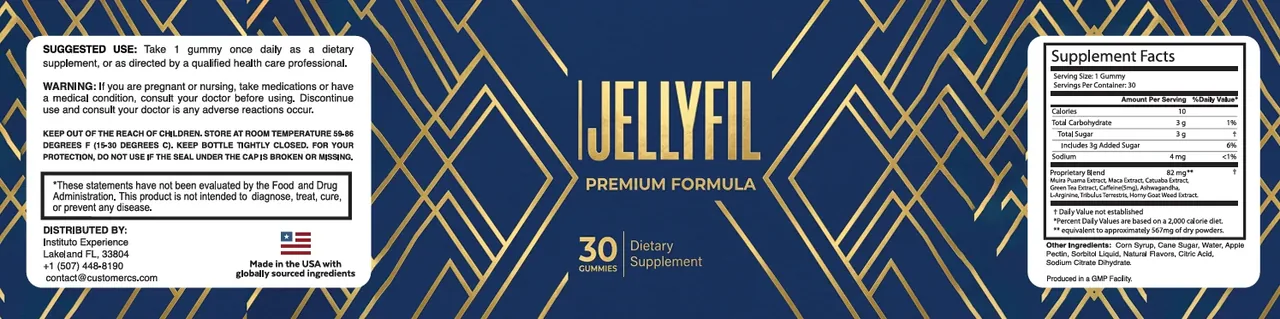
JellyFil ingredients are nine names on the label, while the advertising names only six. Green tea extract, caffeine and horny goat weed are missing from the ad. All nine share one 82 mg proprietary blend, and only caffeine has its own figure, 5 mg a gummy, so the panel is the best place to check.
Two documents, one bottle
Every supplement you can buy carries two accounts of itself. One is the Supplement Facts panel: a regulated statement, printed on the container, with a legally defined format. The other is everything else — the sales page, the ingredient graphic, the bullet list in the listing, the copy on the box.
The panel is the one with rules. It has to declare the serving, the servings per container, the nutrients that must be declared and their amounts, and then the other ingredients in descending order of weight. Where a manufacturer uses a proprietary blend it may state one total for the blend and list the contents in descending order without an amount against each, which is explicitly provided for in the rule.
The advertising has none of those obligations. It can name three ingredients or thirty, in any order, with any emphasis. Nothing requires it to be a complete list, and nothing stops it being one. It usually is not.
What happens on this bottle
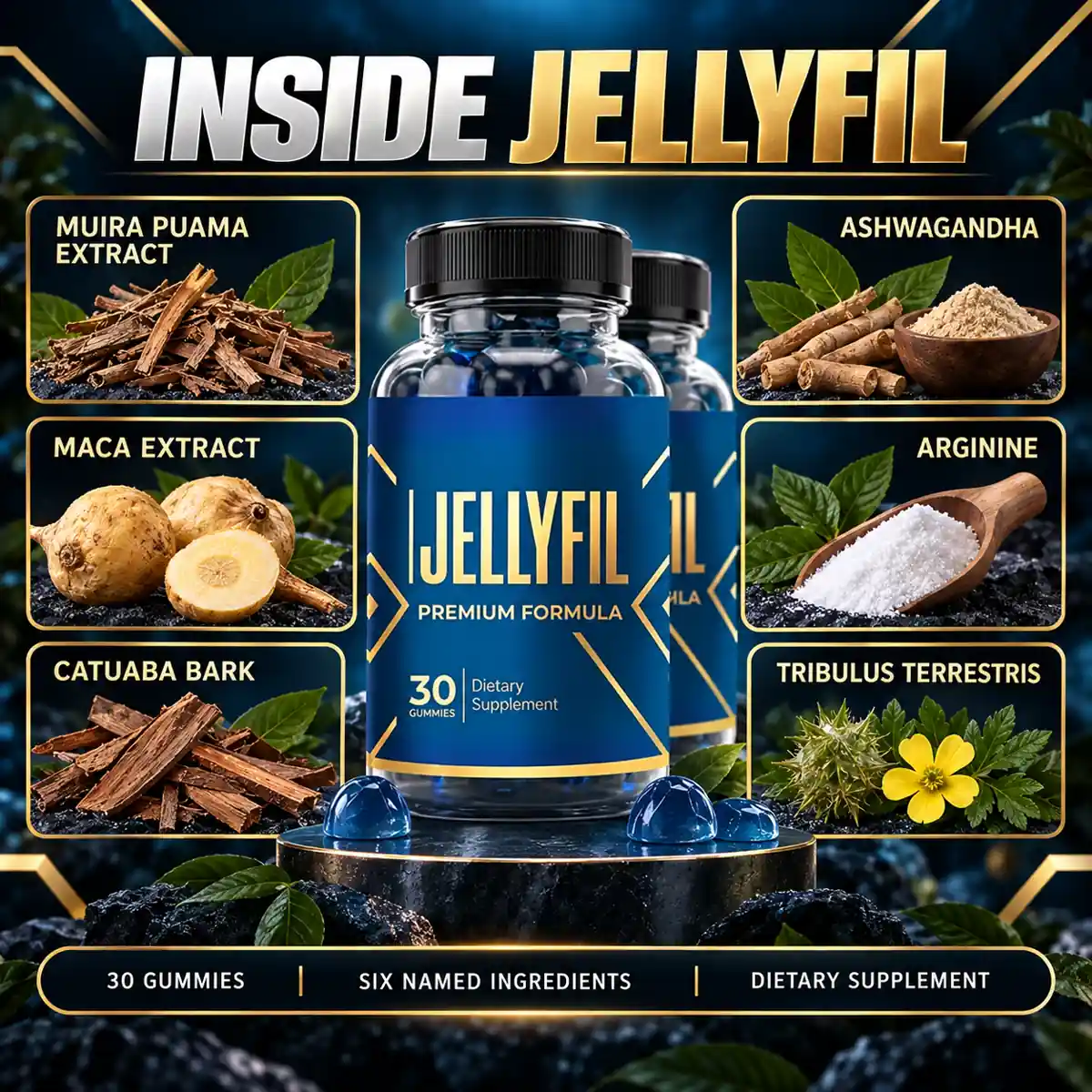
The seller's ingredient section names six plants: muira puama, maca, catuaba bark, ashwagandha, arginine and tribulus terrestris. Each gets a paragraph explaining what it does. Read that section and you would come away believing you had the list.
The panel on the bottle names nine. The three extra are green tea extract, caffeine at five milligrams, and horny goat weed extract. They are inside the same proprietary blend as the other six, printed in the same line, in the same descending order of weight.
Nothing about that is illegal and nothing about it is unusual. It is worth noticing anyway, because the three that were dropped are not a random three.
| Plant, in panel order | On the bottle | In the advertising |
|---|---|---|
| Muira Puama Extract | Yes | Yes |
| Maca Extract | Yes | Yes |
| Catuaba Extract | Yes | Yes |
| Green Tea Extract | Yes | No |
| Caffeine | Yes | No |
| Ashwagandha | Yes | Yes |
| L-Arginine | Yes | Yes |
| Tribulus Terrestris | Yes | Yes |
| Horny Goat Weed Extract | Yes | No |
The panel order is descending order of weight, which is what the labelling rule requires of a proprietary blend. The three marked No appear nowhere in the seller's ingredient copy.
Why an advertiser drops a name
There are three ordinary reasons, and none of them is a conspiracy.
The first is space. An ingredient section with a picture and a paragraph for each name gets long, and six is a comfortable number for a page somebody has to scroll.
The second is story. Marketing copy is built around a narrative — ancient Amazonian bark, Peruvian root, Indian adaptogen — and an ingredient that does not fit the narrative is easier to leave out than to explain. Caffeine does not sound ancient.
The third is caution. An ingredient with a safety literature attached is an ingredient that invites questions, and a sales page is not written to invite questions.
- Space explains dropping a ninth name, but not which ninth.
- Story explains dropping caffeine, which belongs to a different genre entirely.
- Caution explains dropping green tea extract and horny goat weed, which are the two with the most to say about safety and interaction.
- Nothing explains dropping all three and keeping tribulus, which has the weakest evidence of the nine.
The three that got dropped here
Green tea extract
It has the largest safety literature of any plant on this panel. The US Pharmacopeia review of green tea extract and the liver is the reason USP recommends a cautionary statement on products carrying it. A reader who has been told to avoid it, or who takes something else hard on the liver, needs to see it on the ingredient list before buying rather than on the bottle afterwards.
Caffeine
Five milligrams a gummy, and the only member of the blend with a figure of its own. It is far too small to do the work the sports-nutrition literature describes, which puts a measurable dose at three to six milligrams per kilogram of bodyweight. But an undeclared stimulant, even a tiny one, is exactly the kind of thing a buyer avoiding stimulants would want to know about, and it is the single easiest thing on this panel to state accurately.
Horny goat weed extract
The most pharmacologically interesting name on the bottle. When four plants traditionally used for impotence were screened against human PDE5, only Epimedium and its icariin were active — and tribulus, which the advertising does name, showed nothing in the same assay.
So the advertising kept a plant the bench test found inactive and dropped the one it found active. That is almost certainly accidental, and it is still the clearest single illustration of why the label is worth more than the copy.
When an advertisement and a panel disagree about what is in a product, the panel is the fact. It is the regulated statement on the container you receive, it carries the amounts, and it is the document written last.
What an advertisement is allowed to say instead
The rules that govern a supplement's marketing are about the CLAIMS rather than the list. A dietary supplement may make what are called structure-function statements: that an ingredient supports a normal function of the body. It may not say the product treats, prevents or cures a disease, and wherever it makes a structure-function claim it has to carry the FDA disclaimer alongside.
That is why the copy on a page like this reaches for words such as supports, promotes and helps maintain, and why a page that says treats is in different territory entirely. It is also why the ingredient count is not covered: nothing in the claims framework requires an advertisement to list everything, because the list is the panel's job.
The practical consequence is a division of labour most buyers have never been told about. The advertising tells you what the seller wants the product associated with. The panel tells you what is in it. Reading only the first is like reading a film poster instead of the running time.
- Supports, promotes, helps maintain — structure-function language, permitted with the disclaimer.
- Treats, cures, prevents — disease claims, not permitted on a supplement.
- Clinically studied ingredient — a claim about an ingredient, which says nothing about the amount in this product.
- Nine premium botanicals — a count, and the panel is where you check it.
Four label claims are printed for this bottle: libido and sexual desire, circulation and sexual health, physical stamina and vigour, and confidence in performance. All four are structure-function statements and all four are the ceiling for what this website says. What the seller's ingredient copy adds on top of them — that the formula naturally elevates testosterone, for instance — is not carried onto these pages, and the about page lists the three sentences refused and why.
Read the whole JellyFil panel before you decide
Nine plants, one blend figure and five milligrams of caffeine, printed here exactly as the bottle prints them, including the three the sales page leaves out.
From $158 for two bottles to $294 for six, with 60 days on all three
Choose A JellyFil PackChewed, one a day, 30 to a bottle. Batch JEL-26/JE-5655, shipped from the United States.
How to count any ingredient list in ninety seconds
This is a habit rather than an analysis, and it works on any product in any category.
- Find the panel, not the sales page. On a product page that means the label photograph; in a shop it means turning the bottle around.
- Count the names inside the blend. Not the bullet points on the front. The names inside the parenthesis after the blend total.
- Compare that count with the advertising. If they match, the seller has told you the whole list and that is worth something on its own.
- Read the extras first. Anything on the panel and not in the copy is where the interesting information lives, in both directions.
- Look for a stimulant. Caffeine, guarana, green tea, yerba mate. All four are stimulants and only one of them sounds like one.
- Note the blend total. It is a ceiling: nothing inside an eighty-milligram blend is present at five hundred milligrams, whatever the copy implies.
What this does to the rest of the shelf
Once you have counted one list this way, the habit becomes hard to switch off, and the thing it reveals most often is not dishonesty. It is incompleteness.
The audit of the thirty-two best-selling men's formulas pulled thirty-seven distinct ingredients out of products whose front labels advertise far fewer, and found that sixty-eight per cent of those ingredients had contradictory, negative or absent randomised evidence behind them. No finished product in the set had a published trial of its own.
That is the context a count belongs in. An advertisement that names six of nine is not hiding something sinister; it is doing what advertisements do. The panel is the document that tells you what you are actually buying, and reading it takes about as long as reading the bullet points does.
- The panel is regulated. The advertising is not.
- Count the names inside the blend, not the bullets on the front.
- Anything on the panel and missing from the copy is worth reading first.
- A blend total is a ceiling on every ingredient inside it.
- On this bottle the count is nine against six, and the three missing are green tea extract, caffeine and horny goat weed extract.
JellyFil is a dietary supplement, not a treatment for anything. Erectile difficulty that arrived quickly, or that has worsened month by month, is treated in the cardiology consensus on the subject as a cardiovascular marker worth assessing rather than a standalone complaint, because the vessels involved are small and show a problem before larger ones do. MedlinePlus sets out plainly what a clinician will look at. That is an appointment, and no gummy is a substitute for it.
Further reading on this website: the full panel, reproduced line by line; the nine plants with the dose every published trial used; and the seal wall, which is the same exercise applied to the marks rather than to the names.
References
- 21 CFR 101.36, Nutrition labeling of dietary supplements. US Government Publishing Office. The rule that lets a label state one total for a proprietary blend and list its contents in descending order of weight without an amount for each. https://www.govinfo.gov/content/pkg/CFR-2023-title21-vol2/xml/CFR-2023-title21-vol2-sec101-36.xml
- Oketch-Rabah HA, Roe AL, Rider CV, et al. United States Pharmacopeia (USP) comprehensive review of the hepatotoxicity of green tea extracts. Toxicol Rep. 2020;7:386-402. The review behind the cautionary labelling statement USP now recommends for green tea extract products. PMID 32140423. https://pubmed.ncbi.nlm.nih.gov/32140423/
- Dell'Agli M, Galli GV, Dal Cero E, et al. Potent inhibition of human phosphodiesterase-5 by icariin derivatives. J Nat Prod. 2008;71(9):1513-7. Four plants traditionally used for impotence were screened against human PDE5A1. Only Epimedium and its icariin were active; Tribulus terrestris showed nothing. PMID 18778098. https://pubmed.ncbi.nlm.nih.gov/18778098/
- Kuchakulla M, Narasimman M, Soni Y, et al. A systematic review and evidence-based analysis of ingredients in popular male testosterone and erectile dysfunction supplements. Int J Impot Res. 2021;33(3):311-317. Thirty-seven ingredients across the thirty-two best-selling products; no finished product had a published trial of its own, and 68% of ingredients scored C or D for contradictory, negative or absent evidence. PMID 32358510. https://pubmed.ncbi.nlm.nih.gov/32358510/
- Lowery LM, Anderson DE, Scanlon KF, et al. International society of sports nutrition position stand: coffee and sports performance. J Int Soc Sports Nutr. 2023;20(1):2237952. The performance range in the literature is 3-6 mg of caffeine per kilogram of bodyweight, taken about an hour beforehand. PMID 37498180. https://pubmed.ncbi.nlm.nih.gov/37498180/