Cardio vs Weightlifting for Testosterone and Libido
Is cardio or weightlifting better for testosterone and libido?
Both help, in different ways. Resistance training gives acute testosterone spikes and, more importantly, long-term body-composition gains that support healthy baseline levels. Cardio protects the heart, endothelium and blood flow that erections depend on. The mistake is going to extremes: overtraining raises cortisol and can suppress testosterone. Regular mixed training beats maxing out either one.
- Weights: short-term T spikes plus durable body-composition benefits.
- Cardio: protects blood vessels and the circulation erections rely on.
- The trap: too much volume with too little recovery raises cortisol and lowers drive.

Two tools, two jobs
Cardio versus weights is framed as a rivalry, but for male vitality they are complementary tools doing different jobs. Weightlifting is mainly about hormones and body composition. Cardiovascular exercise is mainly about the plumbing — the heart and blood vessels that turn desire into function. An erection is fundamentally a circulatory event, so anything that improves blood flow is working directly on performance, while anything that improves body composition is working on the hormonal backdrop. You want both, and the interesting questions are about dose and balance, not which one wins.
Weightlifting: the spike and the real prize
Lift something heavy for a hard set of compound movements — squats, deadlifts, presses, rows — and your body responds with a short-term rise in testosterone and growth hormone. This acute spike is real and gets a lot of attention, but it fades within an hour or so and is not where the lasting benefit lives. Do not train chasing the post-workout bump.
The durable prize is what consistent resistance training does to your body over months. It builds muscle and reduces fat, and body composition is one of the strongest everyday influences on a man's baseline testosterone. Excess fat, especially around the midsection, promotes the conversion of testosterone to estrogen and drags hormones the wrong way; muscle does the opposite. So the man who lifts twice a week for a year does far more for his testosterone through the body he builds than through any single session's hormone flicker. The habit is the intervention.
The acute testosterone spike from a hard lift is a footnote. The body composition you build over months is the headline.
Cardio: the blood-flow story
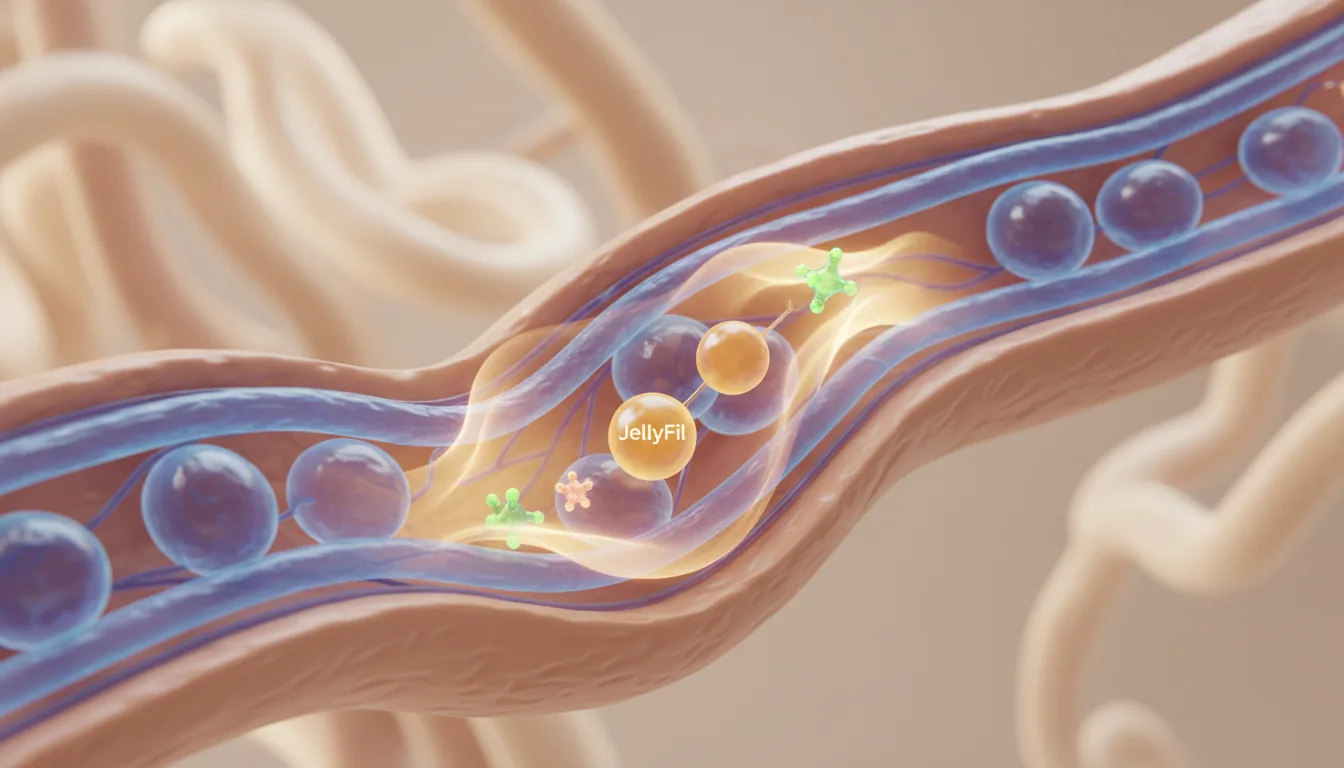
If weights own the hormonal side, cardio owns the circulatory side — and circulation is where erections are won or lost. Regular aerobic exercise strengthens the heart and keeps the endothelium, the delicate lining of your blood vessels, healthy and responsive. That lining is what produces nitric oxide, the signal that relaxes arteries and lets blood flow into the erectile tissue. A healthy endothelium is, quite literally, the machinery of a firm erection, which is why cardiovascular fitness and erectile function track so closely.
Cardio also helps control body fat and lowers stress, so it supports the hormonal side too. The nitric-oxide pathway it protects is the same one JellyFil's L-Arginine targets — exercise builds the road, and the amino acid supports the traffic on it. For most men, the worry that cardio "kills gains" or tanks testosterone is overblown; moderate cardio is one of the best things you can do for the blood flow behind performance.
The overtraining trap: when more becomes less
Here is where the nuance matters, because more is not always better. The clearest way to hurt your testosterone with exercise is to overtrain — to pile on heavy volume without enough recovery. This is most associated with extreme endurance training, where very high mileage combined with under-eating and poor recovery can keep cortisol chronically elevated and push testosterone down. But it can happen with excessive lifting too, especially when sleep and nutrition do not keep pace with the training load.
Cortisol is the mechanism. In short bursts, the stress hormone is useful; chronically elevated, it works against testosterone and drains the energy and mood that desire depends on. The warning signs are worth knowing: stalled or reversing progress, disrupted sleep, persistent fatigue, irritability, frequent illness and a fading libido. When those appear, the answer is counterintuitive — you need more rest, not more effort. This is also where an adaptogen fits the picture: JellyFil's ashwagandha is included specifically because human trials link it to lower cortisol, the exact hormone overtraining drives up. On the training side itself, a systematic review and meta-analysis of exercise training and resting testosterone concentrations is the fairest summary of what structured activity does to baseline hormone levels in men who were not previously active.
The sweet spot: a mixed, sustainable routine
Stack it all up and the evidence points to balance, not extremes. A practical template for most men looks like this:
- Two to four strength sessions a week, built around compound lifts, to support testosterone and body composition.
- Regular moderate cardio — brisk walking, cycling, swimming or intervals — to protect the heart and the blood flow behind erections. General guidance of roughly 150 minutes of moderate activity a week is a sensible floor.
- Genuine rest days, because recovery is when adaptation actually happens.
The exact split matters less than consistency and sustainability. A moderate routine you keep for years beats a punishing one you burn out on in two months.
Recovery is where the gains land
Training is the stimulus; recovery is where the benefit is banked. Two levers do most of the work. The first is sleep — most of a man's daily testosterone is released overnight, so skimping on sleep undermines the very hormone your training is trying to support, a link we cover in sleep quality and erection quality. The second is not sabotaging your effort with the obvious drags; heavy drinking in particular blunts recovery, sleep and testosterone all at once, as we explain in alcohol and libido. Train hard, then let your body cash the cheque.
Where JellyFil fits
Exercise is the driver here; a supplement is support around it. JellyFil is built to complement a balanced routine rather than replace it: L-Arginine supports the same nitric-oxide pathway your cardio protects, ashwagandha targets the cortisol that overtraining drives up, and Maca sits on the energy and stamina side. It is daily support for men who are already doing the work, not a substitute for it. For the wider, skeptical view of the category, read our honest guide to male-enhancement gummies.
Related reading
- Endothelial Health and Erections in Men
- Belly Fat and Testosterone in Men
- Sleep Quality and Erection Quality: The Real Link
- Alcohol and Libido: How Drinking Affects Erections
Support the work you're already doing
JellyFil pairs blood-flow, energy and cortisol-supporting actives in one daily gummy — every ingredient named on the label, with today's official-store pricing and a 60-day guarantee.
Order NowFrequently asked questions
Does lifting weights raise testosterone?
Yes, in two ways. A hard resistance session produces a short-lived spike in testosterone that fades within an hour or so, which is interesting but not the main event. The bigger win is long term: consistent strength training builds muscle and cuts fat, and that better body composition supports healthier baseline testosterone over months. The durable benefit comes from the training habit, not the post-workout spike.
Is cardio bad for testosterone?
No, moderate cardio is good for the systems male performance depends on. It strengthens the heart and blood vessels that erections rely on, helps control body fat, and lowers stress. The only caveat is extreme, excessive endurance training with too little recovery, which can raise cortisol and suppress testosterone. For nearly all men, regular cardio helps far more than it could ever hurt.
Can overtraining lower my sex drive?
Yes. Overtraining, meaning heavy training volume without enough recovery, keeps cortisol elevated and can suppress testosterone, and it drains the energy and mood that desire depends on. Warning signs include stalled progress, poor sleep, persistent fatigue, irritability and a fading libido. The fix is usually more rest, not more effort: deload, sleep, and eat enough, and drive typically returns.
What's the best exercise mix for male vitality?
For most men, a blend beats either extreme. Aim for two to four strength sessions a week to support testosterone and body composition, plus regular moderate cardio to protect the heart and blood flow behind erections. Build in genuine rest days. The sweet spot is consistent, mixed training you can sustain, not maximal volume in either direction that outruns your recovery.
References
- Potter NJ et al. Effects of Exercise Training on Resting Testosterone Concentrations in Insufficiently Active Men: A Systematic Review and Meta-Analysis. J Strength Cond Res. 2021. PMID: 35134000.
- Corona G et al. Body weight loss reverts obesity-associated hypogonadotropic hypogonadism: a systematic review and meta-analysis. Eur J Endocrinol. 2013. PMID: 23482592.
- Centers for Disease Control and Prevention — Physical Activity Guidelines for Adults.
- MedlinePlus (U.S. National Library of Medicine) — Exercise and Physical Fitness.