Ashwagandha, Cortisol and Testosterone in Men
The short version
Of all the adaptogens that end up in men's formulas, ashwagandha (Withania somnifera) has the most human research behind it. Several controlled trials report that it lowers the stress hormone cortisol and, in some studies of stressed or active men, modestly supports testosterone. The reason it belongs in a vitality product is that stress and hormones are linked: chronically high cortisol works against testosterone, drive and recovery.
- Best supported: reduced perceived stress and lower cortisol.
- Promising: small testosterone increases, mainly in stressed or older men.
- Caveat: many trials are small and industry-linked, so read the effect sizes, not the headlines.

Why cortisol and testosterone are two ends of one seesaw
Cortisol is your primary stress hormone. In short bursts it is useful — it mobilises energy and sharpens focus. The trouble is chronic elevation. When cortisol stays high for weeks and months, it is associated with poorer sleep, blunted recovery and a suppressed drive to do almost anything, intimacy included. Testosterone tends to move in the opposite direction: the two hormones share upstream resources and regulatory signals, so a body stuck in a high-stress state is rarely a body producing its best hormonal output.
That is the logic behind putting an adaptogen in a men's formula. Rather than trying to whip testosterone upward directly, ashwagandha works on the stress side of the seesaw. Lower the chronic cortisol load and you remove a headwind that has been quietly working against drive, energy and confidence.
Adaptogens do not add stimulation. They aim to lower the stress load your body is carrying — which is the opposite of a caffeine hit.
What the human trials actually found
Ashwagandha is unusual among botanicals in having repeated randomised, placebo-controlled trials, most using standardised root extracts. Across this literature, the most consistent finding is a reduction in perceived stress and in measured cortisol. The most-cited example is a prospective, randomised, double-blind, placebo-controlled study of a high-concentration full-spectrum root extract, which reported reduced stress scores and lower serum cortisol over a two-month course. A later randomised, double-blind investigation into the stress-relieving and pharmacological actions of an ashwagandha extract examined stress relief and hormonal markers together in adults. Sleep quality and anxiety scores frequently improve alongside.
On testosterone, the picture is real but more modest. Trials in stressed men, older men, and men on a resistance-training programme have reported increases in testosterone versus placebo — a randomised controlled trial examining ashwagandha supplementation on muscle strength and recovery is the usual reference point for the training context. On fertility endpoints, an evidence-based systematic review and meta-analysis of Withania somnifera in male infertility pooled the semen-parameter studies. The effects are meaningful enough to take seriously and small enough that no honest write-up should imply a dramatic hormonal transformation.
What ashwagandha does and does not do
Reading the trials rather than the marketing gives a narrower and more useful picture. It is worth separating the two columns explicitly.
| What the evidence supports | What it does not support |
|---|---|
| Lower self-reported stress and lower measured cortisol over 8 to 12 weeks | An immediate calming effect from a single dose |
| Improved sleep quality and anxiety scores in stressed adults | Treatment for a diagnosed anxiety disorder or insomnia |
| Modest testosterone increases, mainly in stressed, older or training men | Restoring testosterone in men with clinical hypogonadism |
| Improved semen parameters in the male-fertility studies | A fertility treatment, or a substitute for andrology care |
| Good tolerability across the trial populations studied | Established safety in pregnancy or alongside thyroid medication |
The pattern is consistent: ashwagandha is best evidenced as a stress-load ingredient with a secondary hormonal signal, in people who had elevated stress to begin with. That is a real claim. It is simply a smaller one than most labels imply.
How the mechanism is thought to work
The proposed mechanism runs through the hypothalamic-pituitary-adrenal axis — the feedback loop that governs cortisol release. Ashwagandha's withanolides are thought to dampen the output of that axis under chronic stress rather than to block cortisol directly, which is why the effect accumulates over weeks and why it tends to be larger in people whose stress response was over-active to begin with. Someone with an unremarkable stress load has less to correct, and the trials reflect that.
That mechanism also explains the shape of the testosterone finding. Cortisol and testosterone are governed by parallel axes that compete for the body's resources under sustained stress. If ashwagandha lowers the chronic stress signal, testosterone is not being pushed upward so much as released from a suppressive influence. It is a permissive effect rather than a stimulatory one — which is precisely why the increases are modest, and why they are largest in the men who were most stressed. For the other side of the same hormonal story, see our piece on belly fat and low testosterone.
How to take ashwagandha sensibly
The practical guidance follows the trial protocols rather than the label copy.
- Give it eight weeks. Almost every positive result was measured at 8 to 12 weeks of daily use. Judging it after ten days is judging it before the studied window opens.
- Take it daily, not situationally. There is no established acute dose, so treating it as a pre-event calming aid does not reproduce anything that has been tested.
- Check the extract, not just the plant name. The trials used standardised root extracts with a stated withanolide content. Our guide to what to look for on an ashwagandha label covers how to read that.
- Fix sleep first. An adaptogen working against a four-hour sleep habit is fighting the wrong battle, and sleep does far more for the same hormones — as our piece on sleep quality and erection quality sets out.
- Raise it with your doctor if you take thyroid medication, sedatives or immunosuppressants, or if you manage any health condition. This is general information, not medical advice.

The caveats worth stating out loud
- Small samples. Many trials enrol a few dozen participants over 8 to 12 weeks. That is enough to detect an effect but not enough to settle the size of it.
- Funding. A good share of the best-known studies were supported by companies that sell the standardised extract. That does not make the results fake, but it is a reason to weight independent replication more heavily.
- Who benefits most. The clearest gains show up in people who were stressed, sleeping poorly, or older to begin with. If your stress and hormones are already in good shape, expect less.
- Not for everyone. Ashwagandha can affect thyroid hormones and interacts with sedatives and some medications; it is generally advised against in pregnancy and for people with certain conditions.
How JellyFil uses ashwagandha
In JellyFil, ashwagandha is the calm-and-hormones ingredient. It works on the stress side while L-Arginine handles circulation and Maca supports energy and stamina, with Tribulus rounding out testosterone support. The formula is built around daily use for exactly this reason: cortisol reduction shows up over weeks of consistent intake, not in a single dose. If you want the wider view of whether this category earns its keep, read our honest guide to male-enhancement gummies.
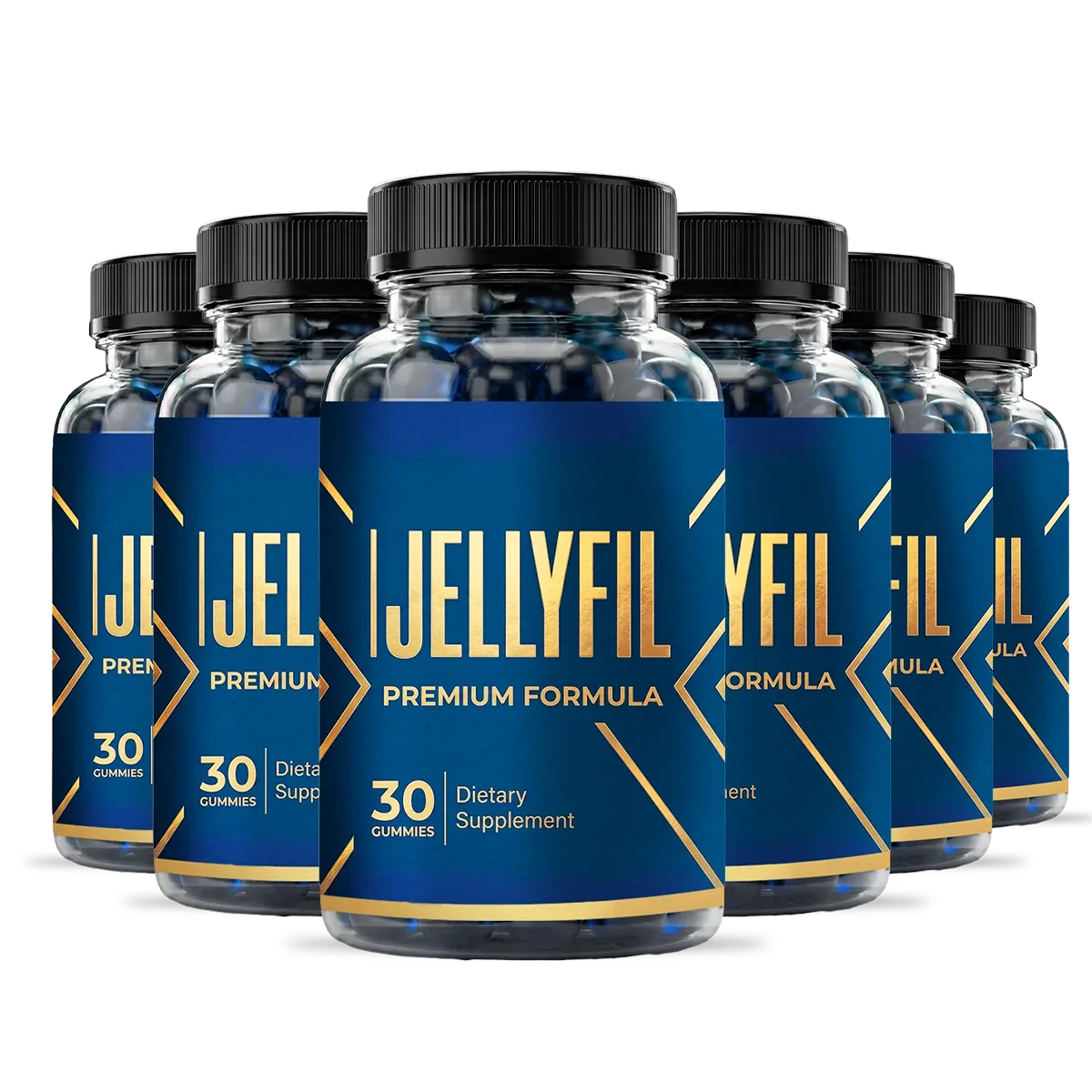
Prefer the label to the hype?
JellyFil names every active, including its ashwagandha, on the Supplement Facts panel — with today's official-store pricing and a 60-day guarantee.
Order NowFrequently asked questions
Does ashwagandha raise testosterone?
Some controlled trials in stressed, older or training men report modest, statistically significant increases versus placebo. The effect is real but small, and it is clearest in men who were under stress or had lower baseline levels. It is not a substitute for medical treatment of low testosterone.
How long until ashwagandha does anything?
Most trials run 8 to 12 weeks, and that is roughly the window in which cortisol and stress scores tend to shift. It is a build-over-time ingredient, not an on-demand one, which is why daily consistency matters more than timing.
Is ashwagandha safe to take every day?
It is generally well tolerated in trials at standardised doses, but it can affect thyroid and sedative medications and is not advised in pregnancy or with certain conditions. Speak to a doctor before daily use if you take medication or manage a health issue. This is general information, not medical advice.
References
- Chandrasekhar K et al. A prospective, randomized double-blind, placebo-controlled study of safety and efficacy of a high-concentration full-spectrum extract of ashwagandha root in reducing stress and anxiety in adults. Indian J Psychol Med. 2012. PMID: 23439798.
- Lopresti AL et al. An investigation into the stress-relieving and pharmacological actions of an ashwagandha (Withania somnifera) extract: A randomized, double-blind, placebo-controlled study. Medicine (Baltimore). 2019. PMID: 31517876.
- Durg S et al. Withania somnifera (Indian ginseng) in male infertility: An evidence-based systematic review and meta-analysis. Phytomedicine. 2018. PMID: 30466985.
- National Center for Complementary and Integrative Health — Ashwagandha.