Belly Fat and Low Testosterone: The Vicious Cycle
How are belly fat and low testosterone connected?
They feed each other. Visceral belly fat contains aromatase, an enzyme that converts testosterone into estrogen, and low testosterone in turn drives more fat storage — a self-reinforcing loop. Waist size tracks inversely with testosterone across large studies. The encouraging part: even modest, sustained fat loss can help break the cycle and support healthy testosterone.
- The enzyme: fat tissue is rich in aromatase, which converts testosterone to estrogen.
- The loop: more belly fat lowers testosterone, and low testosterone stores more fat.
- The exit: losing even 5 to 10 percent of body weight is linked to higher testosterone.

Two problems that make each other worse
Belly fat and low testosterone are often discussed as separate complaints, but in men they are usually two ends of the same loop. Understanding that changes how you approach both, because it means you are rarely fixing one thing in isolation — you are trying to reverse a cycle that has momentum. The cycle runs like this: carrying excess fat around the middle tends to lower testosterone, and lower testosterone tends to make the body store more fat around the middle. Each turn of the wheel makes the next turn a little easier, which is exactly why so many men feel it creeps up on them slowly and then feels stubborn to shift.
The good news hiding inside that description is that a loop can be run in reverse. If the two problems reinforce each other on the way down, then progress on one can support the other on the way back up. That is the theme of this article: how the cycle works, and where the realistic exit points are.
Aromatase: the enzyme at the centre
The key player is an enzyme called aromatase. Its job is to convert testosterone into estrogen — a normal process that every man's body performs, since men need a small amount of estrogen too. The complication is where aromatase lives: it is especially concentrated in fat tissue, and particularly in the deep visceral fat that sits around the abdominal organs. That means fat is not a passive storage depot. It is metabolically active tissue that actively converts your testosterone into estrogen.
Follow the logic and the problem becomes obvious. The more visceral fat a man carries, the more aromatase activity he has, and the more of his testosterone gets converted away. Lower testosterone then shifts the body's balance toward storing fat rather than building muscle, which adds more visceral fat, which adds more aromatase. This is the biochemical engine of the vicious cycle. It is also why belly fat specifically matters more than weight in general: the deep abdominal fat is the metabolically active, aromatase-rich kind, which is why waist circumference is such a useful marker.
Fat around the middle is not just stored energy. It is active tissue that converts your testosterone into estrogen — which is why the belly and the hormone move together.
The other half of the loop
The cycle does not only run from fat to hormone; it runs the other way too. When testosterone is low, the body's tendency to build lean muscle drops and its tendency to store fat rises. Lower testosterone is also associated with lower energy and drive, which quietly reduces how much a man moves and trains — and less activity means fewer calories burned and less muscle to keep the metabolism ticking. It can also worsen insulin sensitivity, nudging the body further toward fat storage. None of these effects is dramatic on its own, but together they tilt the whole system toward gaining exactly the kind of fat that lowers testosterone further. That is the second half of the loop, and it is why low testosterone can feel self-sustaining once it takes hold.
Across large population studies, this shows up as a clear, consistent pattern: a bigger waist tends to go with lower testosterone. Correlation is not the same as proof of cause in every individual, and there are other drivers of low testosterone that have nothing to do with weight. Exercise is part of the same picture — a meta-analysis of exercise training and resting testosterone in insufficiently active men examined what training alone does to the hormone. But the fat-testosterone link is one of the best-established relationships in men's metabolic health, and the mechanism through aromatase gives it a plausible cause, not just an association.
Can losing weight actually raise testosterone?
For men who are carrying excess fat, yes — and this is where the story turns hopeful. Because fat mass drives aromatase activity, reducing fat mass reduces the amount of testosterone being converted to estrogen. A systematic review and meta-analysis of body weight loss and obesity-associated hypogonadotropic hypogonadism found that losing weight was associated with a rise in testosterone across the pooled studies. You are not adding testosterone from outside; you are removing the drag that was pulling it down and letting the body's own production count for more.
Two honest caveats belong here. First, this applies most clearly to the fat-driven part of the picture. There are causes of low testosterone that weight loss will not fix, which is why persistent symptoms deserve a proper medical check rather than a self-diagnosis. Second, it has to be real, sustained fat loss — crash diets that shed water and muscle do not help, and can even backfire. But for the very common situation of a man whose testosterone has drifted down as his waist has drifted up, fat loss is one of the most reliable natural levers available. For the wider context on what does and does not raise the hormone, our piece on common testosterone myths, debunked is a useful companion.
How much do you actually need to lose?
Less than most men fear. You do not have to reach an "ideal" weight to benefit, because the cycle starts easing as soon as you begin removing visceral fat. Studies suggest that losing a meaningful but realistic share of body weight — often in the region of around five to ten percent — is enough to be associated with measurable improvements in testosterone in overweight men. For a man of 100 kilograms, that is five to ten kilograms, not a total transformation. The reason modest loss works is that visceral fat tends to be among the first fat to go when you create a sustained calorie deficit, and it is the visceral fat that carries the most aromatase. The lesson is to aim for steady, keepable progress rather than a dramatic sprint you cannot maintain.
The levers that break the cycle
The practical levers are unglamorous and effective. On the diet side, the goal is a modest, sustainable calorie deficit built mostly from whole foods, with enough protein to protect muscle while you lose fat — muscle is metabolically valuable and helps keep testosterone-friendly conditions in place. Cutting back on excess alcohol matters more than men expect, both for the calories and for its direct effect on hormones; our article on alcohol, libido and erections covers that in detail.
On the activity side, both training styles pull their weight. Resistance training builds and preserves the muscle that keeps your metabolism and hormones in a better place, while cardiovascular exercise is efficient at burning fat and improving insulin sensitivity — the trade-offs between the two are the subject of our piece on cardio versus weightlifting for testosterone. Sleep is the quiet multiplier: poor sleep raises stress hormones, worsens insulin sensitivity and blunts testosterone, so it can stall an otherwise good routine. And the mineral basics matter — zinc's role in testosterone and libido is one worth understanding, since a deficiency there can drag on hormone production regardless of body fat.
Track the number that actually matters
If you take one measurement to heart, make it your waist rather than the number on the scale. Because it is the deep visceral fat around the abdomen that carries the most aromatase, waist circumference is a better real-world proxy for the fat that is dragging on your testosterone than body weight alone. Measure around the navel, first thing in the morning, once a week — not daily, since normal fluctuation will only frustrate you — and watch the trend over a month or two rather than any single reading. A waist that is slowly shrinking is direct evidence you are removing the metabolically active fat at the heart of the cycle, even on weeks when the scale is stubborn. It is also more motivating than a bathroom scale, because it reflects the specific change you are trying to make instead of the noise of water and food weight. Pair that weekly measurement with how you feel — energy, drive, sleep — and you have a simple, honest dashboard for whether the loop is turning back in your favour.
Where a supplement fits — honestly
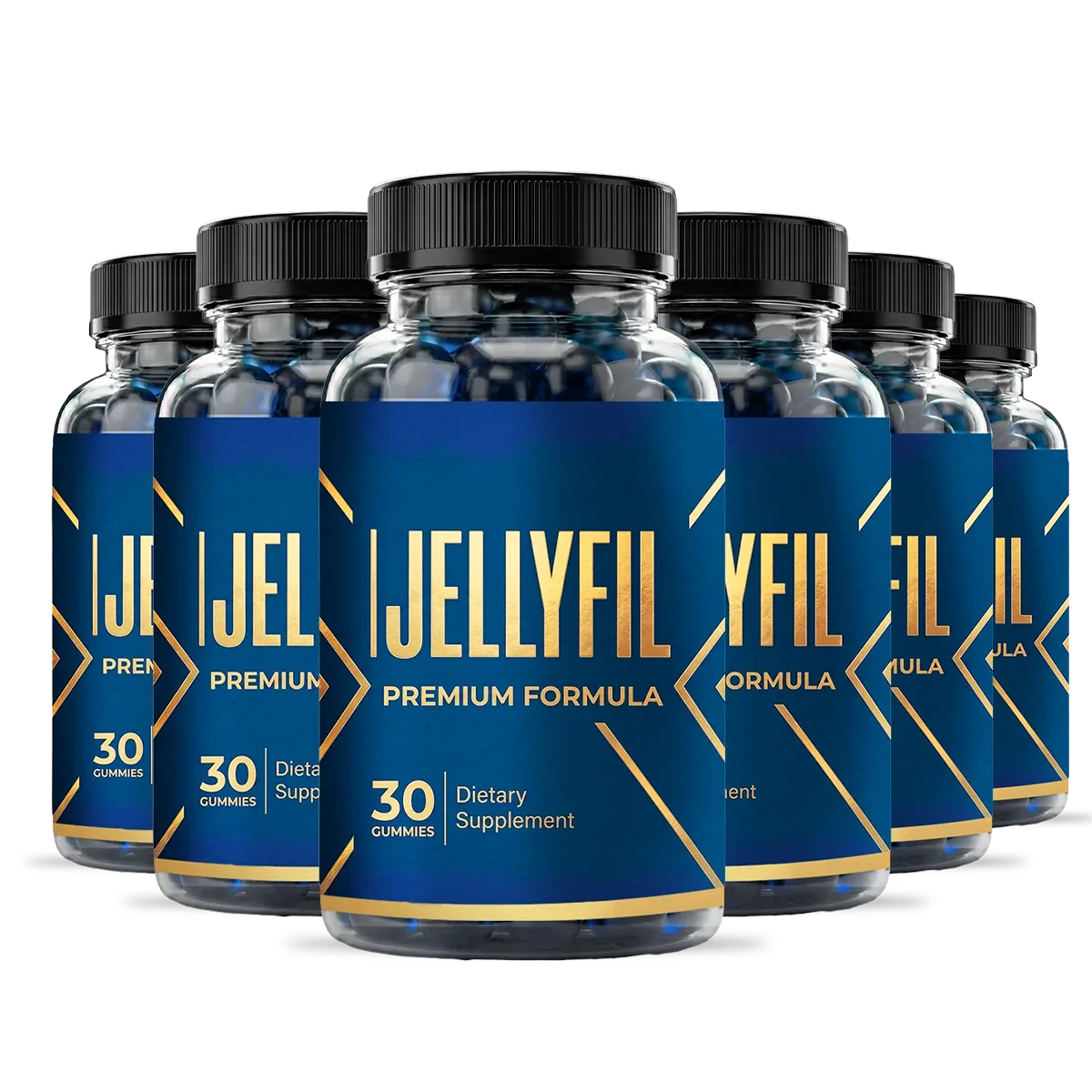
It is worth being clear about what a supplement can and cannot do here, because the belly-fat-testosterone cycle is driven mainly by body composition and lifestyle. No gummy melts visceral fat, and none should claim to. What a well-designed men's formula can do is support the surrounding pieces: JellyFil includes adaptogens such as Ashwagandha and Maca, which are associated with supporting healthy testosterone and managing the stress that undermines both sleep and fat loss, alongside Tribulus, the desire botanicals Muira Puama and Catuaba, and L-Arginine for circulation. That is a support role around a foundation of eating, training and sleeping better — not a replacement for it. Treated that way, honestly, it complements the levers that actually break the cycle instead of pretending to be one.
Related reading
- Zinc, testosterone and libido in men
- Cardio vs weightlifting for testosterone
- Alcohol, libido and erections in men
- Common testosterone myths, debunked
Support the hormonal side of the equation
JellyFil pairs Ashwagandha, Maca and Tribulus — adaptogens associated with healthy testosterone — with Muira Puama, Catuaba and L-Arginine in a once-daily gummy. A support to your routine, not a replacement for it.
Order NowFrequently asked questions
Does belly fat lower testosterone?
Yes, the two are strongly linked, and it works in both directions. Visceral belly fat is metabolically active and converts testosterone into estrogen, while low testosterone in turn encourages the body to store more fat around the middle. Across large studies, a bigger waist circumference tends to track with lower testosterone. That two-way relationship is why belly fat and low testosterone form a self-reinforcing cycle rather than a one-off cause and effect.
What is aromatase and why does it matter?
Aromatase is an enzyme that converts testosterone into estrogen, and it is especially concentrated in fat tissue. The more visceral fat a man carries, the more aromatase activity he tends to have, which means more of his testosterone is being converted away. It matters because it explains the mechanism of the cycle — carrying more belly fat does not just correlate with lower testosterone, it provides a direct biochemical route for testosterone to fall.
Can losing weight raise my testosterone?
For men who are overweight, losing fat is one of the most reliable natural ways to support healthy testosterone, because reducing fat mass reduces aromatase activity and eases the cycle. Research consistently shows that weight loss in overweight men is associated with a rise in testosterone. It is not a guaranteed fix for every cause of low testosterone, but for the fat-driven part of the picture it is a genuine lever.
How much weight loss makes a difference?
Even modest, sustained weight loss can move the needle — you do not need to reach an ideal weight to benefit. Studies suggest that losing a meaningful percentage of body weight, often in the range of around five to ten percent, is associated with measurable improvements in testosterone in overweight men. The key is that the loss is real fat and is sustained, which is why steady lifestyle change beats crash dieting.
References
- Corona G et al. Body weight loss reverts obesity-associated hypogonadotropic hypogonadism: a systematic review and meta-analysis. Eur J Endocrinol. 2013. PMID: 23482592.
- Potter NJ et al. Effects of Exercise Training on Resting Testosterone Concentrations in Insufficiently Active Men: A Systematic Review and Meta-Analysis. J Strength Cond Res. 2021. PMID: 35134000.
- MedlinePlus Medical Encyclopedia — Testosterone blood test.
- National Institute of Diabetes and Digestive and Kidney Diseases — Weight management.