Maca Root for Men: Energy, Stamina and Libido
The short version
Maca (Lepidium meyenii) is a root vegetable grown high in the Peruvian Andes and eaten there as food. In men's formulas it is used for energy, stamina and libido. Its strongest claim to a spot in the blend is that, unusually for a botanical, it has randomised human trials showing improved sexual desire — importantly, without reliably changing testosterone. In other words, Maca appears to work more on drive than on hormones.
- Best supported: increased self-reported sexual desire after several weeks.
- Traditional use: energy, stamina and endurance at altitude.
- Key nuance: trials generally show no consistent testosterone change.
Food first, supplement second
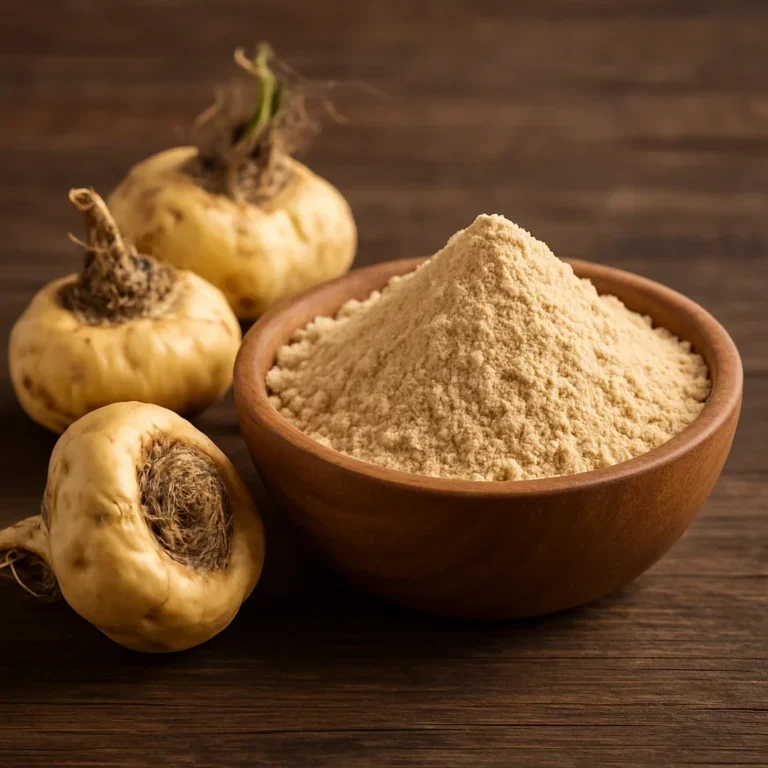
One reason Maca has a friendlier safety profile than many "performance" botanicals is that it is genuinely a food. Andean communities have cultivated and eaten it for generations, both for nourishment and for a traditional reputation as an energy and fertility crop that thrives where little else grows. That long dietary history is part of why it is generally well tolerated in the amounts used in supplements.
Maca comes in colours — yellow, red and black — and some research suggests the varieties are not identical in their effects, with black Maca of particular interest for stamina and cognitive endpoints in animal work. For a consumer, the practical takeaway is simpler: the source and preparation vary, so the specifics on the label matter.
Maca is one of the few libido botanicals that has been put through randomised trials — and one of the few honest enough to show what it does not do.
What the human trials show on libido
The most interesting Maca research is on sexual desire. The anchor study is a small randomised, placebo-controlled trial in healthy adult men, which reported increased self-reported desire after roughly 8 to 12 weeks of daily use at gram-level doses (Gonzales GF et al., Andrologia, 2002). A later systematic review of maca for improving sexual function pulled the available studies together and concluded there is suggestive evidence for a libido benefit, while being explicit that the number and size of the trials remain limited.
Two details make this evidence more credible, not less. First, the desire effect showed up without a consistent rise in testosterone or oestrogen in the men studied — the trial title itself names that "absent relationship" — so Maca is not acting as a hormone booster, and any product that claims it is has misread the research. Second, a separate double-blind dose-finding study looked specifically at sexual dysfunction in people taking SSRI medication, which is known to dampen desire, and again saw a signal at the higher dose. That is a narrow but genuinely useful finding.
What the maca evidence does not show
An honest read of the maca literature is as much about the gaps as the findings. Four claims routinely appear on sales pages that the research does not support.
- It does not raise testosterone. This is the single most common misreading. The headline trial specifically measured serum testosterone and found no relationship with the desire effect. Maca is not a hormone product.
- It is not an erection treatment. Desire and erectile function are different endpoints. Maca has been studied for the first, not the second. If firmness rather than interest is the problem, that is a question about erectile dysfunction options, and often a circulation question rather than a libido one.
- It does not work on demand. Nothing in the trial design supports taking maca an hour before sex. The effects that were measured emerged over weeks of continuous daily use.
- The trials are small. Most maca studies enrol a few dozen participants. That is enough to justify interest and nowhere near enough to justify certainty, and reviewers of the literature say so plainly.
None of that makes maca a bad ingredient. It makes it an ingredient with a modest, specific, honestly-bounded claim — which is rarer in this category than it should be.
How much maca, and in what form?
The doses used in the human desire trials were in grams rather than milligrams, taken every day for two to three months. That single fact does more to explain disappointing results than any argument about which colour of root is best: a product delivering a token amount, or taken sporadically, is not reproducing what was studied. The forms on sale differ mainly in processing, not in species.
| Form | What it is | Practical notes |
|---|---|---|
| Raw powder | Dried, milled hypocotyl | Cheapest per gram and closest to the food. Some people find the raw starch harder on digestion. |
| Gelatinised powder | Heat-and-pressure treated to break down starch | Usually gentler on the stomach. "Gelatinised" refers to the starch, not gelatin, so it is still plant-based. |
| Capsules | Powder in a shell | Convenient and tasteless, but reaching a gram-level dose can mean several capsules. |
| Extract | Concentrated fraction | Ratios are inconsistent between brands, so an extract is not automatically stronger in a meaningful way. |
| Blends and gummies | Maca alongside other actives | Maca is one contributor rather than the whole dose. Judge the formula, not the maca line alone. |
If you are weighing up which product to actually buy, we have written that out in detail in our guide to choosing a maca supplement, and the colour question has its own comparison in red versus black maca.
Common mistakes men make with maca
Most of the complaints about maca "not working" trace back to one of four habits rather than to the root itself.
- Stopping at two weeks. The trials measured change at eight to twelve weeks. Judging maca after a fortnight is judging it before the studied window has opened.
- Expecting a hormone effect. Men who take maca to "boost testosterone" and then test their bloods are measuring the one thing the research says will not move.
- Taking it only on the days it seems needed. Intermittent use does not reproduce a daily-dosing protocol, and maca has no established acute effect to fall back on.
- Ignoring the inputs that dominate. Sleep, alcohol and body composition move desire and erection quality more than any botanical does. If you are short on sleep, our piece on sleep and erection quality is a more productive place to start than a bigger maca dose.

Energy and stamina: weaker but plausible
The energy and endurance side of Maca's reputation rests more on tradition and animal studies than on strong human trials. There is athletic-performance research, but it is small and mixed, and it does not yet support a firm claim. The reasonable way to hold this is: the libido evidence is the headline, and the energy and stamina use is a traditional, plausible bonus rather than a proven effect. An honest formula leans on the former and does not oversell the latter.
It is worth understanding why the mechanism is still open. Maca contains two families of compounds that get most of the attention — glucosinolates, which it shares with other brassicas such as broccoli and mustard, and macamides, a group of fatty-acid amides that appear to be more or less unique to the plant. A comprehensive review of maca's chemical and pharmacological variability makes the awkward point plainly: the compound profile shifts with the growing altitude, the phenotype and the drying method, which means two products both honestly labelled "maca" can differ chemically. That variability is a good reason to be sceptical of confident mechanism claims, and a good reason to stay with one product long enough to judge it.
Is maca safe to take every day?
Maca's safety record is unusually reassuring for a libido botanical, and the reason is mundane: it is eaten as food. Andean households consume it in quantities far beyond a supplement serving, and the controlled trials report good tolerability, with mild digestive upset the most commonly noted complaint. Gelatinised powder is often the answer for men who find the raw form bloating.
The honest caveats are the ordinary ones rather than anything exotic. Maca is a cruciferous plant, so anyone managing a thyroid condition should raise it with their doctor before adding a daily gram-level dose. The same applies if you take prescription medication or are managing any health condition. And because the desire research is conducted in adults, none of it transfers to anyone under 18. This is general information, not medical advice.
How JellyFil uses Maca
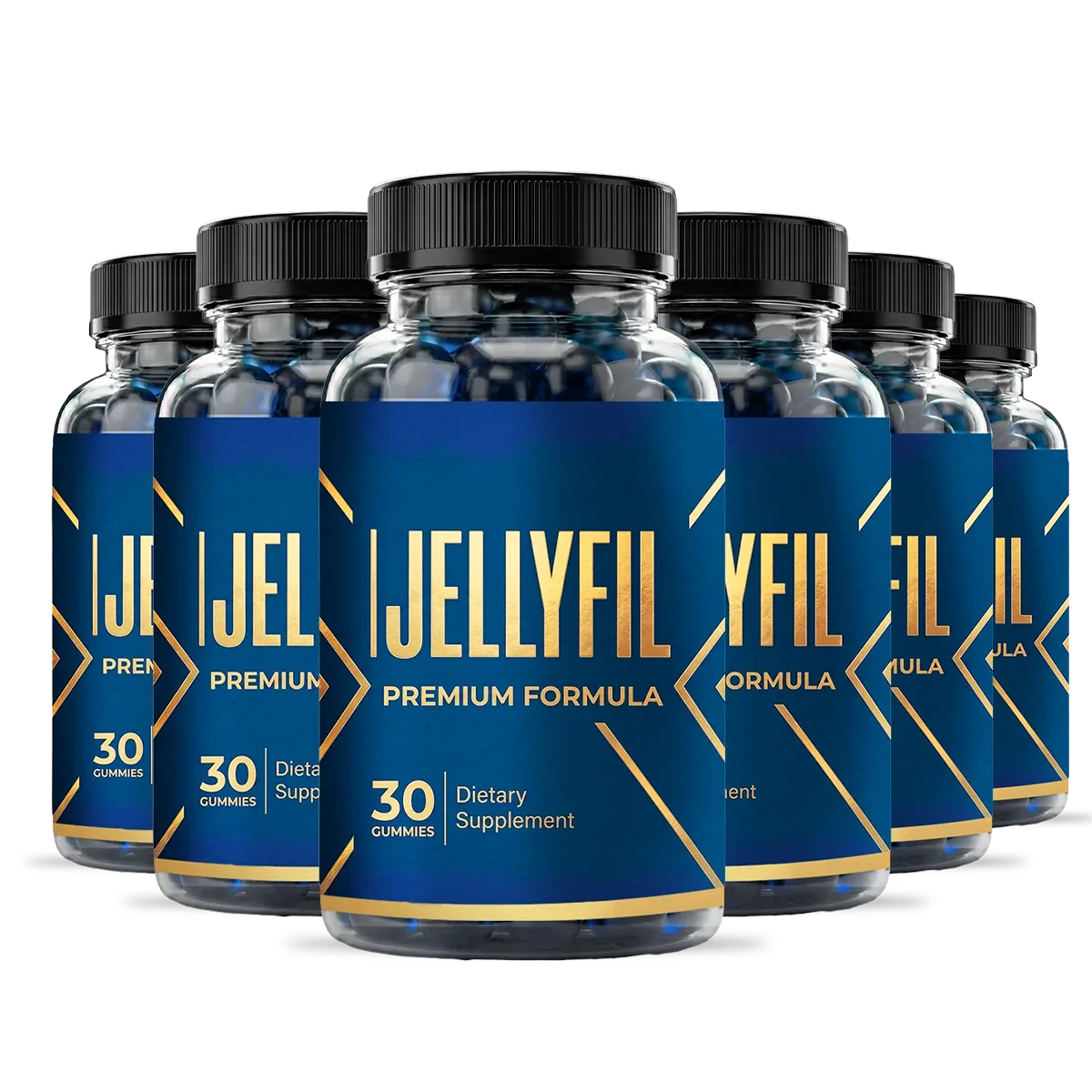
In the JellyFil blend, Maca is the stamina-and-drive ingredient, complementing the two Amazonian botanicals on desire and the adaptogen work on stress. Because Maca acts on drive rather than hormones, it pairs naturally with ashwagandha and Tribulus on the hormonal side and L-Arginine on circulation. It also fits the product's core idea: the desire benefit in the trials appears after weeks of daily use, which is exactly how JellyFil is meant to be taken. For the whole-category view, see our honest guide to male-enhancement gummies.
See the Maca in context
JellyFil combines Maca with eight other named botanicals in a once-daily gummy — with today's official-store pricing and a 60-day guarantee.
Order NowFrequently asked questions
Does Maca increase testosterone?
The human trials generally do not show a consistent change in testosterone, even where desire improved. Maca appears to work on drive through other pathways, so a product claiming it raises testosterone is going beyond the evidence.
How long does Maca take to work?
In the libido trials, effects on desire typically appeared after about 8 to 12 weeks of daily use at gram-level doses. It is a consistency ingredient, not an on-demand one.
Is Maca safe?
Maca is a food crop with a good tolerability record in trials, with mild digestive complaints the most common issue. If you take medication, are managing a health condition, or are pregnant or nursing, check with a doctor first. This is general information, not medical advice.
References
- Gonzales GF et al. Effect of Lepidium meyenii (MACA) on sexual desire and its absent relationship with serum testosterone levels in adult healthy men. Andrologia. 2002. PMID: 12472620.
- Shin BC et al. Maca (L. meyenii) for improving sexual function: a systematic review. BMC Complement Altern Med. 2010. PMID: 20691074.
- Dording CM et al. A double-blind, randomized, pilot dose-finding study of maca root (L. meyenii) for the management of SSRI-induced sexual dysfunction. CNS Neurosci Ther. 2008. PMID: 18801111.
- Ulloa Del Carpio N et al. Exploring the chemical and pharmacological variability of Lepidium meyenii: a comprehensive review of the effects of maca. Front Pharmacol. 2024. PMID: 38440178.