Red vs Black Maca: Which Is Better for Men?
Red vs black maca: which is better for men?
There is no single winner. Black maca draws the most interest in animal research for stamina, endurance and cognition, while red maca has been studied more for prostate endpoints. Yellow is the most common everyday type. For libido, human trials used gram-level daily doses over several weeks whatever the colour, so dose and consistency matter as much as the shade.
- Black maca: the stamina and cognition candidate in animal work.
- Red maca: the colour most studied for prostate endpoints.
- Any colour: libido trials used gram-level doses over 8 to 12 weeks.
Maca is not one plant, colour-wise
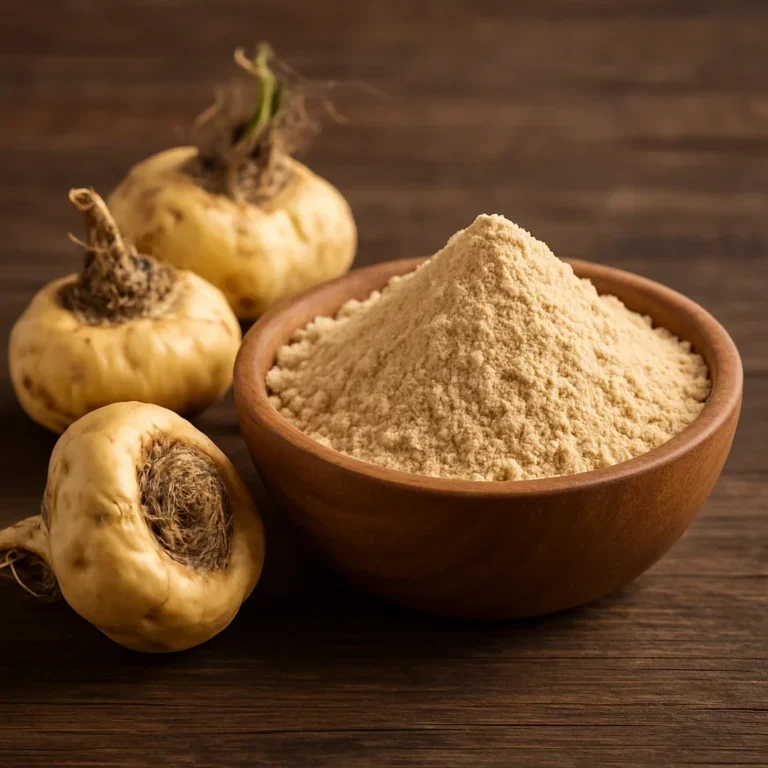
Most men picture maca as a single beige powder, but the root grows in a spectrum of natural colours — predominantly yellow, but also red, purple and black, along with in-between shades. These are not dyed or processed differences; they are natural phenotypes of the same species, Lepidium meyenii, growing side by side in the high Peruvian Andes. Yellow is by far the most common, making up the bulk of the harvest, while red and black are rarer and, as a result, usually pricier.
The important part is that the colours are not just cosmetic. A comprehensive review of the chemical and pharmacological variability of Lepidium meyenii describes how growing altitude, phenotype and drying method all shift the compound profile. Analyses have found that the phenotypes differ in their profiles of maca's characteristic compounds — glucosinolates, macamides and macaenes — and, more usefully for us, they behave differently in the research. That is why a blanket claim like "maca boosts X" is less accurate than it sounds: which maca, and for what, are fair questions. Let's take the two colours men ask about most.
What black maca is studied for
Black maca is the variety that tends to excite researchers looking at physical and mental performance. In animal studies — mostly rodents — black maca has shown the most consistent signals for endurance and physical stamina, and it is also the colour most often linked to learning and memory endpoints in that same animal literature. Work on the effect of short-term and long-term treatment with three ecotypes of Lepidium meyenii on spermatogenesis in rats and a companion study of chronic treatment with three varieties of maca on reproductive parameters in adult male rats has pointed to black maca having the strongest effect on sperm-related measures among the colours — again, in animal models.
The honest framing matters here. This is a genuinely interesting pattern, and it is the reason black maca gets marketed as the "performance" colour. But most of it lives in animal research, not large randomised human trials, so it is best read as a promising direction rather than a proven human benefit. If someone sells you black maca as a guaranteed stamina upgrade, they have skipped the words "in mice." The traditional human use of maca for energy at altitude, meanwhile, spans all the colours and predates any of this lab work.
What red maca is studied for
Red maca has carved out a different research niche. Its most-cited work concerns the prostate: in rodent models of benign prostatic enlargement, red maca specifically — not yellow or black — reduced prostate size in several studies, an effect not consistently seen with the other colours. Red maca also tends to score well on antioxidant measures, and some bone-related endpoints have been explored in animal work too.
Two caveats keep this grounded. First, "prostate endpoints in rodents" is not the same as a treatment claim for any human prostate condition, and nothing here should be read that way — if you have prostate symptoms, that is a conversation for a doctor, not a supplement label. Second, as with black maca, the human trial base is thin. What red maca offers a formula is a plausible, colour-specific profile leaning toward the antioxidant and prostate-research side, rather than the stamina-and-cognition lean of black.
The colour question is real — the phenotypes genuinely differ — but most of the colour-specific evidence is animal work. For a man choosing a product, the human data on dose and consistency is the sturdier ground to stand on.
Yellow maca: the everyday workhorse
It would be a mistake to write off yellow maca just because it is common. Yellow is the most abundant, the most affordable, and — importantly — the colour used in a good share of the general maca research, including some of the human libido and mood work. It is the sensible baseline: broadly studied, well tolerated, and the version most people have in mind when the human trials say "maca improved sexual desire." If black is the boutique performance pick and red the prostate-and-antioxidant pick, yellow is the dependable all-rounder.
There is also a practical reason yellow anchors most products. Because it makes up the bulk of every harvest, yellow maca is the most consistent to source in volume and the easiest to standardise batch to batch. Pure single-colour red or black maca, sold at a genuine dose, is comparatively scarce and expensive, which is worth remembering when a bargain-priced tub claims to be "100% black maca." When the price looks too good for the rarity, the honest questions are how much is really in there, and whether it is truly the colour on the label.
How the root becomes a supplement
One more thing shapes what you actually get: processing. Traditionally, Andean communities do not eat maca raw — the fresh root is dried in the sun over weeks and then boiled or cooked before eating. Many supplements follow this logic with a step called gelatinisation, in which the dried root is heated to break down its starch, which improves digestibility and concentrates the active compounds. This matters more than colour for some men: raw maca powder can be harder on the stomach, and a gelatinised or properly extracted preparation is often better tolerated. So when you compare products, "red versus black" is only one variable. The plant part is always root here, but the drying, gelatinisation and extraction method all affect the final potency and how your gut handles it. A transparent product will tell you not just the colour but the form and the amount.
The colour debate vs the dose reality
Here is the part the colour marketing tends to bury. The strongest human evidence for maca in men is on sexual desire, and it comes from small randomised, placebo-controlled trials that used maca at gram-level daily doses — roughly 1.5 to 3 grams — for about 8 to 12 weeks. Those trials generally did not crown a colour; they showed that adequately dosed, consistently taken maca nudged self-reported desire upward. Just as tellingly, the desire effect appeared without a reliable change in testosterone, so maca is not acting as a hormone booster no matter what colour it is.
The practical hierarchy for a shopper, then, is: dose first, consistency second, colour third. A perfectly chosen black maca at a token dose will do less than a well-dosed yellow taken daily for three months. Colour is a reasonable tie-breaker — leaning black if stamina and mental drive are your priorities, red if the antioxidant and prostate-research angle appeals — but it is a refinement on top of getting the fundamentals right, not a substitute for them. Chasing the "best" colour while ignoring the milligrams is optimising the wrong variable.
All of that is a comparison between phenotypes of one plant, which is a narrower question than the one most buyers are actually asking. If what you want to know is which product to put in the basket — powder, capsules or coffee, raw or gelatinised, and at what price per gram — we have set that out separately in our guide to choosing a maca supplement.
Which maca does JellyFil lean on, and why
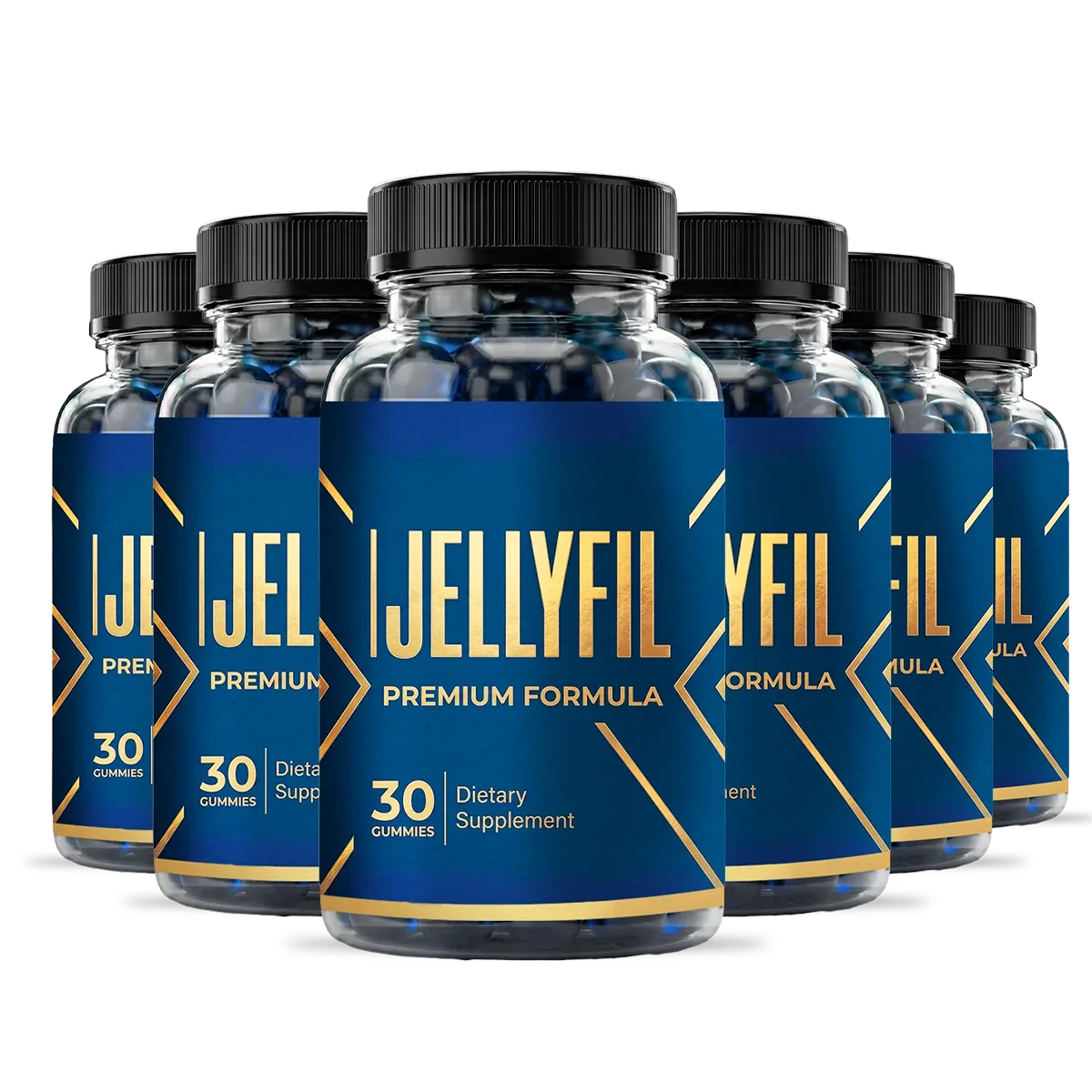
In JellyFil, maca is the stamina-and-drive active, sitting alongside the two Amazonian aphrodisiacs (Muira Puama and Catuaba), the circulatory amino acid L-Arginine, and the stress-and-testosterone pair of Ashwagandha and Tribulus. Its job in the blend is the drive-and-endurance role that maca fills across the colour spectrum — and, consistent with the trials, it acts on desire and vigour rather than on hormones directly. The product's design reflects the dose-and-consistency reality above: maca is meant to be taken daily, with the desire and stamina benefits building over weeks rather than arriving overnight. If you want the fuller picture of how these actives fit together, see our guide to stacking vitality ingredients, our deep-dive on Maca root for men, or the wider honest guide to male-enhancement gummies.
See how the maca fits the formula
JellyFil pairs maca with eight other named botanicals in a once-daily gummy — with today's official-store pricing and a 60-day guarantee.
Order NowFrequently asked questions
What's the difference between red and black maca?
They are different colour phenotypes of the same plant, Lepidium meyenii, and their compound profiles are not identical. Black maca is the variety most often examined in animal studies of stamina, endurance and memory. Red maca is the one most associated with prostate-related research in rodents. Yellow is the common baseline type used in most everyday maca products.
Which maca color is best for libido?
No single colour has been proven best for libido in men. The human libido trials that showed increased sexual desire used maca at gram-level daily doses over several weeks and did not establish one colour as superior. For desire specifically, using an adequate dose consistently appears to matter more than choosing a particular shade.
Is black maca better for energy and stamina?
Black maca is the variety of most interest for stamina and endurance, but that evidence comes largely from animal studies rather than large human trials. It is a reasonable candidate, not a settled fact. The traditional use of maca for energy at altitude spans all colours, so treat black maca as promising rather than proven for stamina.
What maca dose is used in studies?
Human libido trials generally used maca in the range of about 1.5 to 3 grams per day, taken daily for roughly 8 to 12 weeks. Effects on desire tended to appear only after several weeks of consistent use. Maca is used as a food in Peru, which is part of why these gram-level daily amounts have a reasonable tolerability record.
Related reading
- Tongkat Ali vs Maca for libido: how they differ
- Catuaba bark and libido: what the evidence says
- Stacking vitality ingredients: do they work together?
- The best time to take male vitality gummies
References
- Gonzales C et al. Effect of short-term and long-term treatments with three ecotypes of Lepidium meyenii (MACA) on spermatogenesis in rats. J Ethnopharmacol. 2006. PMID: 16174556.
- Gasco M et al. Effect of chronic treatment with three varieties of Lepidium meyenii (Maca) on reproductive parameters and DNA quantification in adult male rats. Andrologia. 2007. PMID: 17683465.
- Ulloa Del Carpio N et al. Exploring the chemical and pharmacological variability of Lepidium meyenii: a comprehensive review of the effects of maca. Front Pharmacol. 2024. PMID: 38440178.
- Gonzales GF et al. Effect of Lepidium meyenii (MACA) on sexual desire and its absent relationship with serum testosterone levels in adult healthy men. Andrologia. 2002. PMID: 12472620.