Best Maca for Men: How to Choose a Supplement
The short version
There is no single best maca for men. Every product on the shelf is the same plant — Lepidium meyenii — and the differences that actually matter are dose, processing and honesty of labelling, not the colour on the packet. The human trials that found an effect on sexual desire used gram-level daily doses for eight to twelve weeks, so the first question to ask any product is whether its serving gets anywhere near that.
- Dose first: the desire trials used roughly 1.5 to 3 g a day, taken continuously.
- Form is about tolerance: gelatinised is easier on digestion, not stronger.
- Colour is oversold: phenotype research is mostly pre-clinical and mostly in rodents.
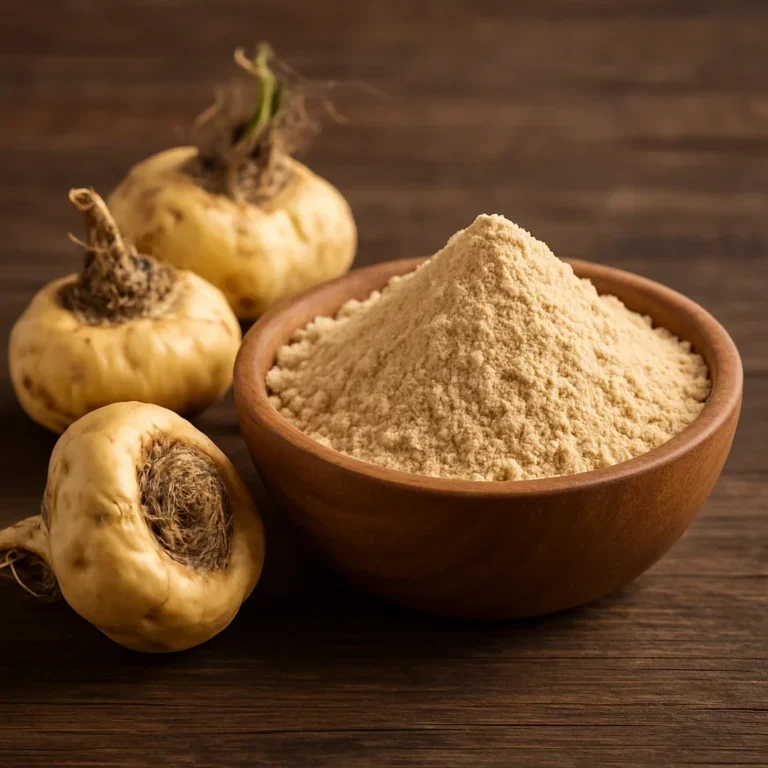
Which maca is best for men?
The honest answer is that no maca phenotype has been shown to be best for men in a controlled human trial, because the trials that studied men did not treat colour as the deciding variable. What exists on colour is largely pre-clinical. Rodent studies comparing the ecotypes — for example, work on the effect of short-term and long-term treatment with three ecotypes of Lepidium meyenii on spermatogenesis in rats — report that black maca behaves differently from red and yellow on reproductive endpoints. That is a genuine and interesting finding in rats. It is not the same as evidence that a man buying black maca will notice something a man buying yellow maca will not.
The chemistry gives a reason to be careful with colour claims in either direction. A comprehensive review of the chemical and pharmacological variability of Lepidium meyenii describes how the compound profile shifts with growing altitude, phenotype and drying method — meaning two batches of the same colour from different farms can differ more than two colours from the same farm. Colour is a real botanical distinction that has been turned into a marketing hierarchy the evidence does not support, and we go through it in detail in red maca versus black maca.
The practical rule: choose colour on price and availability, and choose the product on dose and labelling.
Raw versus gelatinised maca: what is the difference?
Gelatinised maca is raw maca that has been heat-and-pressure treated to break down its starch content. Despite the name, it contains no gelatin and remains entirely plant-based — "gelatinisation" is a food-science term for what happens to starch granules, not a reference to animal products. The purpose is digestibility, not potency.
This is the distinction most worth understanding before you buy, because it decides whether you will still be taking the product in week ten. Raw maca retains its starch, and a meaningful minority of people find a gram-level daily dose of it bloating; those people usually get on fine with gelatinised. There is no evidence that gelatinisation increases the active compounds, and any label implying it multiplies absorption is going beyond what has been shown.
| Raw maca | Gelatinised maca | |
|---|---|---|
| Processing | Dried and milled only | Dried, milled, then heat-treated |
| Starch content | Intact | Broken down |
| Digestive tolerance | Fine for most; bloating for some | Generally gentler |
| Potency | No established difference | No established difference |
| Price per gram | Lower | Typically higher |
| Taste | Stronger, earthier, more malty | Milder |
Gelatinised maca is a comfort decision, not a strength decision. Pay the premium only if raw maca disagrees with you.
Maca powder, capsules, tablets or coffee: which form should you buy?
Form determines how easily you can reach a studied dose and how likely you are to keep going. It does not change what the plant is. The trade-offs are straightforward.
| Form | Reaching a gram-level dose | Best suited to |
|---|---|---|
| Loose powder | Easy — a teaspoon is roughly 3 g | Anyone who already makes a smoothie, porridge or shake daily |
| Capsules | Awkward — often 4 to 6 capsules | Travel, taste-aversion, precise counting |
| Tablets | Similar to capsules; may include binders | Convenience over cost |
| Instant maca coffee | Rarely — maca content is usually small and often unstated | Enjoyment; treat it as a food, not a dose |
| Liquid extract | Hard to judge — ratios vary between brands | People who have already found a brand they trust |
| Blends and gummies | Maca is one contributor among several actives | People who want a formula rather than a single ingredient |
Maca coffee deserves a specific note because it is searched for far more than its dose justifies. Most instant maca coffees are ordinary coffee with a modest amount of maca blended in, and many do not state how much. It is a pleasant drink, but it is rarely a way to take the amount used in the trials, and it should not be the thing you judge maca by. The same caveat applies to blends and gummies, where maca is one contributor among several actives: judge the product as a whole rather than on its maca line alone. Our honest guide to male-enhancement gummies works through how to grade a multi-ingredient label.

How much maca should a man take?
The randomised trial that anchors the desire finding in men used gram-level daily dosing over a period of weeks, and reported increased self-reported desire without a corresponding change in serum testosterone. A later systematic review of maca for improving sexual function pooled the available randomised trials and reached a cautious conclusion: suggestive evidence, limited by the small number and small size of the studies.
Two numbers follow from that literature and are worth carrying into a shop.
- Roughly 1.5 to 3 grams a day. This is the range the trials clustered in. A product offering 500 mg a serving is not wrong, but it is not the studied amount either, and you should adjust your expectations or your serving accordingly.
- Eight to twelve weeks. This is the window in which effects were measured. Buying a two-week supply to "try it" is buying less time than any positive study allowed.
Neither figure is a recommendation to dose yourself, and neither is medical advice. They are simply what the research used, which is the only sensible benchmark to compare a label against. Timing within the day matters far less than continuity, for reasons we set out in when to take male vitality gummies.
What should maca cost?
Maca is an agricultural commodity, and bulk powder is genuinely inexpensive per gram — which is why the price spread between products is so wide. Understanding where the money goes makes the comparison easier.
- Loose powder is the cheapest way to buy maca by a considerable margin, because you are paying for the crop and almost nothing else.
- Capsules and tablets add encapsulation, and because a capsule holds only a few hundred milligrams, the cost per studied gram rises sharply.
- Gelatinised powder carries a processing premium that is worth paying only if raw maca does not suit you.
- Coffee blends and gummies are priced as finished consumer products, and the maca inside is a small part of what you are buying.
The only fair way to compare two products is cost per gram of maca per day, not cost per bottle or per capsule. Work that figure out and most of the apparent bargains in the category rearrange themselves. Being cheap is not a red flag for maca in the way it might be for a concentrated extract; the crop simply is not expensive.
What to check on a maca label
Five checks separate a straightforward product from a vague one.
- The botanical name. Lepidium meyenii should appear. Its absence is not proof of anything, but its presence tells you the seller knows what they are selling.
- The amount per serving, in grams or milligrams. If maca sits inside a proprietary blend with no individual figure, you cannot compare it to the trial doses at all.
- Raw or gelatinised, stated plainly. A label that will not tell you which processing it used is withholding the one thing that affects how you will get on with it.
- The plant part. Maca supplements should be made from the hypocotyl — the root-like storage organ that is actually eaten — rather than leaf or aerial parts.
- Sober claims. Maca has not been shown to raise testosterone, and a label saying it does has misread its own evidence base. A review of the chemical composition and health effects of maca is a useful reality check against packaging copy.
Is it safe to buy maca from a marketplace listing?
Maca itself is a food crop with a reassuring tolerability record, so the risk in buying it lies less with the plant than with the seller. Anonymous marketplace listings are harder to hold accountable: you cannot always tell who manufactured the product, what testing it received, or whether the pictured label matches what ships. That matters more in the men's-vitality aisle than in most, because this is a category where adulteration with undeclared pharmaceutical ingredients has been documented repeatedly. Single-ingredient maca powder from a named brand is a low-risk purchase; a multi-ingredient "male performance" blend from an unnamed seller promising drug-like effects is a different proposition entirely, and the deciding question is not the maca. If you are weighing that kind of product, our comparison of natural and prescription ED options is deliberately blunt about where supplements stop and medicine starts.
What maca will not do
Setting expectations correctly is the last, and probably most important, part of choosing well.
- It will not raise testosterone. The anchor trial measured exactly this and found no relationship with the desire effect.
- It will not work on demand. There is no acute-dose evidence; maca is a daily-habit ingredient.
- It will not fix an erection problem. Desire and erectile function are separate endpoints. Firmness is more often a circulation question — see endothelial health and erections — and persistent difficulty deserves a doctor rather than a supplement.
- It will not outrun your inputs. For an honest comparison against another popular libido botanical, tongkat ali versus maca sets both against their own evidence.
For the full picture of what maca has and has not been shown to do in men, our main article on maca root for men goes through the trials one by one.
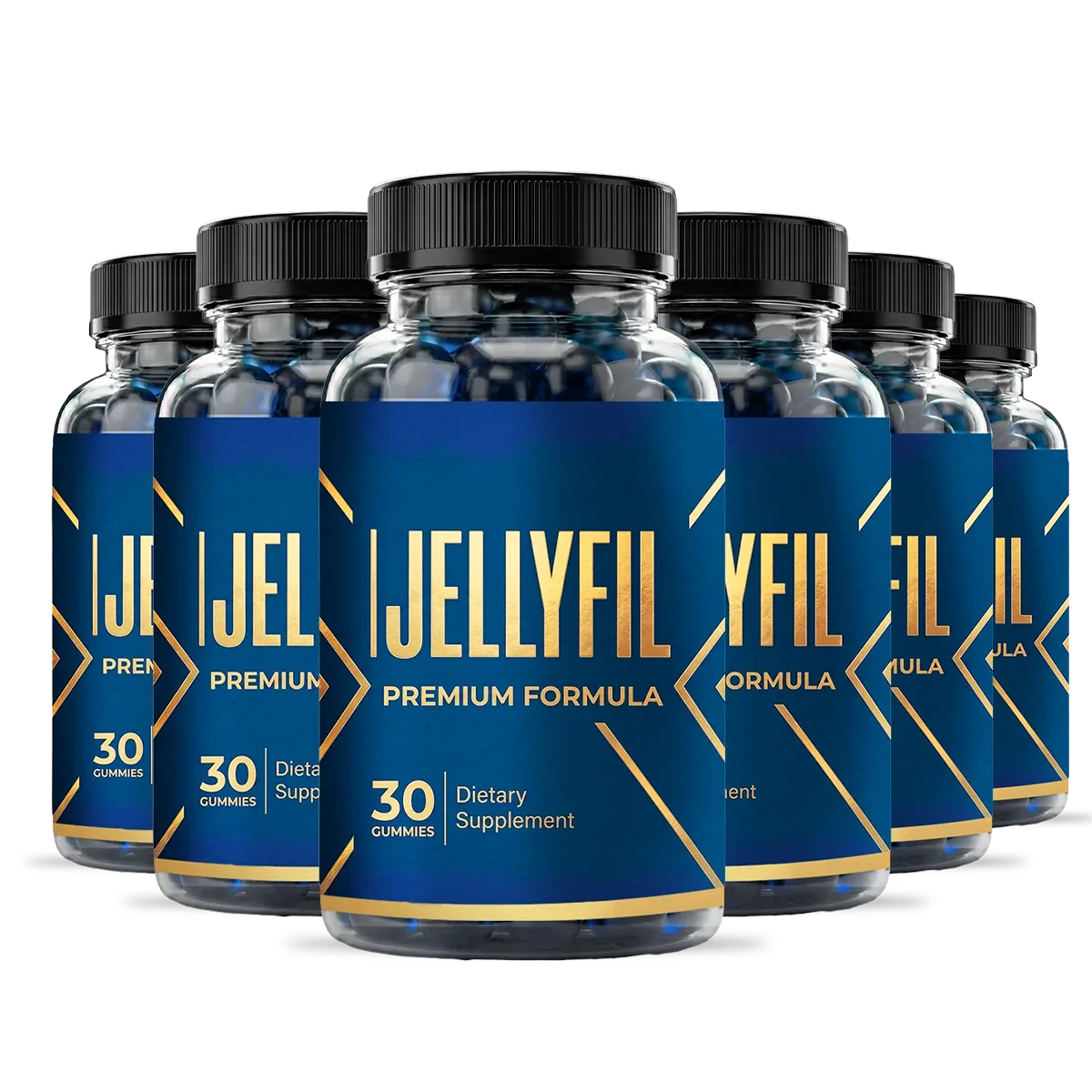
See maca inside a full formula
JellyFil combines Maca with eight other named botanicals in a once-daily gummy — with today's official-store pricing and a 60-day guarantee.
Order NowFrequently asked questions
Which maca is best for men?
There is no single best maca for men. The colour research is largely pre-clinical: black maca appears most often in rodent work on stamina and sperm parameters, red maca in prostate models, and yellow maca is the everyday food crop. The human desire trials did not make colour the deciding variable, so dose and consistency matter more than shade.
Is gelatinised maca better than raw maca?
Gelatinised maca has been heat-treated to break down its starch, which many people find easier to digest. It is not more potent and it contains no gelatin, so it remains suitable for vegetarians. If raw maca powder leaves you bloated, gelatinised is the sensible swap. If raw agrees with you, there is no evidence-based reason to pay more for gelatinised.
How much maca should a man take?
The human desire trials used gram-level daily doses, broadly 1.5 to 3 grams a day taken continuously for 8 to 12 weeks. That range is the most useful benchmark when comparing products, because a serving well below it is not reproducing what was studied. This is general information, not a dosing recommendation.
Is maca coffee the same as maca powder?
Maca coffee is usually instant coffee blended with a modest amount of maca powder, sometimes alongside other ingredients. It is a pleasant way to take a small dose, but it is rarely a way to take a studied dose, and the maca content is often unstated. If you like it, treat it as a food rather than as your supplement.
Is maca safe to take every day?
Maca is a food crop with a good tolerability record in the trials run so far, with mild digestive complaints the most commonly reported issue. Because it is a cruciferous plant, anyone managing a thyroid condition should raise it with their doctor first, as should anyone on prescription medication. This is general information, not medical advice.
References
- Ulloa Del Carpio N et al. Exploring the chemical and pharmacological variability of Lepidium meyenii: a comprehensive review of the effects of maca. Front Pharmacol. 2024. PMID: 38440178.
- Wang S et al. Chemical composition and health effects of maca (Lepidium meyenii). Food Chem. 2019. PMID: 30902313.
- Gonzales GF et al. Effect of Lepidium meyenii (MACA) on sexual desire and its absent relationship with serum testosterone levels in adult healthy men. Andrologia. 2002. PMID: 12472620.
- Shin BC et al. Maca (L. meyenii) for improving sexual function: a systematic review. BMC Complement Altern Med. 2010. PMID: 20691074.