Stacking Vitality Ingredients: Do They Work Together?
Do stacked vitality ingredients actually work together?
Sometimes, yes. When ingredients act through different mechanisms — blood flow, drive and stress — their effects can complement rather than overlap, which is the sensible case for a formula over a single pill. The catch is dosing: a blend only helps if each active appears in a meaningful amount, so label transparency matters more than the sheer number of ingredients.
- Complement, don't duplicate: different pathways can add up; identical ones just cost more.
- Watch the dose: synergy is meaningless if each active is underdosed.
- Prefer transparency: named amounts beat a hidden proprietary blend.
The case against the single-ingredient mindset
Male vitality is not one problem, so it is rarely fixed by one lever. What men describe as "low drive" or "off my game" is usually several things at once: circulation that is not what it was, mental drive that has dipped, sleep and stress that are quietly draining the tank, and a hormonal picture that reflects all of the above. A single ingredient, even a good one, can only push on one of those at a time. That is the honest argument for a formula: not that more is magically better, but that the target has more than one surface.
The counter-argument is just as important, because the supplement aisle is full of formulas that stack ingredients for the label rather than the logic. A bottle boasting "23 powerful ingredients" is not automatically better than one with six — often it is worse, because 23 actives cannot all fit at a real dose in a single gummy or capsule. So the useful question is not "single or blend?" It is "does this blend cover different jobs, and is each ingredient actually dosed to do its job?" The rest of this article is about answering that.
What "synergy" really means (and doesn't)
Synergy is one of the most abused words in supplement marketing. In the strict sense it means the combined effect is greater than the sum of the parts — two plus two equals five. That kind of true multiplying synergy does happen in pharmacology, but it is genuinely hard to prove in humans and rarely demonstrated for botanical blends. So when a label promises "synergistic" results, treat the word as a hypothesis, not a finding.
The honest, defensible version of the idea is complementation: ingredients that act on different pathways so the overall result is broader and more complete, even if each piece is modest. Two plus two equals four — but a well-rounded four rather than a lopsided one. That is a realistic and worthwhile goal, and it is the standard you should hold a formula to. If two ingredients do the same job through the same mechanism, doubling up mostly doubles the cost. If they do different jobs, the case for combining them is real.
The believable promise is not "two plus two equals five." It is "four ingredients covering four different problems beat one ingredient covering one." Complementation, not magic.
Three pathways, not one problem
The cleanest way to judge a vitality stack is to sort its ingredients by the pathway they act on. A thoughtful men's formula tends to cover three or four distinct routes:
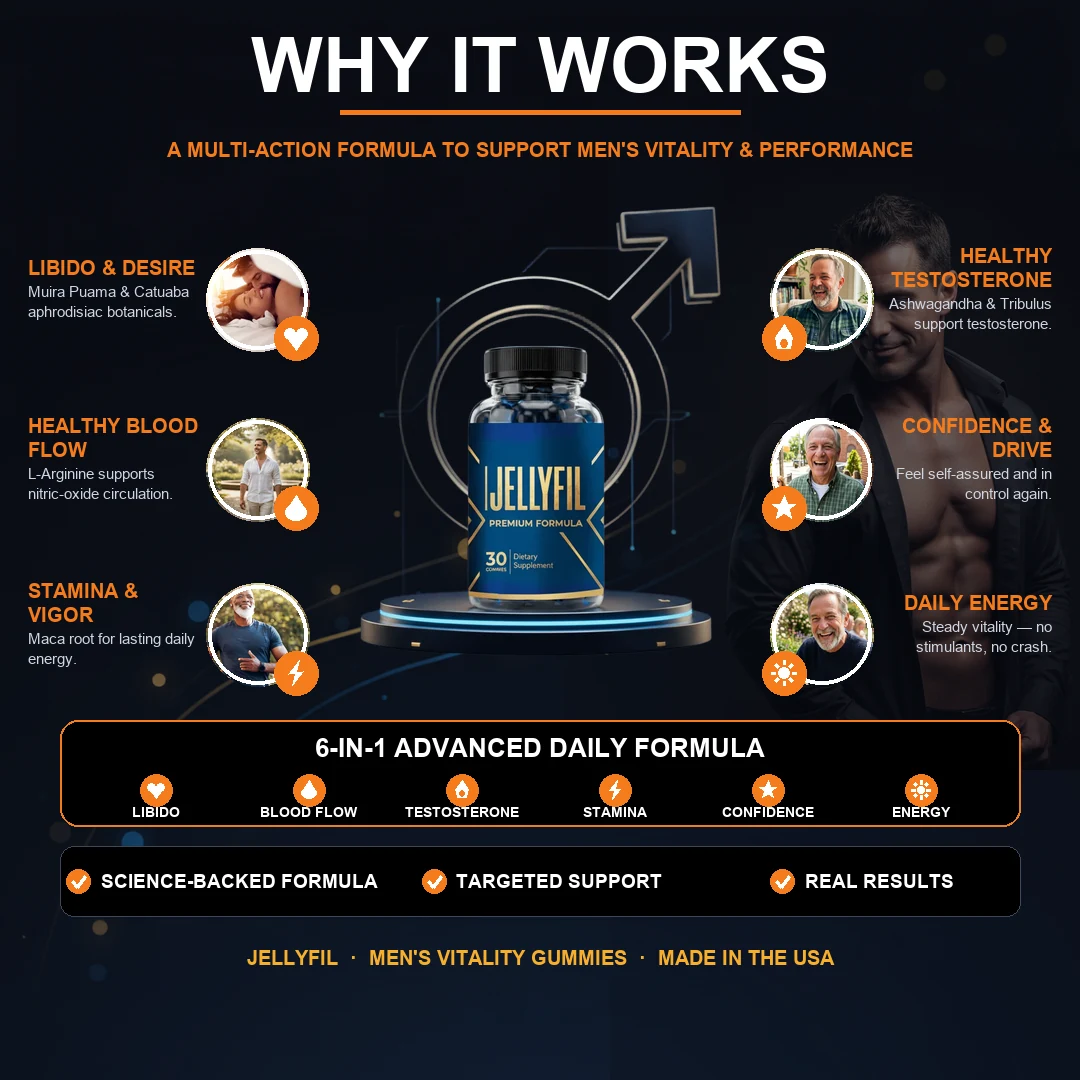
- Blood flow / nitric oxide. This is the circulatory, physical side of performance. L-Arginine is a nitric-oxide precursor here — it helps relax blood vessels rather than affecting mood or hormones. Nothing else in a typical blend does this job, so it is not duplicating anything.
- Drive and stamina. This is desire and get-up-and-go. Maca supports drive and stamina through non-hormonal routes, while the two Amazonian botanicals, Muira Puama and Catuaba, are traditional aphrodisiacs used for desire and sensitivity. They cluster around the same outcome but come at it differently.
- Stress and hormones. This is the calm-and-testosterone axis. Ashwagandha works on cortisol and stress, and Tribulus is a traditional testosterone-support botanical. Lowering chronic stress removes a headwind that works against drive and recovery.
Laid out like that, the logic of a stack becomes checkable. If a formula has an ingredient in each column, the ingredients are complementing rather than competing. If it has five ingredients that all sit in the "drive" column and nothing for circulation or stress, it is narrower than its ingredient count suggests. Counting columns beats counting ingredients.
Where stacking goes wrong: proprietary blends and pixie dust
Here is the trap. A blend can look perfect on paper — the right ingredients in the right columns — and still do very little, because the amounts are too small to matter. The industry name for adding a token quantity of a fashionable ingredient is "fairy dusting" or "pixie dusting." The ingredient is present, so it can be named on the front of the box, but it is nowhere near the dose used in the research. This is exactly the gap a systematic review and evidence-based analysis of the ingredients in popular male testosterone and erectile dysfunction supplements set out to measure, and it is why the maca reference dose — gram-level, from the randomised trial on maca and sexual desire in adult healthy men — is worth memorising before you read a label.
The tool that makes fairy dusting easy to hide is the proprietary blend. On a proprietary-blend label, you see the ingredients listed and one combined total weight — say "Men's Vitality Blend, 900 mg" — but not how that 900 mg is split. The maker could put 880 mg of the cheapest filler-grade botanical and 20 mg spread across the actives everyone actually came for, and the label would look identical. That is not illegal, and not every proprietary blend is dishonest, but it removes your ability to check any single ingredient against its studied dose. When information is hidden, assume it is hidden for a reason.
How to read a blend honestly
You can vet almost any vitality formula with a short checklist:
- Are the ingredients in different columns? Blood flow, drive, stress/hormones. Coverage beats quantity.
- Are the amounts disclosed per ingredient, or hidden inside one proprietary-blend total? Named amounts are the greener flag.
- Do the key actives look dosed to match their research, or like label dressing? Cross-check the headline ingredients against what the trials actually used.
- Does the timeline make sense? Botanicals and adaptogens build over weeks. Anything promising an overnight transformation is selling the fantasy, not the pharmacology.
- Is the ingredient list short enough to be plausible? Six well-chosen actives at real doses beat two dozen at a sprinkle.
Run that list and most of the noise in the category sorts itself out. It also protects you from the opposite mistake — dismissing all blends as gimmicks. A tight, transparent, well-dosed stack is a legitimately better tool than buying five separate bottles and guessing at your own combination.
How JellyFil combines its actives
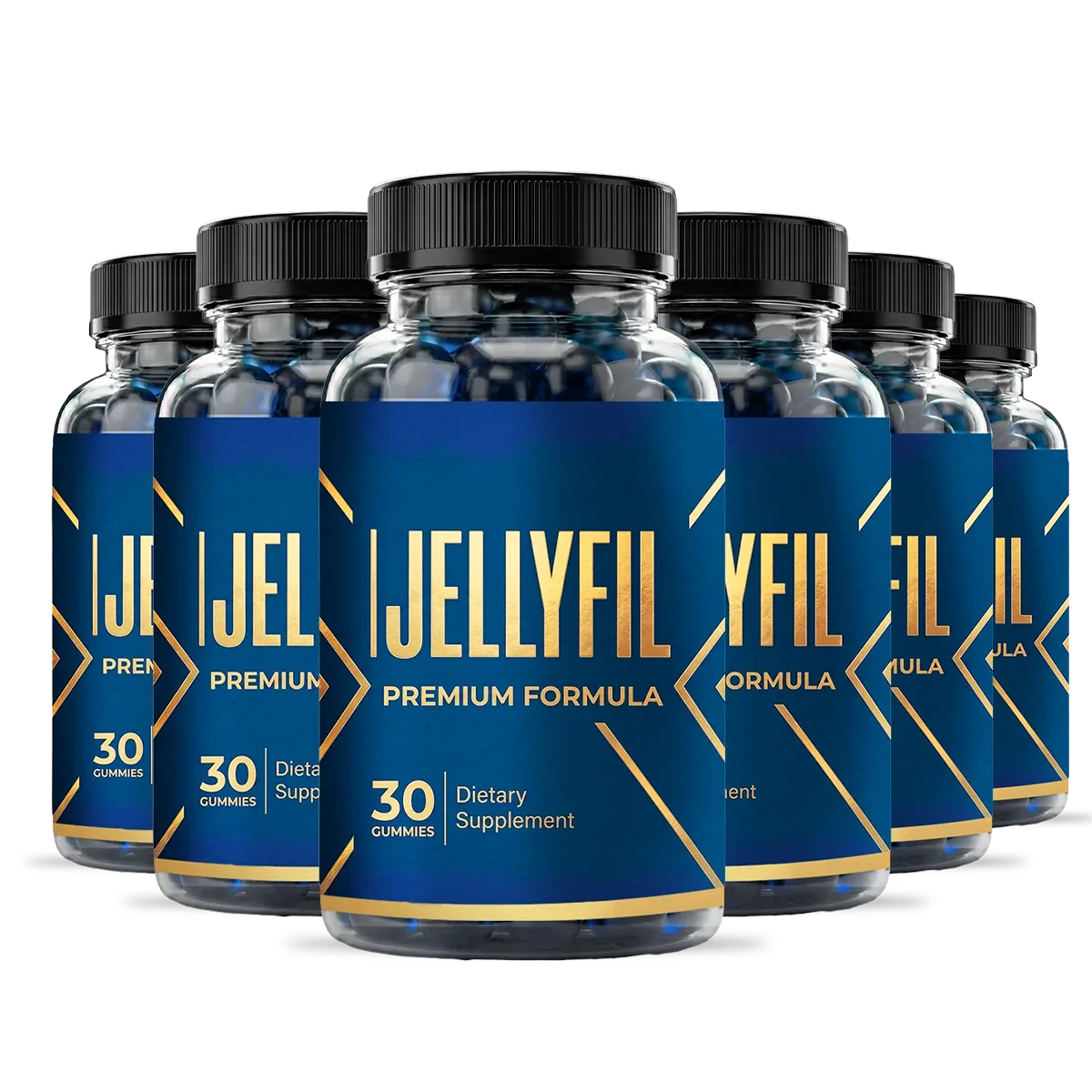
JellyFil is built as a compact stack: nine ingredients spread across the three columns rather than piled into one. L-Arginine handles blood flow. Maca, Muira Puama and Catuaba cover the drive-and-stamina side from different angles. Ashwagandha and Tribulus work the stress-and-testosterone axis, with green tea extract, 5 mg of caffeine and horny goat weed extract rounding the blend out. The design goal is complementation — each ingredient doing a job the others are not — which is the realistic version of "synergy" described above. Crucially, every ingredient is named on the Supplement Facts panel — though the amounts sit inside an 82 mg proprietary blend rather than being broken out one by one, so apply the checklist with that limit in mind. For the ingredient deep-dives, see our pieces on what to look for in ashwagandha and Maca for men, or the wider honest guide to male-enhancement gummies.
See the whole stack on one label
JellyFil names all nine ingredients of its 82 mg proprietary blend on the Supplement Facts panel — with today's official-store pricing and a 60-day guarantee.
Order NowFrequently asked questions
Is a blend better than single ingredients?
Not automatically. A blend is better only when its ingredients work through different mechanisms and each is present in a useful amount. Stacking two ingredients that do the same job just adds cost. Stacking ingredients that cover blood flow, drive and stress can address more of the picture than any single active on its own.
What does supplement synergy actually mean?
Synergy means the combined effect is greater or more complete than the parts alone. In practice, the honest version is usually complementation: ingredients covering different pathways so the overall result is broader. True multiplying synergy is hard to prove in humans, so it is more accurate to expect complementary effects than a dramatic multiplier.
Are proprietary blends a red flag?
Not always, but they hide information. A proprietary blend lists a total weight without telling you how much of each ingredient is inside, which makes it impossible to check any active against its studied dose. A label that names the amount of each ingredient is easier to trust than one that hides the split.
How does JellyFil combine its actives?
JellyFil pairs ingredients across separate pathways: L-Arginine for blood flow, Muira Puama, Catuaba and Maca for drive and stamina, and Ashwagandha with Tribulus for the stress and testosterone side. The idea is that these areas complement rather than duplicate each other. Every active is named on the Supplement Facts panel.
Related reading
- L-Citrulline vs L-Arginine for men: which nitric-oxide booster?
- KSM-66 ashwagandha: what to look for on the label
- Catuaba bark and libido: what the evidence says
- The best time to take male vitality gummies
References
- Kuchakulla M et al. A systematic review and evidence-based analysis of ingredients in popular male testosterone and erectile dysfunction supplements. Int J Impot Res. 2021. PMID: 32358510.
- Gonzales GF et al. Effect of Lepidium meyenii (MACA) on sexual desire and its absent relationship with serum testosterone levels in adult healthy men. Andrologia. 2002. PMID: 12472620.
- Chandrasekhar K et al. A prospective, randomized double-blind, placebo-controlled study of safety and efficacy of a high-concentration full-spectrum extract of ashwagandha root in reducing stress and anxiety in adults. Indian J Psychol Med. 2012. PMID: 23439798.
- National Center for Complementary and Integrative Health — Using Dietary Supplements Wisely.