Catuaba Bark for Libido: What the Evidence Says
Does catuaba bark actually help libido?
Catuaba is a Brazilian bark used for centuries as an aphrodisiac and nerve tonic, and it has interesting animal and mechanistic research behind it. But controlled human trials are scarce, so the honest verdict is traditional-use with plausible support rather than proven. It is best judged as one desire-focused piece of a broader formula.
- Deep tradition: centuries of Brazilian use as a desire and vitality tonic.
- Thin human data: most evidence is preclinical — animal and lab studies, not RCTs in men.
- Better as a pair: JellyFil combines it with Muira Puama, its traditional partner.
What catuaba is
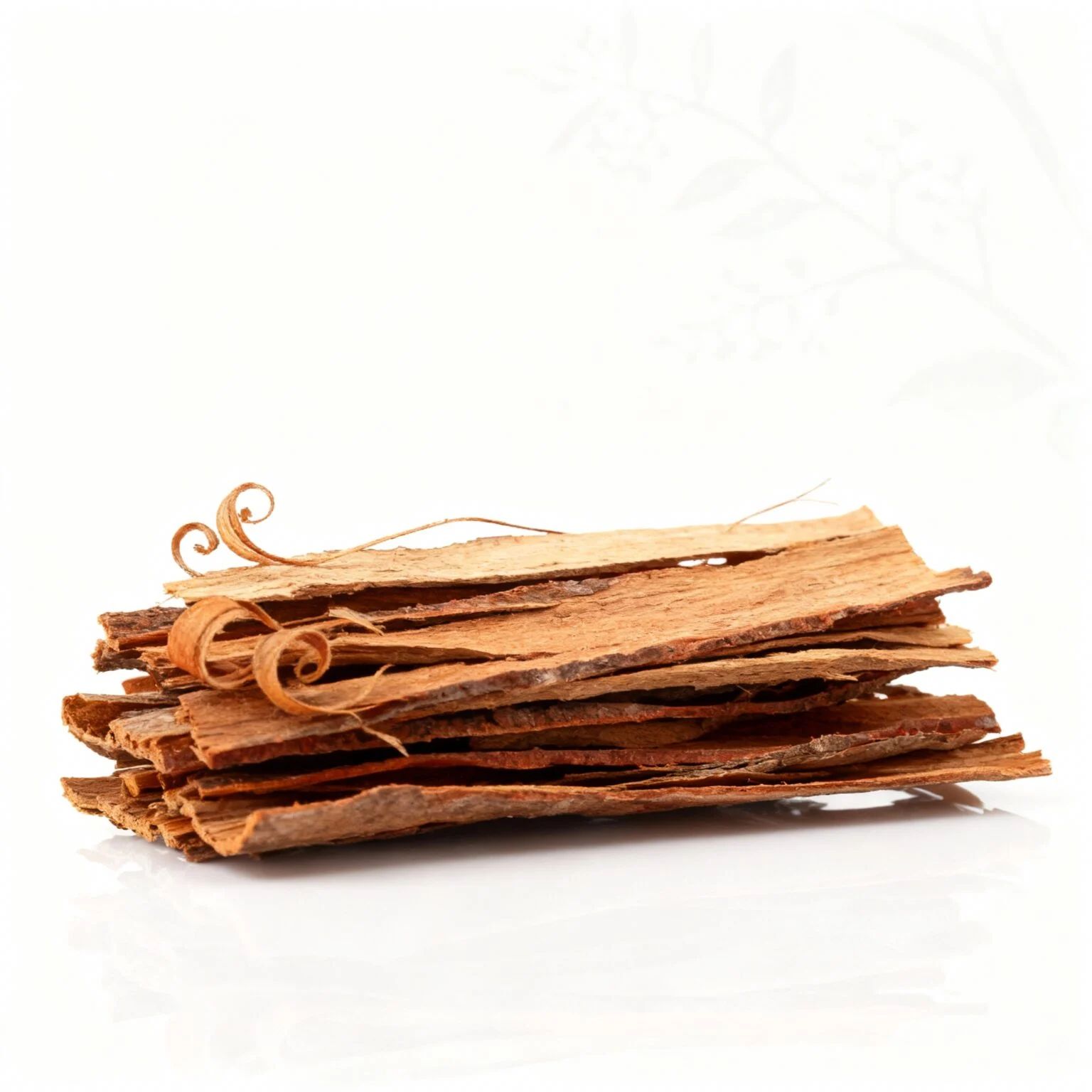
Catuaba is not one plant but a name shared by the bark of several Brazilian trees, most commonly Trichilia catigua and various Erythroxylum species. That is worth knowing up front, because it means two products labelled "catuaba" can be botanically different, and the research on one species does not automatically transfer to another. In the traditional medicine of Brazil the bark is brewed and used as an aphrodisiac and as a nerve tonic — a category that covers sexual desire but also a broader idea of calm energy, resilience and vitality. Indigenous and folk use of catuaba runs deep enough that it appears in Brazilian sayings about virility, which tells you how embedded its reputation is.
When catuaba crossed into Western supplements it kept that dual identity: a botanical for desire, and a botanical for a general sense of vigour. In a men's formula it typically sits in the "libido" or "desire" pillar rather than the circulatory or hormonal ones, which is exactly where JellyFil places it.
The ethnobotanical case
The strongest thing you can say about catuaba is that its traditional record is genuine and long. Ethnobotany — the study of how cultures use plants — is not a substitute for a clinical trial, but it is not nothing either. When a plant has been used for the same purpose, in the same way, across many generations, that persistence is a real-world signal. People tend to abandon remedies that do nothing noticeable, and catuaba never got abandoned. It survived as a desire tonic for centuries and remains popular in Brazil today.
The honest caveat is that traditional persistence can be driven by expectation, ritual and culture as much as by pharmacology. History tells us catuaba is worth taking seriously enough to study. It does not, on its own, tell us how much of the effect is the plant and how much is belief. That gap is precisely what controlled research exists to close — and for catuaba, that research is still thin.
A centuries-old reputation is a reason to investigate an ingredient, not a certificate that it works. Both of those statements can be true about catuaba at the same time.
What the modern research shows — and does not
Most of the modern evidence on catuaba is preclinical, meaning it comes from laboratory and animal studies rather than trials in men. Several strands are interesting. Some work has explored effects on the dopamine system — the brain's motivation and reward chemistry — which is a plausible route for anything that influences desire, since libido has a strong central-nervous-system component. Other studies have looked at antioxidant activity and at relaxation of blood vessels in animal tissue, which would, in principle, touch the circulatory side of arousal. The clearest published example is a study of the antidepressant-like effects of Trichilia catigua extract, which pointed to dopaminergic mechanisms in an animal model. There is also preclinical interest in mood-related and neuroprotective effects, echoing the traditional "nerve tonic" use, and a separate study of catuaba crude extract and reproductive outcomes in rats is a reminder that traditional botanicals still warrant proper toxicology.
Each of these findings is a mechanism, not a result. A herb that relaxes vessels in a dish or shifts dopamine markers in an animal has shown a reason it might help; it has not shown that it improves libido in a real man taking a real supplement. The missing piece is randomised, placebo-controlled human trials of catuaba specifically, and those are largely absent. So the fair summary is that catuaba has encouraging early mechanistic support layered on top of a deep tradition, and no strong human proof. Anyone telling you catuaba is clinically proven to boost libido is overstating what exists.
How catuaba pairs with Muira Puama
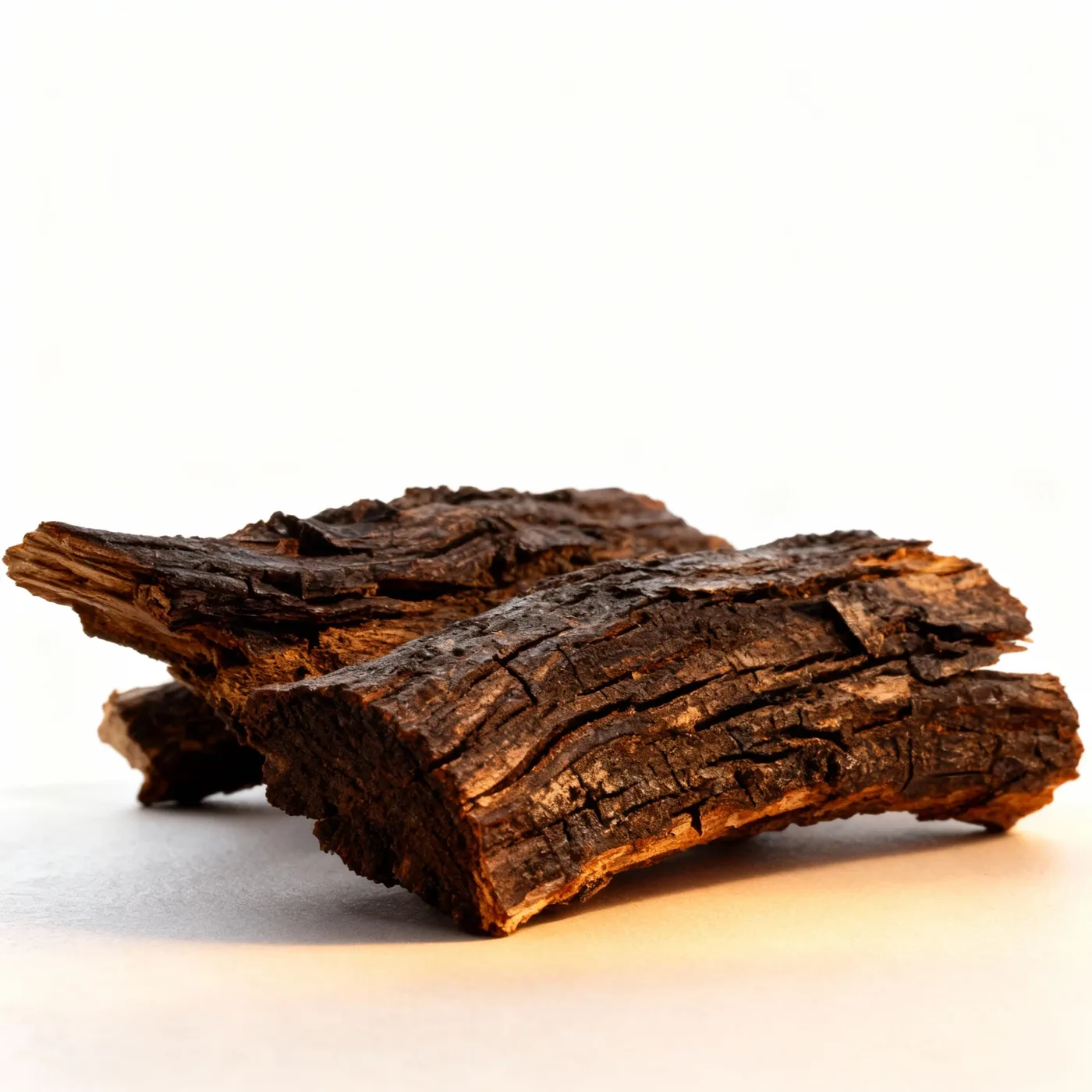
Catuaba is rarely used alone, and that is not an accident. Its traditional and commercial partner is Muira Puama, and the two are so often combined that many formulas treat them as a single desire unit. The logic is complementary rather than redundant. Muira Puama, the "potency wood," leans toward drive and function, while catuaba is described more as a desire-and-nerve tonic that adds a mood and vitality flavour. Using both hedges against the fact that neither has strong solo human data: you are covering the desire pillar from two traditional angles rather than betting everything on one bark.
In JellyFil, that pair does not stand alone either. The desire botanicals sit beside L-Arginine for the circulation side and adaptogens like Ashwagandha and Maca for the hormonal and stress side. That layered design is the more honest way to build a men's formula, because it does not pretend a single traditional herb handles libido, blood flow and testosterone all at once. If you want the desire pair's history in more depth, our piece on Muira Puama and Catuaba as Amazonian aphrodisiacs covers it, and Tongkat Ali vs Maca for libido compares two of the better-studied desire options.
Why the evidence is thinner than the reputation
It is worth pausing on why a herb this popular has so little human trial data, because the reasons are practical rather than damning. Botanicals are hard to study well. There is no patent on a traditional bark, so there is little commercial incentive to fund the large, expensive, placebo-controlled trials that a pharmaceutical company would run for a drug it owns. Preparations vary between suppliers, doses are not standardised across products, and catuaba is usually consumed as part of a blend, which makes isolating its individual effect genuinely difficult. On top of that, libido itself is one of the hardest outcomes to measure objectively — much of it is subjective and highly responsive to expectation, which is exactly why placebo control matters and exactly why it is hard to get right.
None of that means catuaba does not work. It means the machinery that would prove whether it works has mostly not been pointed at it. This is a common situation with traditional botanicals, and the mature response is neither to dismiss them nor to oversell them, but to hold them where the evidence puts them: promising, plausible, and unproven. When you read a product page that speaks about catuaba in the confident language of settled science, that is a signal the copy has outrun the research.
What a sensible catuaba product looks like
If you are going to include catuaba, a few practical markers separate a thoughtful product from a hopeful one. Look for a formula that names the botanical clearly on the label rather than burying it inside an undisclosed "proprietary blend," because you cannot judge a dose you cannot see. Be wary of any product whose marketing promises a specific, guaranteed or on-demand libido result from catuaba — that is a claim the evidence cannot support, and it tends to travel with other exaggerations. And prefer formulas that treat catuaba as one supporting ingredient in a wider, sensibly designed blend, rather than as a hero ingredient carrying the whole promise. A herb with a strong tradition and modest proof belongs in a supporting role, and the products that place it there are usually the more honest ones overall.
Using catuaba sensibly
A few practical points follow from all of this. First, dose and species vary widely between products, so the amount and source in any given supplement matter more than the word "catuaba" on the front label. Second, because it is a traditional tonic rather than an on-demand agent, catuaba belongs to the same build-over-time category as the rest of a daily formula — judge it over weeks of consistent use, not after a single gummy. Third, "traditional" does not mean "risk-free": catuaba is generally regarded as well tolerated, but its formal safety data is thinner than that of well-studied nutrients, so if you take medication or manage a condition, clear it with a doctor first.
It also helps to think in terms of timelines. Like the other botanicals in a daily formula, catuaba is not something you take an hour before you want an effect; it is something you take consistently for weeks while the wider blend does its work. That reframing protects you from the most common disappointment, which is judging a slow-building tonic by the standard of a fast-acting pill and concluding it failed when it was simply never designed to work that way in the first place.
Set expectations accordingly. Catuaba is a reasonable, evidence-informed inclusion with a strong story and modest proof — a supporting player in a broader vitality strategy, not a guaranteed switch. Treated that way, it is a sensible ingredient. Treated as a miracle, it will disappoint.
Related reading
- Red vs black Maca for men: which and why
- How vitality ingredients stack: synergy in a men's formula
- The confidence and libido connection in men
- Tongkat Ali vs Maca for libido

See how catuaba is combined
JellyFil pairs Catuaba with Muira Puama, L-Arginine, Maca, Ashwagandha and Tribulus in a once-daily gummy. Every active is named on the label.
Order NowFrequently asked questions
What is catuaba bark used for?
Catuaba is a Brazilian bark used in traditional medicine as an aphrodisiac and a nerve tonic — that is, to support sexual desire and a general sense of vitality and calm energy. In modern supplements it is included as a desire-focused botanical, usually alongside Muira Puama. Its reputation rests mainly on long ethnobotanical use rather than large clinical trials.
Is there human research on catuaba?
Direct human trials of catuaba on its own are very limited. Most of the modern evidence is preclinical — laboratory and animal studies exploring effects on mood, dopamine signalling and blood vessel relaxation. Those findings offer a plausible mechanism for a libido-supporting herb, but they are not the same as a randomised controlled trial in men, so catuaba should be treated as traditional-use with early support, not proven.
Is catuaba safe to take daily?
Catuaba is generally regarded as well tolerated in the amounts used in supplements, and it has a long history of daily traditional use. However, its formal safety literature is thinner than that of well-studied nutrients, so caution is sensible. If you take prescription medication, have a health condition or are unsure, speak to a doctor before starting. This is general information, not medical advice.
How does catuaba differ from muira puama?
Both are Amazonian barks used traditionally for desire, and they are almost always paired together. The simplest distinction is that Muira Puama, nicknamed potency wood, leans toward drive and function, while catuaba is described more as a desire and nerve tonic that adds a mood and vitality element. In practice they are complementary, which is why formulas tend to include the two as a unit rather than choosing between them.
References
- Campos MM et al. Antidepressant-like effects of Trichilia catigua (Catuaba) extract: evidence for dopaminergic-mediated mechanisms. Psychopharmacology (Berl). 2005. PMID: 15991001.
- Dos Santos AH et al. The exposure to Trichilia catigua (catuaba) crude extract impairs fertility of adult female rats but does not cause reproductive damage to male offspring. J Ethnopharmacol. 2015. PMID: 25792016.
- Mendes FR et al. Brazilian plants as possible adaptogens: an ethnopharmacological survey of books edited in Brazil. J Ethnopharmacol. 2007. PMID: 17030478.
- Kuchakulla M et al. A systematic review and evidence-based analysis of ingredients in popular male testosterone and erectile dysfunction supplements. Int J Impot Res. 2021. PMID: 32358510.