L-Arginine, Nitric Oxide and Blood Flow in Men
The short version
L-Arginine is an amino acid your body converts into nitric oxide, the signalling molecule that relaxes and widens blood vessels. Because healthy circulation is the physical side of male performance, L-Arginine is one of the most studied ingredients in this space. The honest catch: results in human trials are dose-dependent and mixed, and a related amino acid, L-citrulline, is sometimes absorbed better.
- What it does: feeds the nitric-oxide pathway that governs blood-vessel tone.
- Best supported: endothelial function and modest blood-pressure effects.
- Where it is weaker: first-pass metabolism blunts oral doses, and not everyone responds.
The nitric oxide pathway, in plain terms
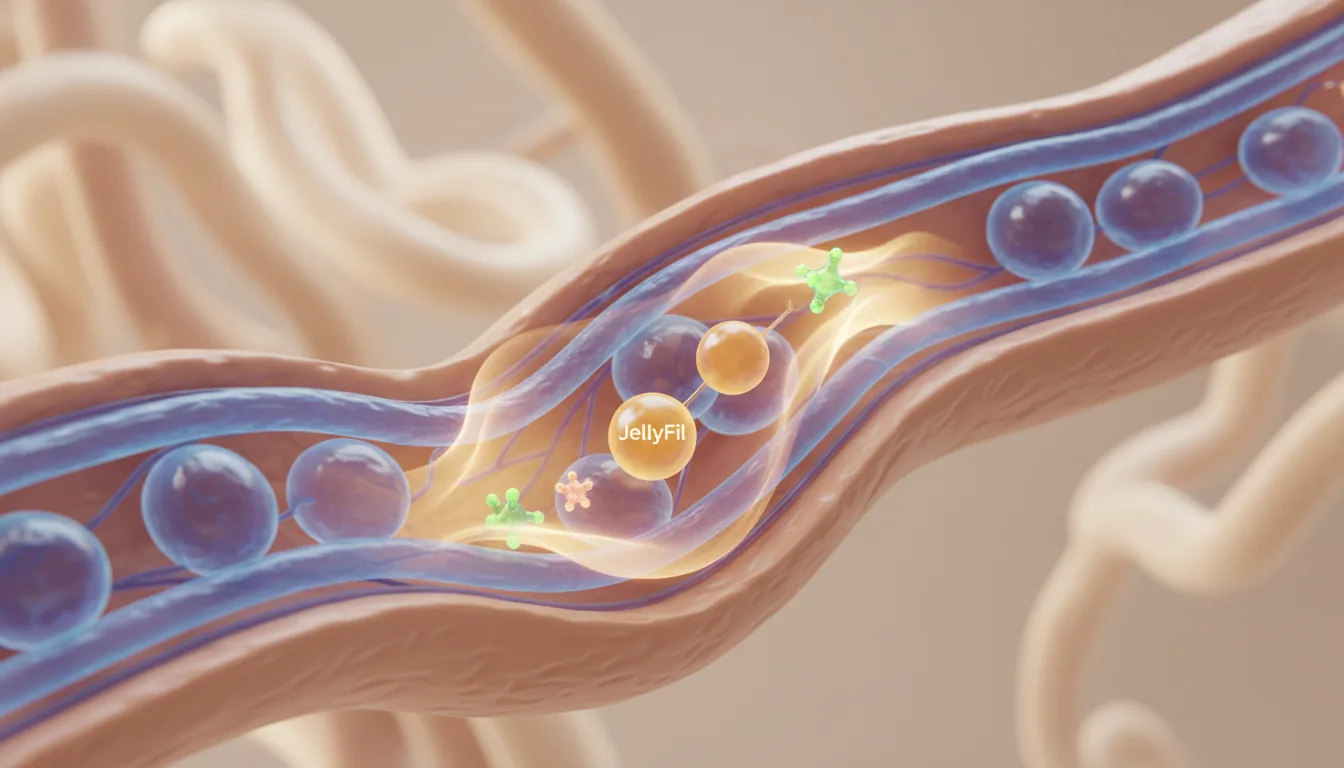
The discovery that a gas could act as a signal inside the body was significant enough to win the 1998 Nobel Prize in Physiology or Medicine. The molecule was nitric oxide (NO), and the pathway is straightforward to describe. An enzyme family called nitric oxide synthase takes L-Arginine and oxygen and produces nitric oxide. That NO diffuses into the smooth muscle wrapping your blood vessels and tells it to relax. When the muscle relaxes, the vessel widens, and blood flows more freely at lower pressure.
That single mechanism is why L-Arginine turns up in cardiovascular research, sports nutrition and men's-vitality formulas alike: more available substrate may support more nitric oxide, and more nitric oxide supports healthier vessel tone. In men, blood flow is the plumbing side of performance, which is why the amino acid earns its place next to the botanicals in JellyFil.
Nitric oxide does not force blood anywhere. It removes a brake — it lets vessels relax so that normal circulation can do its job.
What the human evidence supports
The strongest human data sits around vascular function. Reviews of oral L-Arginine report improvements in endothelial function (how well the vessel lining dilates) and small reductions in blood pressure, particularly in people who started with impaired function. There is also a long line of exercise research using arginine or citrulline to support blood flow and reduce fatigue, with genuinely mixed outcomes depending on dose and the population studied.
For male sexual function specifically, the most useful single study is a multicentre, double-blind, randomised, placebo-controlled trial of long-term high-dose L-arginine in men with vasculogenic erectile dysfunction — that is, men whose difficulty was traced to blood flow rather than to hormones or psychology. It matters because it tested arginine on its own, in the population the mechanism predicts should respond. Most other trials bundle arginine with other actives, and once that happens you cannot cleanly attribute an effect to the arginine alone. The fair summary is that the circulation rationale is solid and the mechanism is real, while the size of the benefit from any single dose is modest and varies between individuals.
It is also worth being clear about which population is being described. Erectile difficulty is frequently an early vascular sign rather than an isolated problem: a systematic review of the association between erectile dysfunction and cardiovascular disease found the two travel together often enough that urologists treat the former as a prompt to check the latter. That is a reason to take blood-vessel health seriously, and a reason not to treat an amino acid as the answer to a symptom that deserves a doctor's attention. We cover that connection in more depth in our piece on endothelial health and erections.
Arginine or citrulline: which one actually raises arginine?
The counterintuitive finding in this field is that swallowing L-arginine is not the most efficient way to raise circulating L-arginine. A randomised study of the pharmacokinetic and pharmacodynamic properties of oral L-citrulline and L-arginine compared the two head to head and examined what each did to nitric oxide metabolism. The reason the comparison exists at all is first-pass metabolism, described in the next section.
| L-Arginine | L-Citrulline | |
|---|---|---|
| Route to nitric oxide | Direct substrate for nitric oxide synthase | Converted to arginine in the kidney, then used |
| First-pass losses | Substantial — broken down in gut and liver | Largely bypasses that breakdown |
| Typical study doses | Grams per day, often split | Lower gram doses for a comparable effect |
| Digestive tolerance | Upset is common at higher doses | Generally better tolerated |
| Direct sexual-function trial | Yes, in vasculogenic cases | Yes, in mild erectile difficulty |
Neither is strictly better; they are different routes to the same pathway with different pharmacokinetics. We have set the comparison out in full in L-citrulline versus L-arginine.
Where the evidence gets weaker
Three honest caveats matter more than any marketing line.
- First-pass metabolism. A large share of swallowed L-Arginine is broken down in the gut and liver before it reaches your bloodstream. This is the main reason study doses are often high (several grams), and why L-citrulline — which the body converts into arginine and which survives first-pass better — is sometimes preferred by researchers.
- Response varies. People with already-healthy endothelial function tend to see less change than those with room to improve. Age, baseline blood pressure and overall vascular health all move the needle.
- Dose reality. A once-daily gummy delivers a supportive amount within a blend, not the multi-gram dose used in some trials — a reasonable trade for a product built around daily consistency, but worth stating plainly.
Dose, timing and safety
Research doses of L-Arginine vary widely — from about 1.5 g up to 6 g or more per day, often split up. Timing matters less than consistency, because the point is to support a background process rather than trigger an on-demand event.
Safety-wise, L-Arginine is generally well tolerated, with digestive upset the most common complaint at higher doses. The important interactions are cardiovascular: because it acts on blood flow, anyone taking nitrates or blood-pressure medication, or living with a heart condition, should talk to a doctor before using it. Arginine can also feed certain viral processes, so people prone to cold sores sometimes notice more outbreaks. None of this is exotic, but it is the reason a responsible label points you to a clinician rather than telling you to double up.
Common mistakes with nitric-oxide supplements
The pathway is real, which is exactly why it is oversold. Four errors account for most of the disappointment.
- Treating it as on-demand. Nitric oxide is a background signalling process, not a switch. Taking arginine an hour before an event is not what the vascular-function studies tested.
- Assuming more is better. Higher oral doses mostly buy more digestive upset, because the limiting factor is first-pass metabolism rather than the amount swallowed.
- Expecting it to fix a hormonal or psychological problem. Arginine acts on plumbing. If drive rather than firmness is the issue, that is a different pathway — see maca and sexual desire — and if anxiety is the driver, our piece on performance anxiety is the more relevant read.
- Ignoring the medication question. This is the one genuine safety issue in the list, and it is covered below.
How JellyFil uses L-Arginine
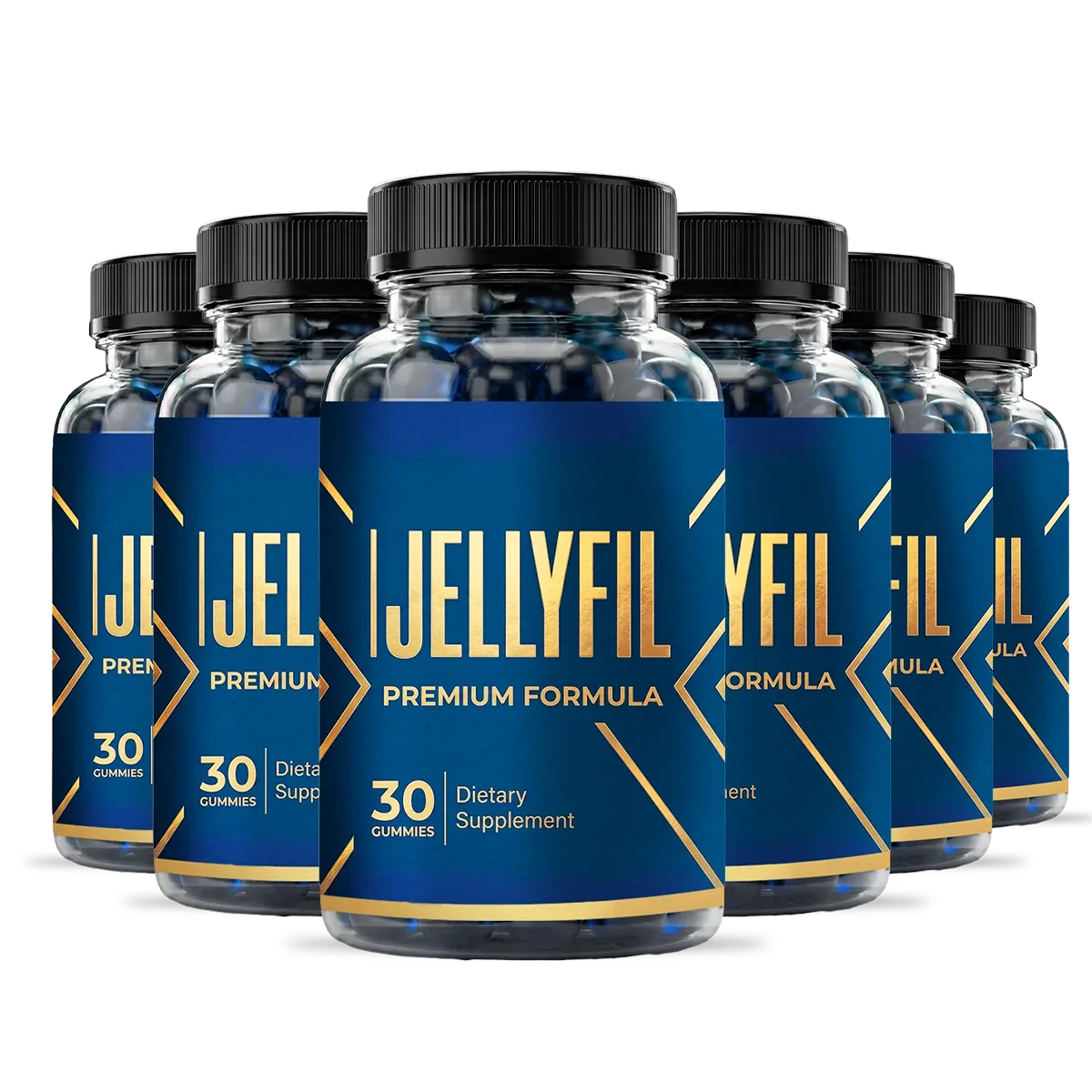
In the JellyFil formula, L-Arginine is the circulation pillar. It sits alongside two aphrodisiac botanicals — Muira Puama and Catuaba — and three testosterone-supporting actives, so the blood-flow amino acid handles the physical side while the adaptogens handle hormones and stress. If you want the hormonal half of that story, our piece on Ashwagandha, cortisol and testosterone covers it, and our honest guide to male-enhancement gummies puts the whole category in perspective.
See where L-Arginine sits on the JellyFil label
Every ingredient and amount is printed on the JellyFil Supplement Facts panel, with today's official-store pricing and the 60-day guarantee.
Order NowFrequently asked questions
Is L-Arginine the same as a pill for performance?
No. L-Arginine supports a background circulatory process with daily use; it is not a fast-acting drug and should not be treated as one. Its value is in supporting healthy blood flow over time rather than producing an immediate on-demand effect.
Is L-citrulline better than L-Arginine?
For raising blood arginine levels, L-citrulline is often absorbed more efficiently because it escapes first-pass breakdown. That does not make arginine ineffective — it is still the direct nitric-oxide substrate — but it explains why some formulas and studies favour citrulline.
Who should avoid L-Arginine?
Anyone taking nitrates or blood-pressure medication, living with a heart condition, or taking prescription medication should speak to a doctor first, because L-Arginine affects blood flow. It is not intended for people under 18. This is general information, not medical advice.
References
- Menafra D et al. Long-term high-dose L-arginine supplementation in patients with vasculogenic erectile dysfunction: a multicentre, double-blind, randomized, placebo-controlled clinical trial. J Endocrinol Invest. 2022. PMID: 34973154.
- Schwedhelm E et al. Pharmacokinetic and pharmacodynamic properties of oral L-citrulline and L-arginine: impact on nitric oxide metabolism. Br J Clin Pharmacol. 2008. PMID: 17662090.
- Gandaglia G et al. A systematic review of the association between erectile dysfunction and cardiovascular disease. Eur Urol. 2014. PMID: 24011423.
- The Nobel Prize in Physiology or Medicine 1998 — nitric oxide as a signalling molecule in the cardiovascular system.